Новости ИИ6 мин чтенияАвтор JH Akash
GLM-5.4: 55.3% KingBench, But 7.2 Hours a Run
Z.ai released GLM-5.4 on Nov 23: a 750B model that runs 28 layers twice to think deeper without growing bigger. It scored 33.2 out of 60 on KingBench 4, but the run took 7.2 hours. Here are the benchmarks, the price, and the catch.
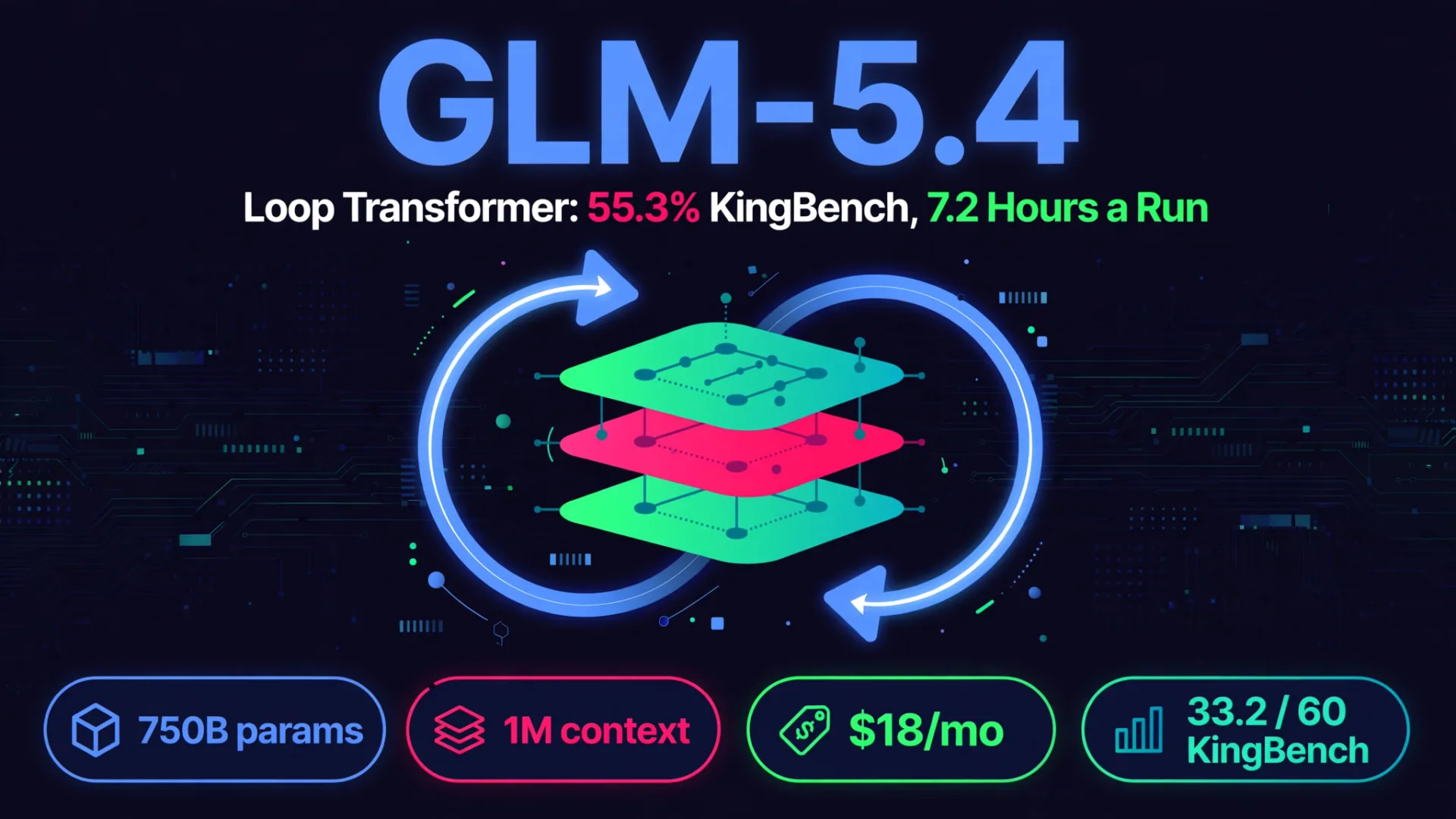
Z.ai released GLM-5.4 on November 23, 2026, and it tries a different trick from every other frontier lab. Instead of adding parameters, it runs the same 28 layers of its 750B model twice for every token. Z.ai says that puts it at the level of models with 2 to 3 trillion parameters, a vendor claim with no independent flagship benchmark behind it yet.
The first independent test tells a more complicated story. On KingBench 4, GLM-5.4 scored 33.2 out of 60, good for 7th place out of 19 models, but the run took 431 minutes, about 7.2 hours, against 109 minutes for Gemini 4 Neon. It thinks longer, and it pays for it in time.
Quick verdict
| Question | Answer |
|---|---|
| What is it | Z.ai's new 750B flagship, the first Loop Transformer model |
| Released | November 23, 2026 |
| Best at | Long coding tasks, visual coding, 3D and game generation |
| Biggest weakness | Marathon thinking, very long run times, no API yet |
| Cheapest way in | GLM Coding Plan Lite, $18 a month |
| Who should try it | Developers curious about looped reasoning, current GLM-5.3 users |
| Who should wait | Anyone who needs an API, fast answers, or proven frontier scores |
What is the Loop Transformer?
A language model is built from layers, and text passes through them one after another. In GLM-5.4, the text passes twice through 28 of the middle layers. Think of someone who writes an answer, then reads it again before sending it. Same brain, no extra knowledge, but the second read catches mistakes.
Z.ai added per-token gates so the two passes do not blow up the model's activations, shares the KV cache across passes with a small sliding window for the second pass, and reuses the sparse-attention indices from the first pass. The result is more reasoning depth with the same 750B parameters.
Z.ai tested the idea on a smaller 30B model with the same architecture. These are Z.ai-reported results for that research model, not for GLM-5.4 itself:
| Benchmark (30B test model) | Baseline | Looped |
|---|---|---|
| AIME25 | 19.17 | 30.42 |
| GPQA-Diamond | 47.58 | 56.26 |
| AA-LCR (long context) | 40.33 | 47.67 |
| MMLU-Pro | 71.65 | 75.05 |
| IFBench | 50.20 | 53.47 |
The pattern is what you would hope for: the biggest gains are on maths, science, and long context, where longer chains of reasoning matter. The looped model also writes 10% to 15% shorter answers, because part of the reasoning moves into the second pass.
What is new in GLM-5.4
- Vision, at last. GLM-5.4 is the first full-size GLM-5 model that reads images and video. GLM-5.3 was text only, so screenshots of bugs, interface mockups, and diagrams can now go straight into the agent's workflow.
- 1M-token context, 128K max output. Enough for an entire code project in one window.
- Generalized Coding. Z.ai's demos lean on vision: a self-narrated music video, a six-axis robotic arm modelled in FreeCAD, a complete game, and a GLSL bird-watching scene, all generated as code.
- Fast when it answers. Up to 200 tokens per second off-peak, 70 to 80 at peak, according to Z.ai.
Benchmarks: where GLM-5.4 actually stands
No major leaderboard has scored GLM-5.4 yet, because Artificial Analysis and Vals AI both need API access. Two independent testers with early access have published results. Treat them as first signals, not verdicts.
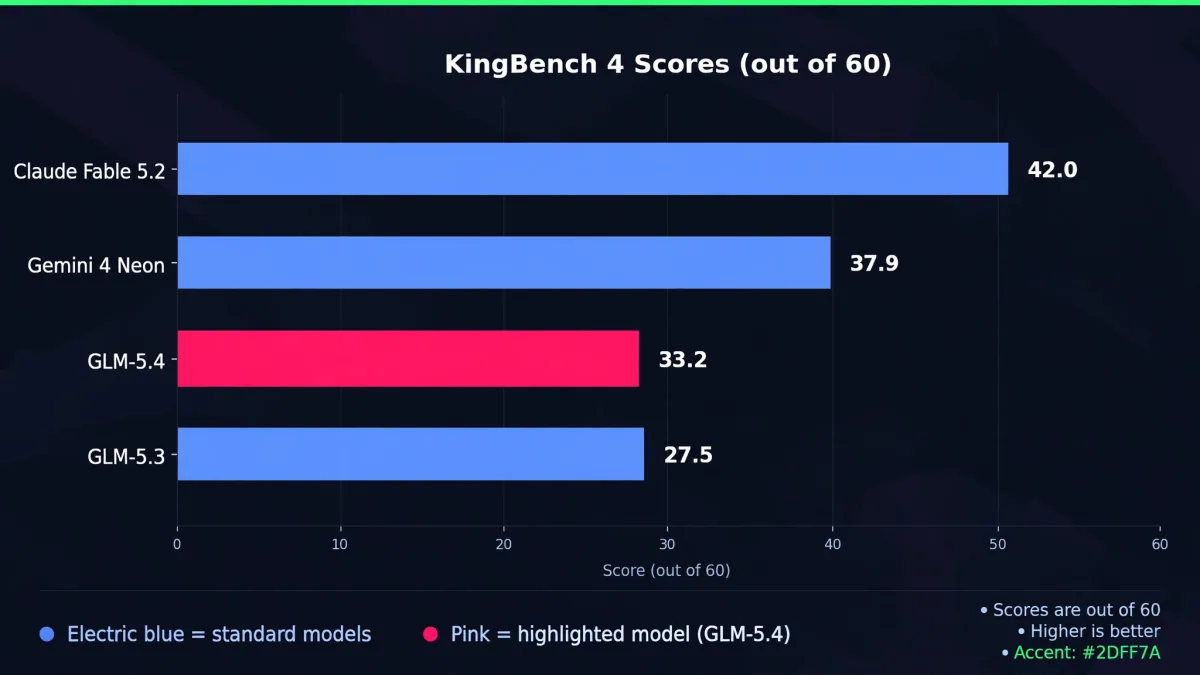
| Model | KingBench 4 (out of 60) | Place |
|---|---|---|
| Claude Fable 5.2 | 42.0 | 1st of 19 |
| Gemini 4 Neon | 37.9 | 2nd |
| GLM-5.4 | 33.2 | 7th of 19 |
| GLM-5.3 | 27.5 | Below GLM-5.4 |
On Kingy AI's AI Decathlon, GLM-5.4 scored 27.1, tied 16th of 27 entries. Kimi K3.1 Pro scored 37.7, DeepSeek V4.1 Flash 34.7, and GPT-6.2 Astra leads at 84.0. That is the clearest sign so far that GLM-5.4's advantage is narrow outside coding.
Z.ai's own test of 200 real coding tasks, also vendor-reported, shows a clear upgrade over its predecessor but a thin edge over rivals:
| GLM-5.4 against | Win | Tie | Loss |
|---|---|---|---|
| GLM-5.3 | 51.1% | 25.7% | 23.1% |
| Kimi K3.1 Pro | 41.8% | 26.9% | 31.3% |
| DeepSeek V4.1 Flash | 36.6% | 30.2% | 33.2% |
Zhipu has not published the task list or the judging method for this test.
The marathon thinking problem
Here is the catch Z.ai admits up front: GLM-5.4 "tends to get caught in overly long marathon thinking loops". The first independent runs confirm it.
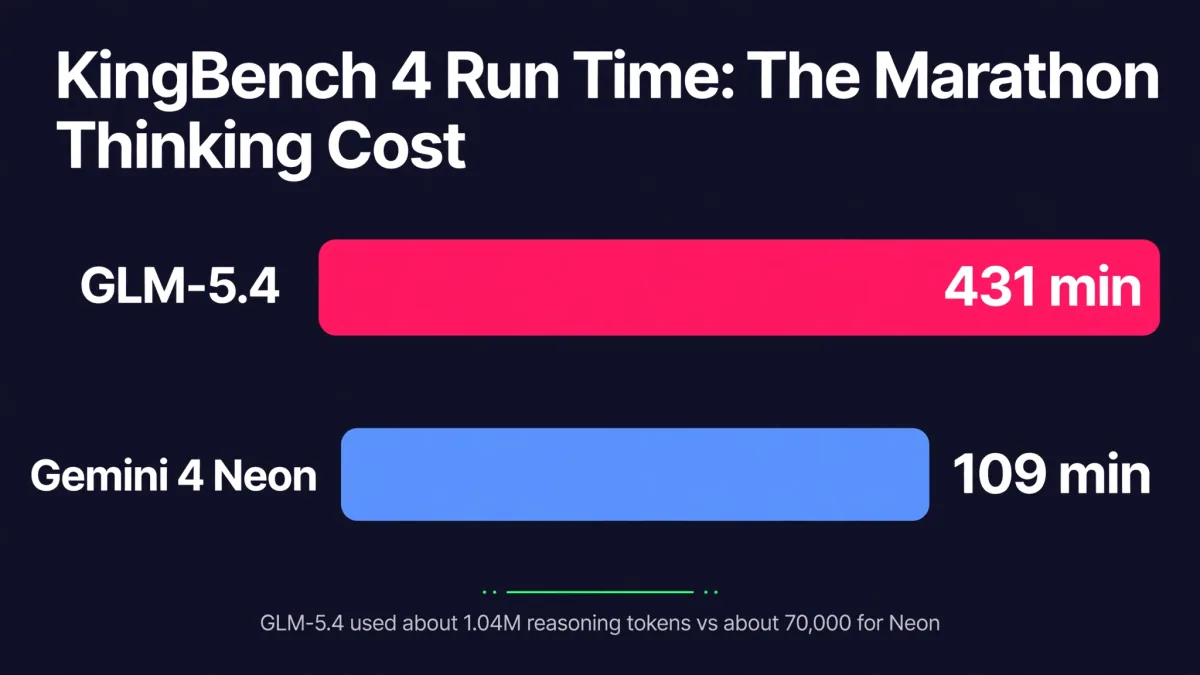
| KingBench 4 run | GLM-5.4 | Gemini 4 Neon |
|---|---|---|
| Run time | 431 min | 109 min |
| Reasoning steps | 1,128 | 244 |
| Reasoning tokens | About 1.04M | About 70,000 |
The score climbs with effort, and so does the time. GLM-5.4 scored 25.2 at low effort, 24.1 at medium, 28.8 at high, and 31.8 at max on the first run, rising to 33.2 after a rerun. A small-task check took 66 seconds at low effort and 454 seconds at max. It buys accuracy with thinking time, and if the model ever gets a per-token API price, that thinking time is what you will pay for.
Pricing: what GLM-5.4 costs today
| Access | Price |
|---|---|
| GLM Coding Plan Lite | $18 per month |
| GLM Coding Plan Pro | $80 per month |
| GLM Coding Plan Max | $168 per month |
| API price | Not announced |
| Open weights | Planned, no date |
There is no per-token price yet, and no API to call. The best clue is the Coding Plan itself: GLM-5.4 uses about a third less quota per token than GLM-5.3, and subscribers get 50% more GLM-5.4 usage than GLM-5.3 under comparable weekly quotas. GLM-5.3's API costs $1.40 in and $4.40 out per 1M tokens, so a quota-based projection would put GLM-5.4 near $0.93 in and $2.93 out. That is a projection, not an announced price, and a model that spends ten times the reasoning tokens of a rival on the same task can still cost more per task.
Which to pick
- Pick GLM-5.4 if you already use GLM-5.3, you do visual coding or long-horizon coding tasks, or you want to test looped reasoning firsthand. It works in ZCode, Z.ai Chat, Claude Code, Codex, Cline, OpenCode, AutoClaw, and 20-plus other tools.
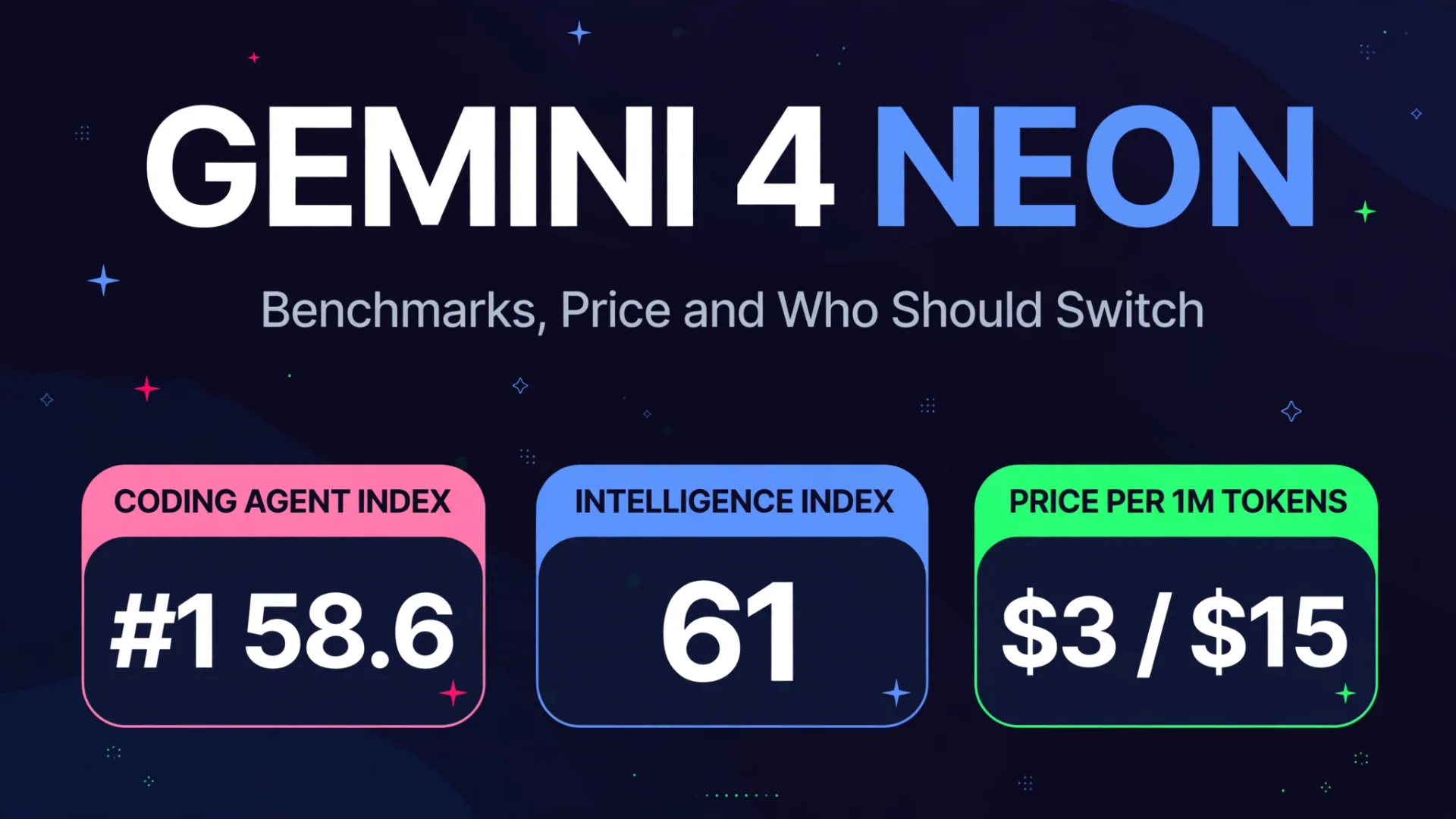
- Pick Gemini 4 Neon if you want the fastest strong coding model with an API today, at $3 in and $15 out per 1M tokens. Read our breakdown: Gemini 4 Neon: #1 Coding Agent at $3, Beats Opus 5.5.
- Pick Kimi K3.1 Pro if you want a proven agentic model at $2 in and $10 out, with an Artificial Analysis score of 46.
- Pick DeepSeek V4.1 Flash if you want cheap open weights at $0.30 in and $1.20 out per 1M tokens.
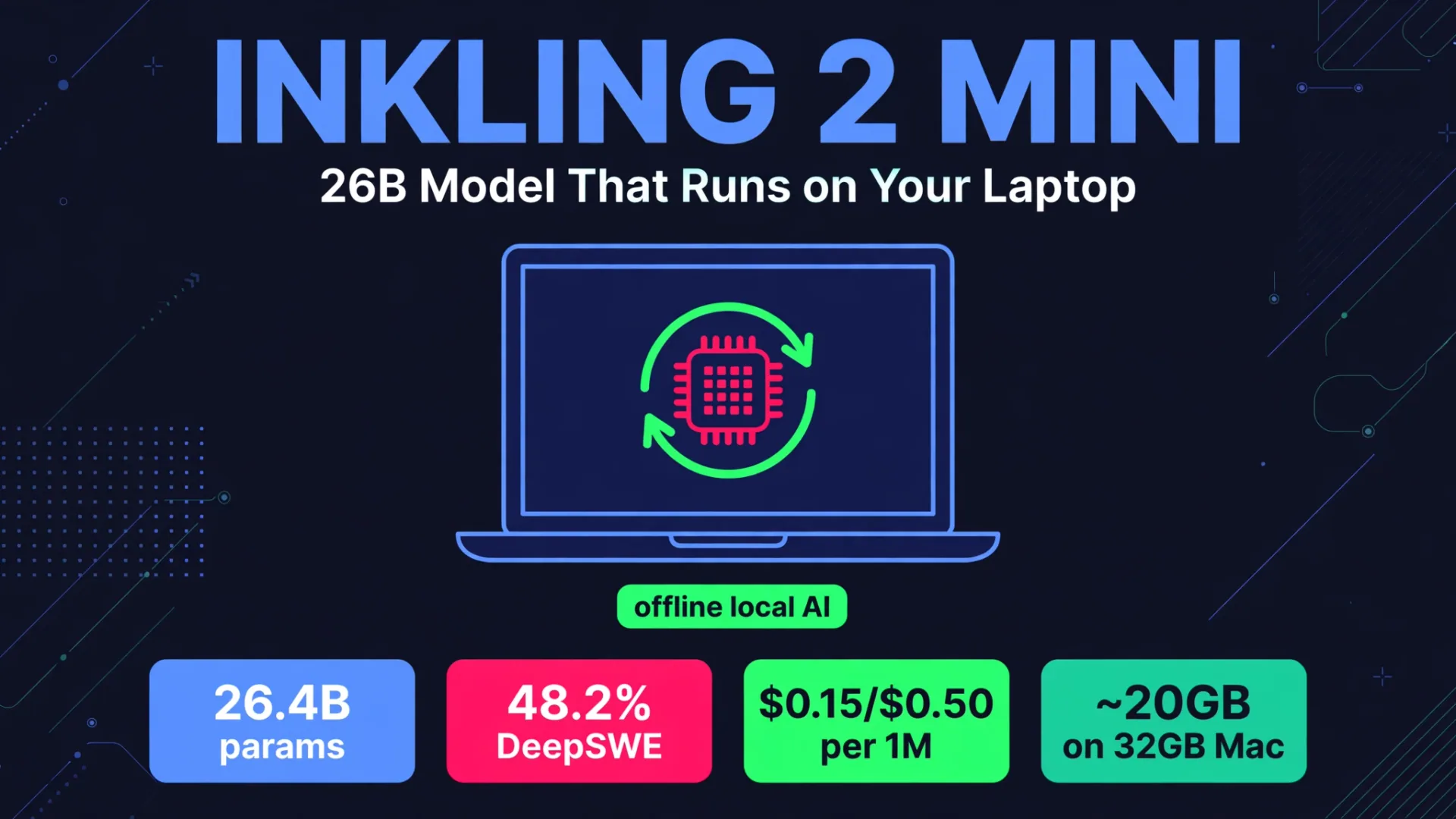
- Wait if you need an API, per-token pricing, or independent scores before switching. For a cheaper open-weight option that runs on your own machine, see Inkling 2 Mini: 26B Model That Runs on Your Laptop.
Related reading: Sarvam-105B: $0.15, Beats Gemini Flash-Lite on Tau2 and GPT-6.2 Astra vs Fable 5.2: 7-5 Win Costs 7.2x More.
FAQ
Is GLM-5.4 open source?
Not yet. Z.ai says open weights will follow after safety hardening, with no date given.
Can I use GLM-5.4 through an API?
No. There is no public API yet. It runs inside the GLM Coding Plan, ZCode, and Z.ai Chat until Z.ai finishes a safety evaluation.
How much does GLM-5.4 cost?
The cheapest access is the GLM Coding Plan Lite at $18 a month. No per-token API price has been announced.
Is GLM-5.4 better than Gemini 4 Neon?
On the first independent coding test, no. KingBench 4 puts GLM-5.4 at 33.2 against Neon's 37.9, and Neon finished the run in 109 minutes against 431 for GLM-5.4.
What is a Loop Transformer?
It runs the same 28 layers of the model twice for each token, adding reasoning depth without adding parameters. Z.ai claims the 750B model reaches the level of 2 to 3 trillion parameter models, but that claim is vendor-reported and untested by independent benchmarks so far.
Sources: Z.ai GLM-5.4 launch post and Coding Plan docs; WidelAI GLM-5.4 comparison, checked November 23, 2026; Decrypt; AICodeKing KingBench 4 via Fello AI; Kingy AI AI Decathlon.
- GLM-5.4
- Z.ai
- Loop Transformer
- KingBench 4
- Gemini 4 Neon
- AI coding agents