KI-News6 Min. LesezeitVon JH Akash
Ternary Bonsai 2.5: 27B AI in 5.9GB, 75.6% SWE-bench
PrismML's Ternary Bonsai 2.5 27B squeezes a 27B coding agent into 5.9 GB. It scores 75.6% on SWE-bench Verified, runs at 291 tokens/s on an H100, and is free under Apache 2.0.
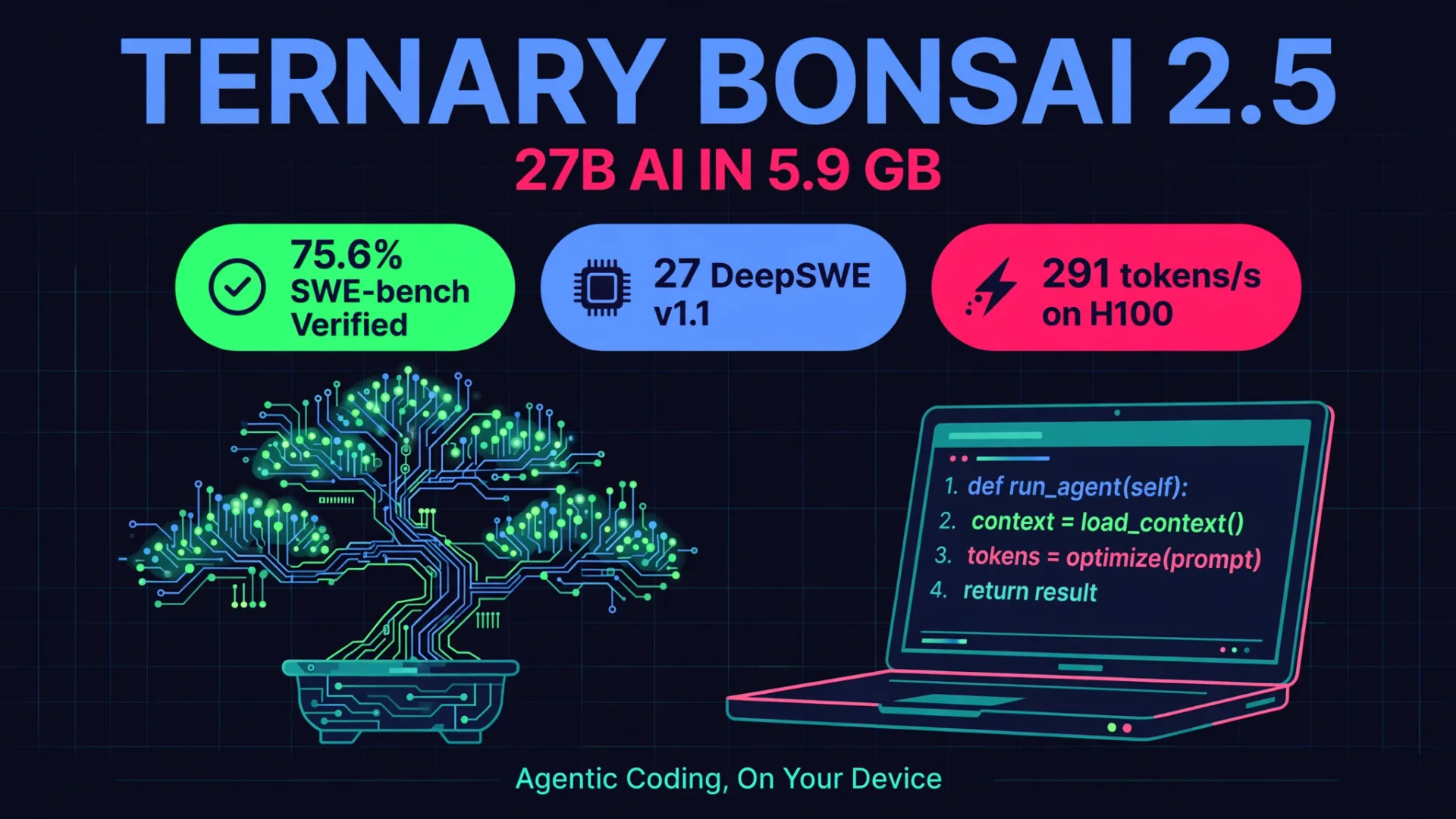
PrismML released Ternary Bonsai 2.5 27B on November 24, 2026, and it is the most practical small coding model of the month. It takes Alibaba's Qwen3.8 27B and compresses it with ternary weights, where every weight is only -1, 0, or 1. The result fits in 5.9 GB, runs on a laptop or a single consumer GPU, and still scores 75.6% on SWE-bench Verified. That is within 5 points of the full-precision base model, which needs roughly 9x the memory.
This is not a toy demo model. PrismML built it for real agentic work: long sequences of tool calls, reading private files, fixing bugs, and running multi-step tasks entirely on your own device. In one demo, it made 180 offline tool calls to reproduce and fix a pytest regression, from root-cause analysis to patch and tests.
Quick verdict
| Question | Short answer |
|---|---|
| What is it? | A 27B agentic coding model compressed to 5.9 GB with ternary weights |
| Based on | Qwen3.8 27B |
| Best score | 75.6% on SWE-bench Verified, 27 on DeepSWE v1.1 |
| Price | Free, Apache 2.0 open weights |
| Runs on | NVIDIA and Intel GPUs via llama.cpp, Mac, iPhone and iPad via MLX |
| Who should care | Developers who want a private coding agent on local hardware |
What changed since Bonsai 2
Bonsai 2 launched in September 2026 with the same 5.9 GB footprint, but it had two real problems: excessive thinking and repetitive loops that burned tokens and derailed long tasks. Bonsai 2.5 targets exactly that. According to PrismML, it completes tasks in fewer turns, uses fewer tokens, and delivers results faster and more accurately.
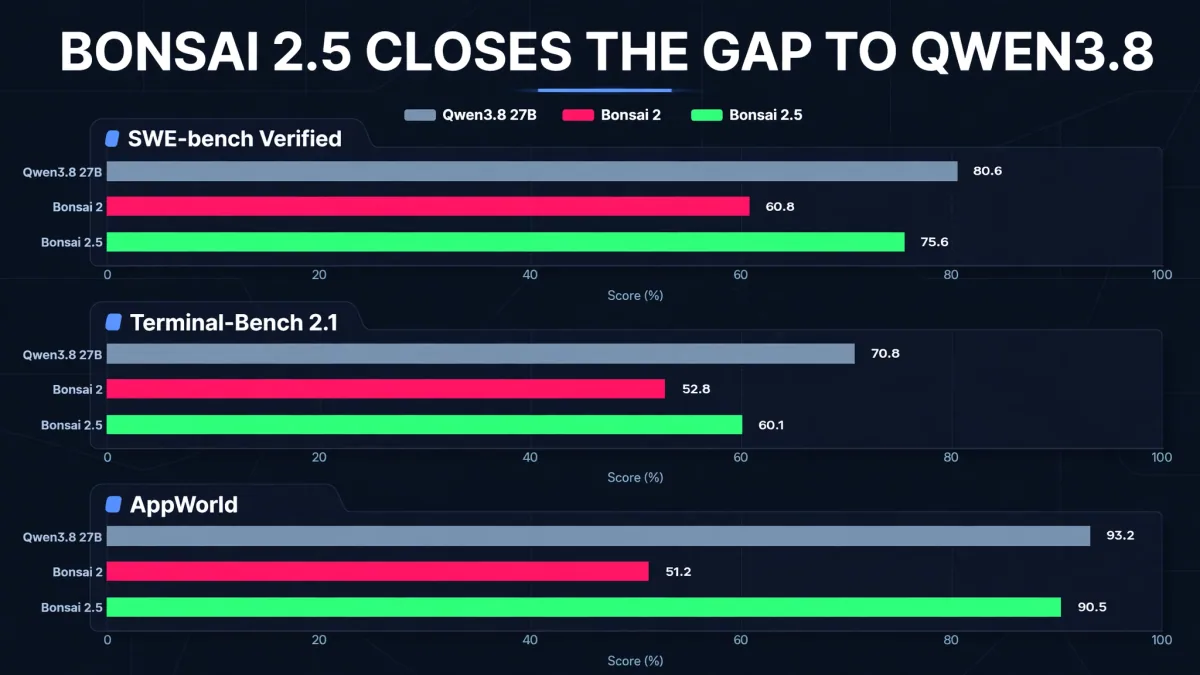
The numbers back it up. The jump from Bonsai 2 to Bonsai 2.5 is the story of this release:
- SWE-bench Verified: 60.8% to 75.6%, a gain of 14.8 points
- DeepSWE v1.1: 0 to 27, where the old model could not finish a single task
- AppWorld: 51.2 to 90.5, nearly matching the full-precision base model at 93.2
- Terminal-Bench 2.1: 52.8 to 60.1
Agentic workflows punish small errors because they compound across tool calls. That is why the DeepSWE jump from 0 to 27 matters more than any single coding benchmark. A model that scores well on one-shot code but collapses after ten tool calls is useless as an agent. Bonsai 2.5 holds together across long task chains, which is the whole point of the release.
Benchmarks: Bonsai 2.5 vs Qwen3.8 vs Bonsai 2
All scores below are vendor-reported by PrismML in its November 24 announcement, measured against the full-precision Qwen3.8 27B base model and the previous Bonsai 2 release.
| Benchmark | Qwen3.8 27B (full precision) | Bonsai 2 27B | Bonsai 2.5 27B |
|---|---|---|---|
| SWE-bench Verified | 80.6 | 60.8 | 75.6 |
| DeepSWE v1.1 | 30.1 | 0 | 27 |
| Terminal-Bench 2.1 | 70.8 | 52.8 | 60.1 |
| AppWorld | 93.2 | 51.2 | 90.5 |
| Tau3-Bench | 72.8 | 69.1 | 73.9 |
| BigCodeBench | 61.5 | 57.2 | 60.3 |
| LiveCodeBench v6 | 87.6 | 83.8 | 83.0 |
Two rows deserve attention. On Tau3-Bench, Bonsai 2.5 scores 73.9, actually beating the full-precision base model at 72.8. On LiveCodeBench v6 it slips slightly to 83.0 from 83.8, so the compression is not free everywhere. But the overall picture is clear: you keep roughly 94% of the base model's SWE-bench performance in about one-ninth of the memory.
Speed: fast enough to feel instant
Small models are only useful if they are fast, and Bonsai 2.5 is quick on both datacenter and consumer hardware. PrismML reports these speeds with multi-token prediction (MTP) enabled:
| Hardware | Generation speed | Prompt processing |
|---|---|---|
| NVIDIA H100 | 291 tokens/s | 3,200 tokens/s on a 2,000-token prompt |
| Consumer RTX 4090 | 204 tokens/s | About 3,060 tokens/s |
At 204 tokens per second on a single RTX 4090, a coding agent can read a file, reason, and write a patch without the wait that kills local-agent workflows. That is the practical payoff of the 5.9 GB size: the model fits easily in VRAM with room left for a long context window.
Price and availability
| Item | Detail |
|---|---|
| Model weights | Free, Apache 2.0 license |
| Download size | 5.9 GB |
| Hardware | NVIDIA and Intel GPUs via llama.cpp, Apple devices via MLX |
| API cost | None, you host it yourself |
| Release date | November 24, 2026 |
There is no API price because there is no hosted API to pay for. You download the weights and run them locally, which also means your code and documents never leave your machine. For teams working with private repositories or sensitive documents, that is the real feature, not a side benefit.
PrismML is a small team of Caltech researchers backed by Khosla Ventures, Cerberus, and Google, with continuing support from Samsung. Their whole focus is compressing neural networks without breaking reasoning, and Bonsai 2.5 is their strongest result yet at this size.
Which to pick: Bonsai 2.5, the full Qwen3.8, or a bigger model
Pick Bonsai 2.5 if you want a coding agent on your own machine. It runs on a laptop or one consumer GPU, costs nothing, keeps your code private, and handles long multi-step tasks. It is the right choice for local dev assistants, private-repo agents, and offline work.
Pick the full-precision Qwen3.8 27B if you have the GPU memory to spare and need the last few benchmark points, for example 80.6% instead of 75.6% on SWE-bench Verified. You pay roughly 9x the memory for about 5 extra points, so this only makes sense on a workstation or server with VRAM to burn.
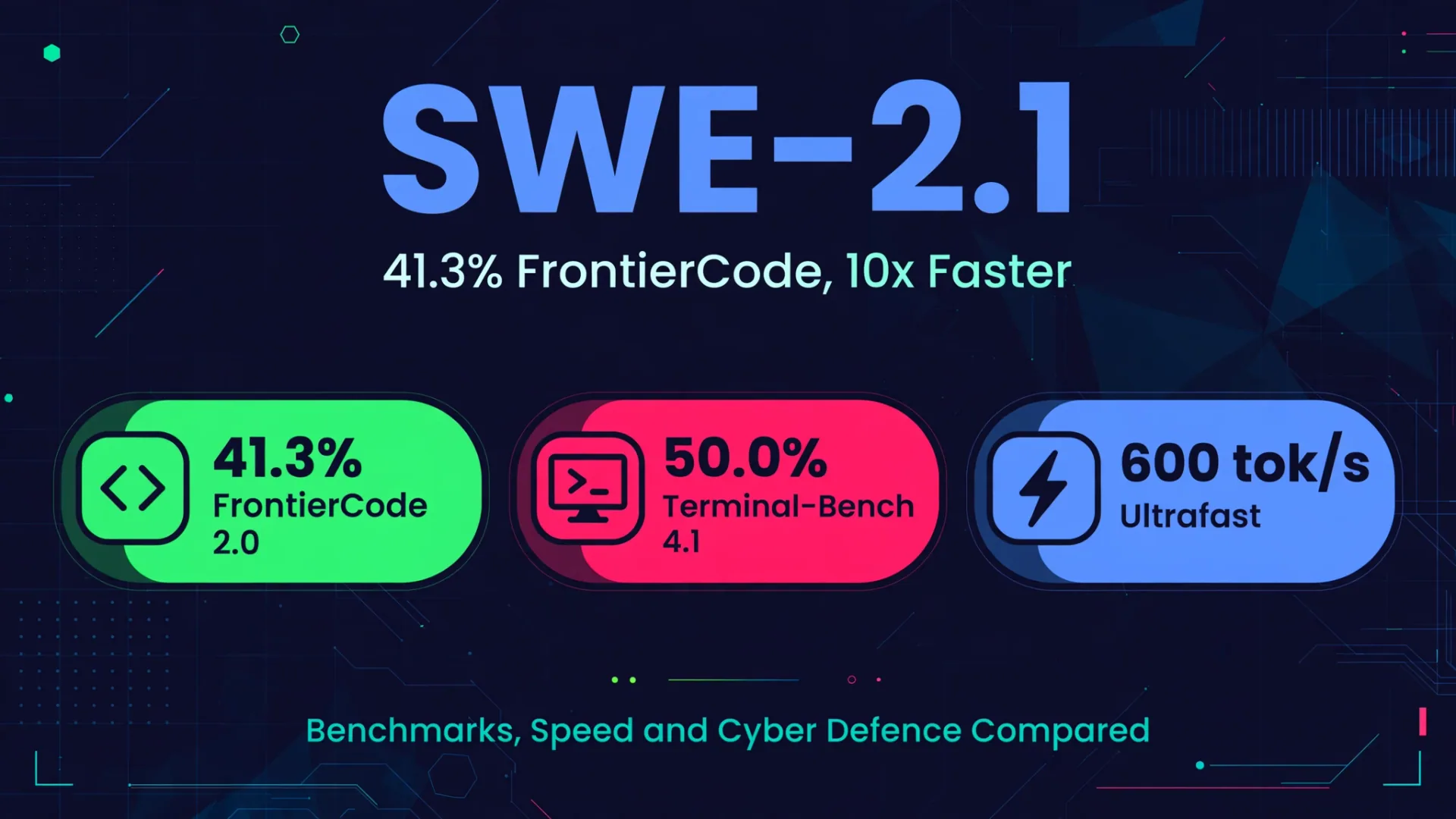
Pick a bigger frontier model if you need maximum reasoning on the hardest problems and do not mind sending code to a cloud API. Models like SWE-2.1 or Gemini 4 Neon still lead on raw coding scores, but they cost money per token and your code leaves your machine.
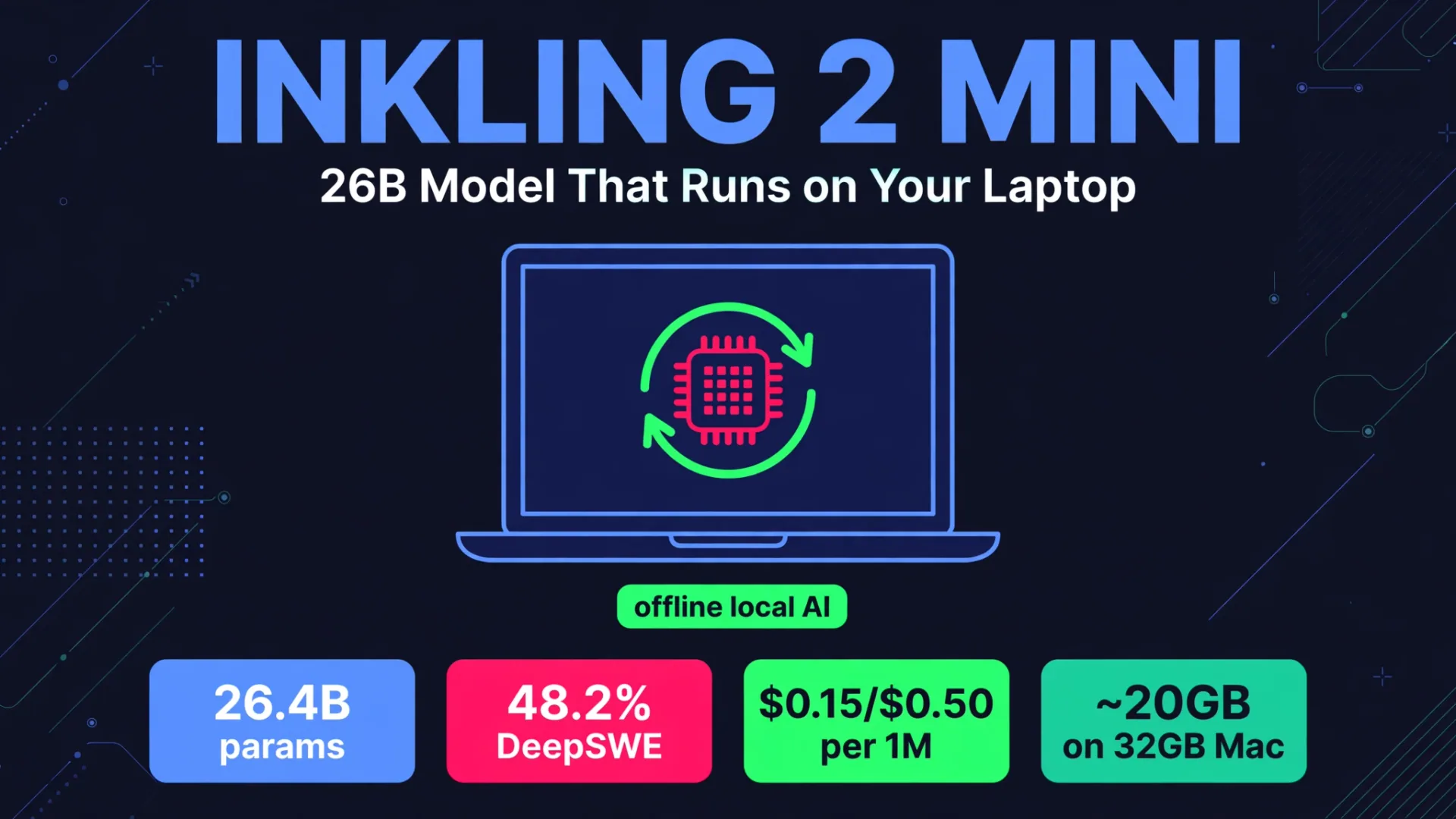
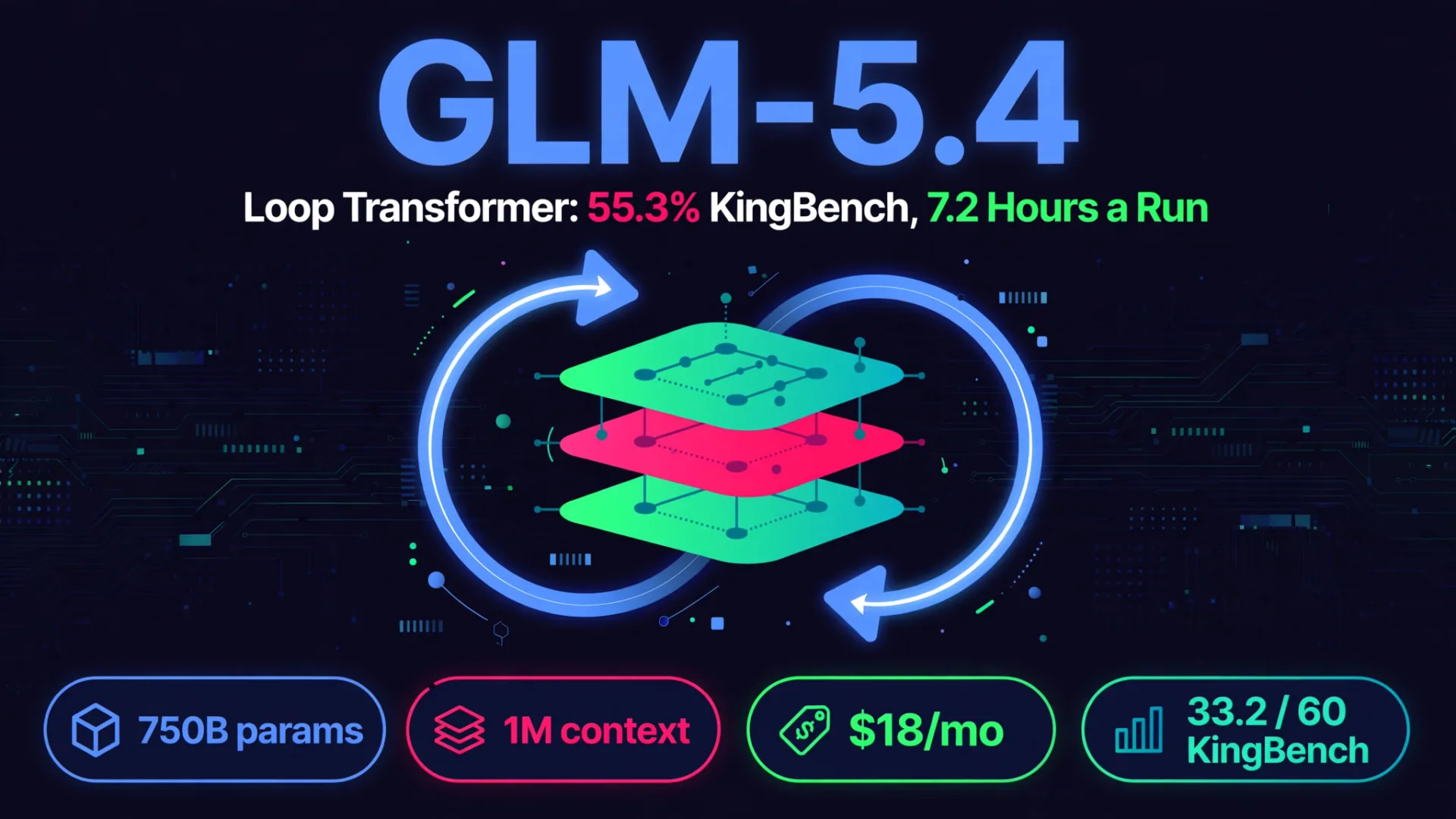
For most developers, Bonsai 2.5 is the sweet spot: near-frontier agentic coding at zero running cost, on hardware you already own. If you want another tiny model that runs locally, see Inkling 2 Mini: 26B Model That Runs on Your Laptop. For a budget open-weight comparison, Sarvam-105B costs $0.15 per million tokens, and GLM-5.4 shows what a 750B flagship looks like.
FAQ
What is Ternary Bonsai 2.5 27B?
It is a 27-billion-parameter AI model from PrismML, released November 24, 2026, built on Qwen3.8 27B. Its weights are compressed to ternary values (-1, 0, 1), so the whole model fits in 5.9 GB while keeping most of the base model's coding and agentic ability.
How good is Bonsai 2.5 at coding?
Vendor-reported scores: 75.6% on SWE-bench Verified, 27 on DeepSWE v1.1, 60.1 on Terminal-Bench 2.1, and 90.5 on AppWorld. That puts it within about 5 points of the full-precision Qwen3.8 27B on SWE-bench, and ahead of it on Tau3-Bench at 73.9.
Can Bonsai 2.5 run on a laptop?
Yes. The 5.9 GB model runs on Apple devices via MLX, and on NVIDIA and Intel GPUs via llama.cpp. On a consumer RTX 4090 it generates 204 tokens per second, fast enough for interactive agentic coding.
Is Ternary Bonsai 2.5 free?
Yes. The weights are available under the Apache 2.0 license, so you can download and use them commercially at no cost. There is no API fee because you run it yourself.
What is the difference between Bonsai 2 and Bonsai 2.5?
Same 5.9 GB size, much stronger agent behavior. Bonsai 2.5 fixes the excessive thinking and repetitive loops of Bonsai 2, jumping from 60.8% to 75.6% on SWE-bench Verified and from 0 to 27 on DeepSWE v1.1.
Where can I download Bonsai 2.5?
PrismML publishes the weights with its announcement at prismml.com, under the Apache 2.0 license. Full technical details are in the whitepaper linked from the announcement.
Sources: PrismML announcement, November 24, 2026; GIGAZINE, November 25, 2026. Benchmark figures are vendor-reported by PrismML.
- Ternary Bonsai 2.5
- PrismML
- Qwen3.8
- AI coding agents
- open-weight AI
- local AI