AI News5 min readBy JH Akash
Edge0-145B: 145B AI Runs on One RTX 5090
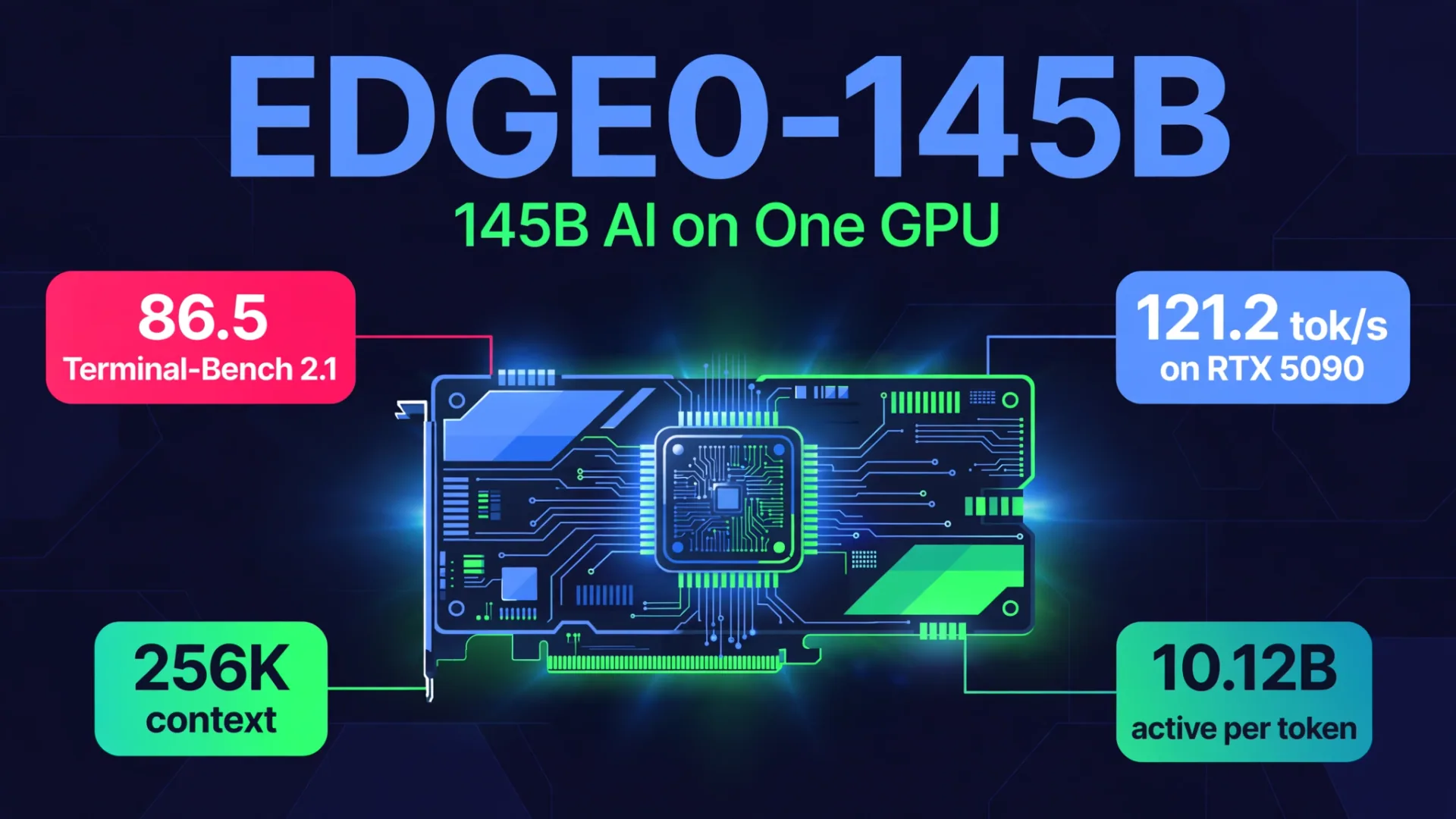
Edge0-145B packs 145B parameters onto a single RTX 5090, scoring 86.5 on Terminal-Bench 2.1. Here are the benchmarks, speed, price and the catches.
Edge0-145B: 145B AI Runs on One RTX 5090
On November 12, 2026, Edge0 released Edge0-145B, a 145-billion-parameter AI model that runs on a single consumer graphics card. The weights landed on Hugging Face on November 11, the official blog post followed on November 12, and by November 14 the model had already passed 61,000 downloads, with 11,379 stars on GitHub.
The headline claim is simple: frontier-class AI, on your own computer, with no cloud bill. Here is what the model actually is, what the numbers say, and where the fine print hides.
What Edge0-145B is
Edge0-145B is a latent sparse mixture-of-experts model. It has 145 billion total parameters, but only 10.12 billion are active for each token, which is why it fits on one GPU at all. The architecture uses 48 layers and 512 experts per layer, with 10 routed experts plus 1 shared expert active per token. It was trained natively at 4-bit precision and ships with a 256K-token context window.
| Spec | Edge0-145B |
|---|---|
| Total parameters | 145B |
| Active per token | 10.12B |
| Architecture | Latent sparse MoE, 48 layers, 512 experts |
| Context window | 256K tokens |
| Training precision | Native 4-bit |
| Weights | Q3_K 40.81 GiB, NVFP4 47.79 GiB |
| Base model | Qwen3.8-Flash-Next (per Hugging Face metadata) |
| License | Edge0 Community Model License 1.0 |
| Released | November 12, 2026 |
A smaller sibling, Edge0-120B, launched the same day with 120B total parameters and 8.64B active per token.
The speed numbers
Edge0 reports these decode speeds from its own testing, so treat them as vendor-reported until independent runs exist.
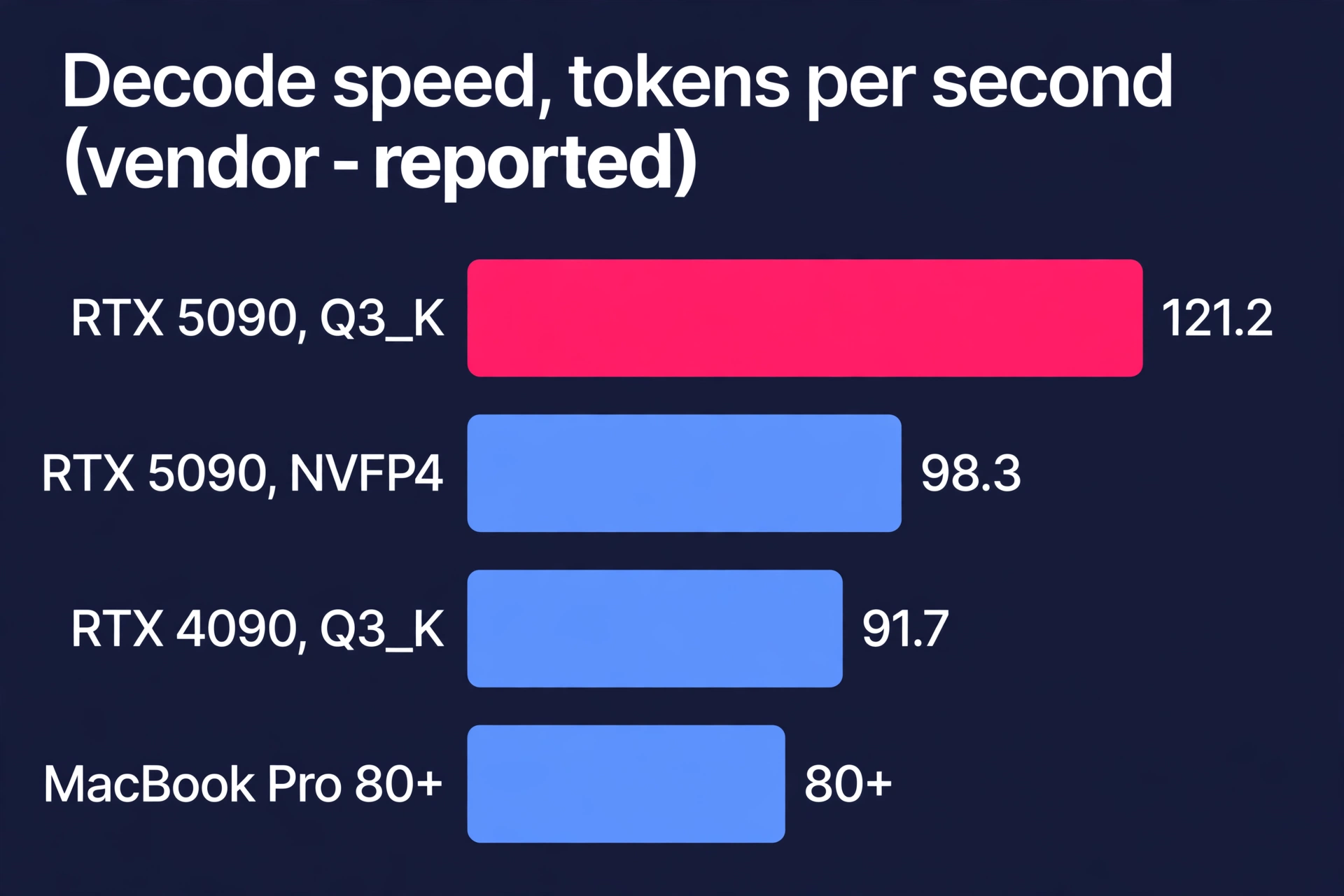
On an RTX 5090 D with 24 GB of memory, the Q3K build decodes at 121.2 tokens per second with 3,554.9 tokens per second on 16K-token prefill. The NVFP4 build runs at 98.3 tokens per second decode and 3,165.7 tokens per second prefill. The same Q3K build hits 91.7 tokens per second on an RTX 4090. On a MacBook Pro, Edge0 reports more than 1,100 tokens per second prefill and more than 80 tokens per second decode, at about 120W typical power, with 128K to 256K context at nearly the same speed.
Day-one support covers macOS, Windows and Linux on Apple M-series laptops and RTX Spark, RTX 4090 and RTX 5090 GPUs.
The benchmark numbers
Every score below comes from Edge0's own internal evaluations. The company says a technical report with full setup and reproduction instructions is still coming, so read these as claims, not settled measurements.
| Benchmark | Edge0-145B | Closest comparison |
|---|---|---|
| DeepSWE 1.1 | 64.6 | Qwen3.8-Flash-Next 58.7, DeepSeek-V4-Flash 54.4 |
| Terminal-Bench 2.1 | 86.52 | Qwen3.8-Flash-Next 83.3, DeepSeek-V4-Flash 82.7, Claude Opus 4.6 Max 78.2 |
| GPQA-Diamond | 90.4 | DeepSeek-V4-Flash 90.8, Claude Opus 4.6 Max 91.3 |
| IFBench | 80.6 | - |
| HLE | 35.4 | - |
| AA-LCR | 79.3 | - |
| Six-benchmark mean | 72.8 | Qwen3.8-Flash-Next 71.7 |
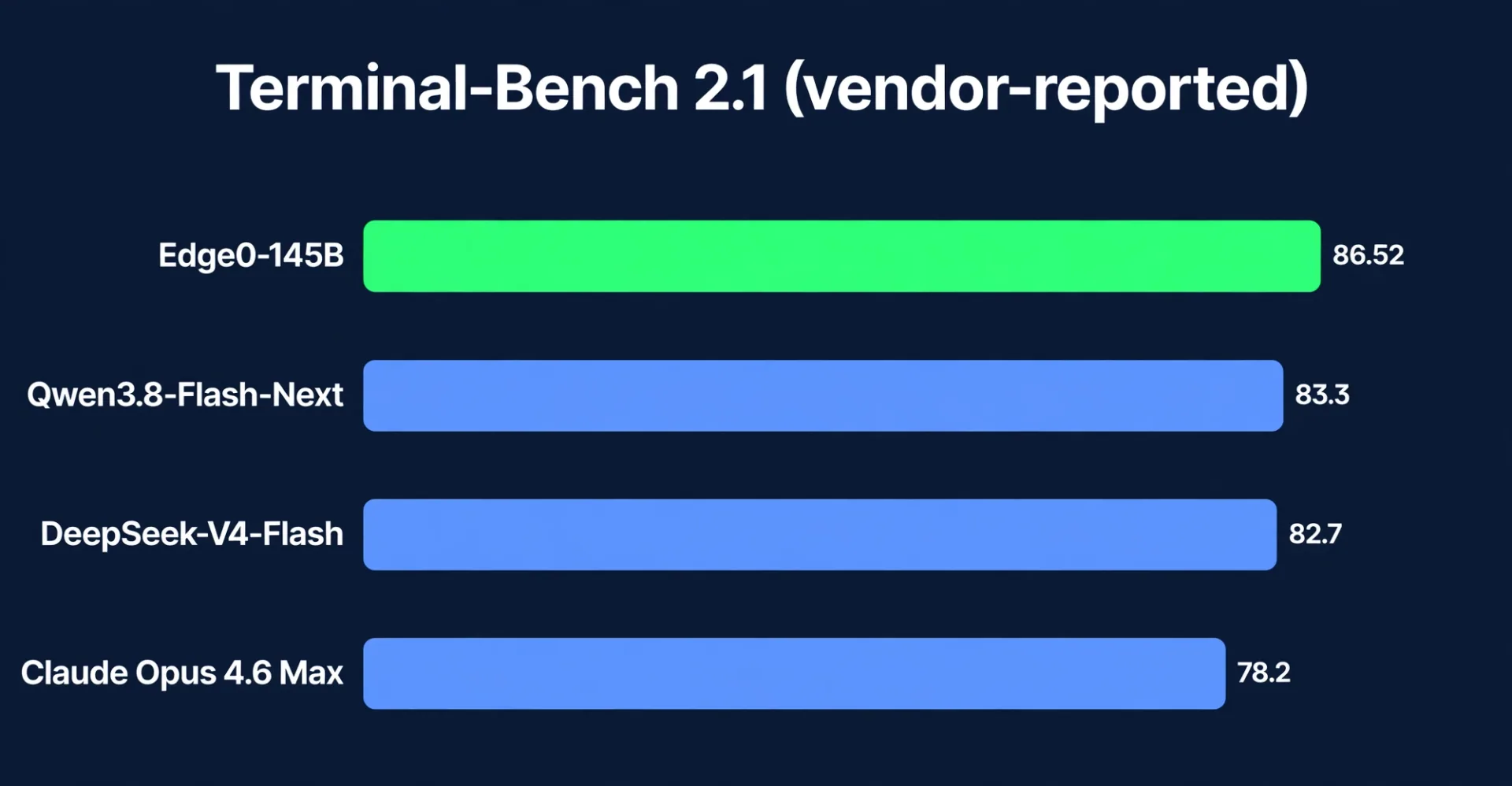
The Terminal-Bench 2.1 result is the eye-catcher: 86.52 against 78.2 for Claude Opus 4.6 in its Max configuration. But notice the GPQA-Diamond column, where Edge0 trails both DeepSeek-V4-Flash and Claude Opus 4.6. No single benchmark decides a model, and cross-benchmark "winners" do not exist. Test it on your own tasks.
What it costs
| Option | Price |
|---|---|
| Edge0-145B weights | Free to download |
| Edge0 inference framework | Apache 2.0, free |
| Your cost | One GPU, electricity, and your time |
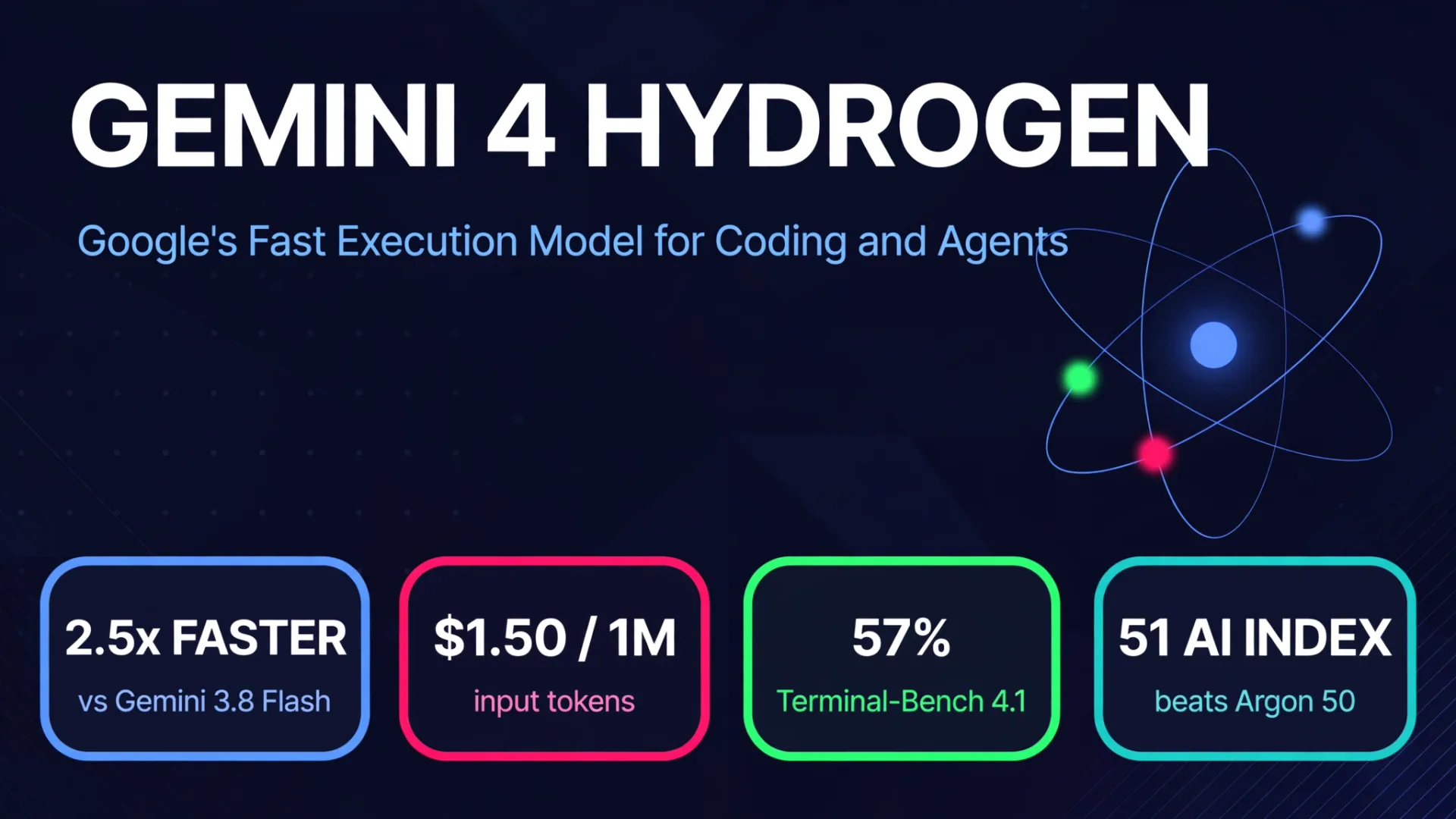
| Gemini 4 Hydrogen API | $1.50 per 1M input tokens |
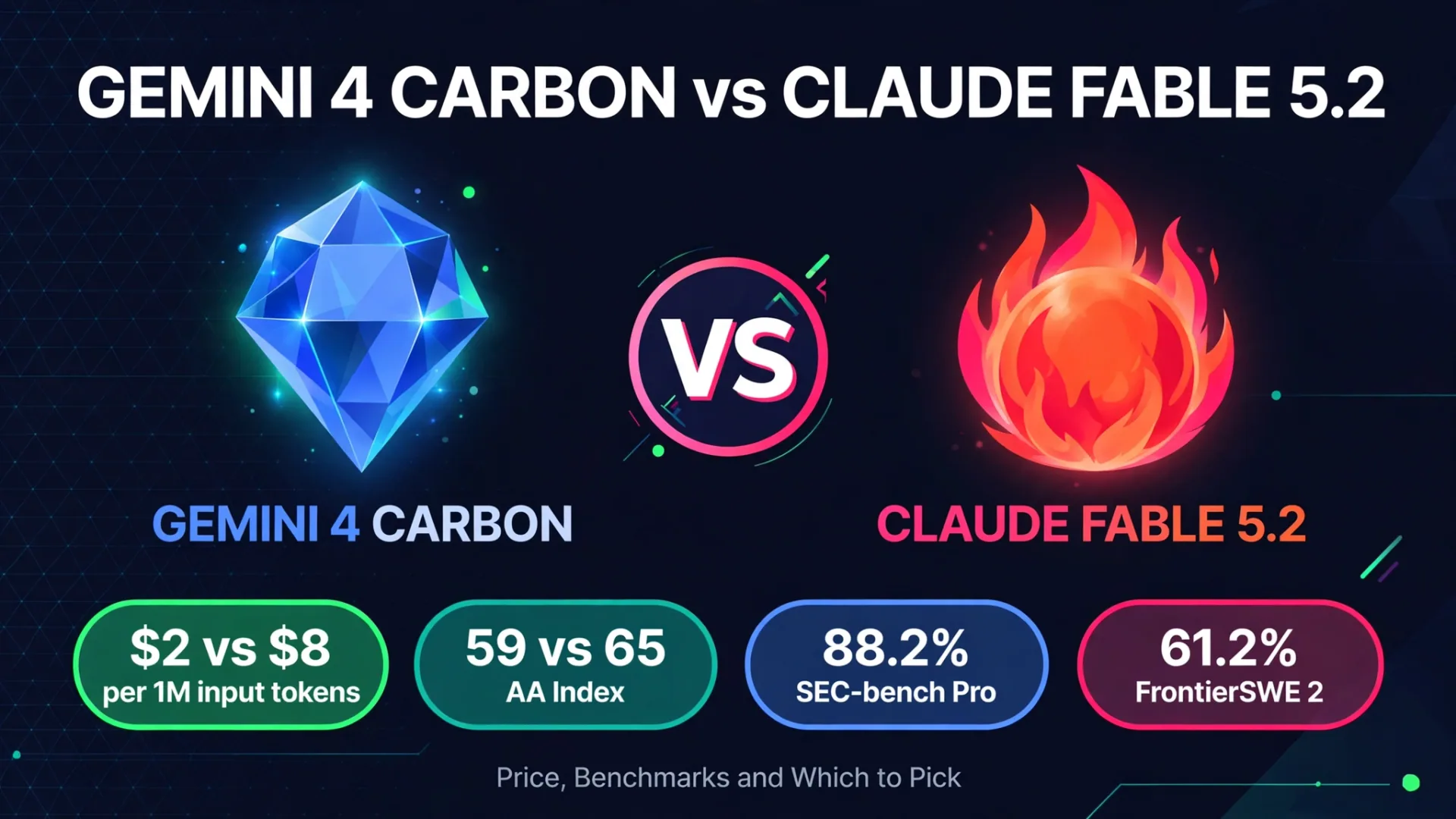
| Claude Fable 5.2 API | $8 per 1M input, $40 per 1M output tokens |
There is no per-token bill with Edge0-145B. The trade is different: you pay in hardware and setup time instead of API fees, and your data stays on your own machine. For teams building automation on their own hardware, that trade is the whole point. If you want to see how cloud pricing compares, our Gemini 4 Hydrogen breakdown covers Google's $1.50 per 1M token model, and the Anthropic IPO story shows how much investors now value the company behind Claude.
The catches
Three things to know before you download.
The 29 GB headline needs context. Edge0 says the model runs with 29 GB peak memory on a laptop, but the Hugging Face model card measures about 61.5 GiB in total for the NVFP4 build: 23.25 GiB of video memory plus 38.27 GiB of system RAM. The 29 GB figure is GPU memory only. Make sure your machine has the RAM to match.
It is open-weight, not open-source. The weights sit under the Edge0 Community Model License 1.0, which reserves some uses, like selling, renting or licensing the weights and running a model service, for a separate written license. The inference framework code is Apache 2.0, but the weights are not. Read the license before building a commercial product on it.
It is built on Qwen. The Hugging Face metadata names Alibaba's Qwen3.8-Flash-Next as the base model, and the release is a derivative of that model. Edge0's own blog does not name Qwen. That matters if your compliance rules care about model lineage.
Which to pick
Pick Edge0-145B if you have a 24 GB GPU or a strong Apple Silicon laptop, you want your data to stay local, and you run agents or coding workloads where a per-token cloud bill would hurt. Pull the NVFP4 or Q3_K build, run your actual workflows, and compare against your current stack on quality, latency and electricity cost.
Stick with a cloud model if you need a managed API, guaranteed uptime, or a model with independent benchmark verification. The technical report for Edge0-145B is still pending, and no independent lab has reproduced the headline scores yet.
Wait and watch if you are deciding between Edge0-145B and its sibling. Edge0-120B is smaller and cheaper to run, and the first wave of independent tests will tell us which one holds up. For a broader look at the build-versus-buy decision, see Custom AI vs Off-the-Shelf AI: 76% Buy First.
FAQ
Is Edge0-145B really free?
The weights are free to download from Hugging Face, and the inference framework is Apache 2.0. You still pay for the GPU, electricity and setup time, and some commercial uses need a separate license under the Edge0 Community Model License 1.0.
Can Edge0-145B run on a laptop?
Edge0 says yes: on a MacBook Pro it reports more than 80 tokens per second decode with 29 GB peak GPU memory. The full measured footprint is about 61.5 GiB including system RAM, so a well-specced laptop is needed.
How fast is Edge0-145B on an RTX 5090?
Edge0 reports 121.2 tokens per second decode with the Q3_K build and 98.3 tokens per second with the NVFP4 build, both vendor-reported figures from the company's own testing.
Is Edge0-145B better than Claude Opus 4.6?
On Terminal-Bench 2.1, Edge0 reports 86.52 against 78.2 for Claude Opus 4.6 Max. On GPQA-Diamond, Claude leads 91.3 to 90.4. The scores are vendor-reported and no independent verification exists yet, so there is no settled winner.
Where can I download Edge0-145B?
The weights are on Hugging Face under Edge0/Edge0-145B-q3k and Edge0-145B-NVFP4, and the inference framework and deployment tools are on GitHub under Edge0-AI/Edge0.
What is the difference between Edge0-145B and Edge0-120B?
Edge0-145B has 145B total parameters with 10.12B active per token; Edge0-120B has 120B total with 8.64B active. Both launched November 12, 2026, and the 120B model is the lighter, cheaper-to-run option.
- Edge0-145B
- open source AI
- local AI
- RTX 5090
- AI benchmarks