AI News8 min readBy JH Akash
Gemini 4 Hydrogen: 2.5x Faster, $1.50 Per 1M
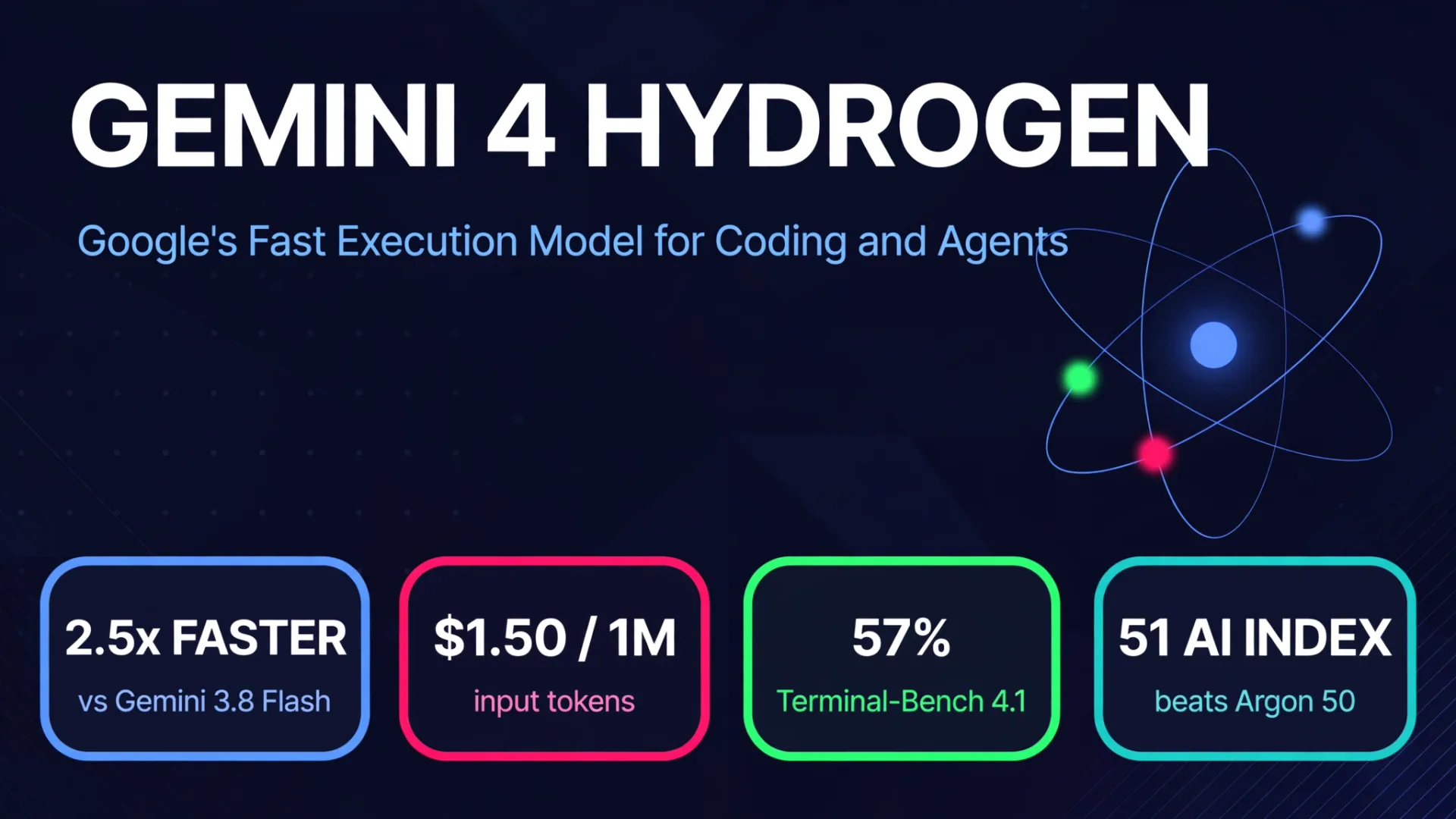
Google's Gemini 4 Hydrogen is 2.5x faster than Gemini 3.8 Flash, scores 57% on Terminal-Bench 4.1, and costs $1.50 per 1M input tokens. Here is the full breakdown.
Google launched Gemini 4 Hydrogen on November 12, 2026, and it is the third member of the Gemini 4 family to arrive in under two weeks. Where Carbon is the heavy reasoner and Argon is the frontier thinker, Hydrogen is the worker: a fast execution model built for everyday coding, debugging, and agentic workflows. It is also the first Gemini 4 model that free users can actually try.
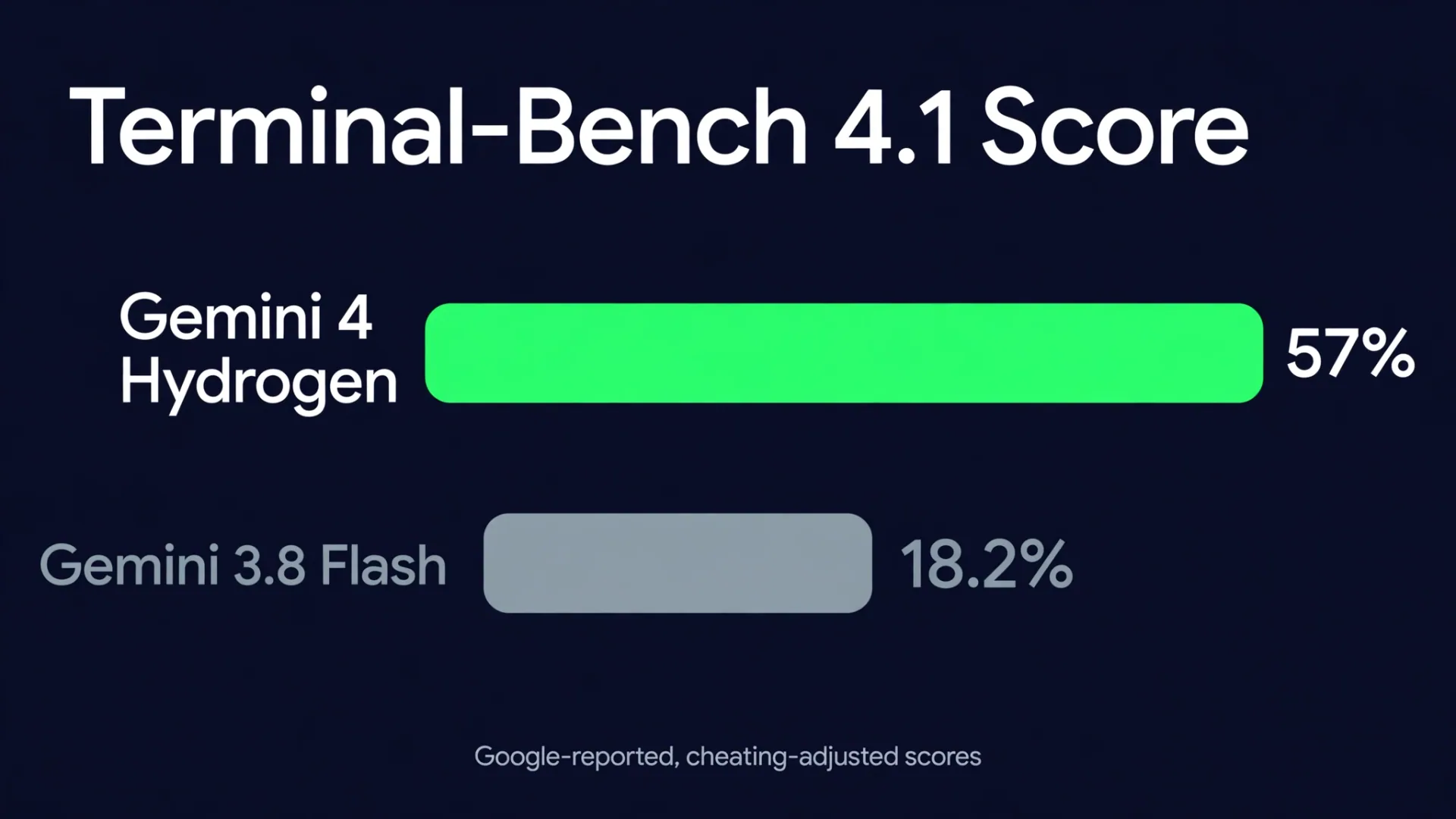
The headline numbers are striking. Google says Hydrogen finishes tasks 2.5 times faster than Gemini 3.8 Flash, scores 57% on Terminal-Bench 4.1 against Flash's 18.2%, and even edges past the bigger Argon on the Artificial Analysis Intelligence Index. All of that at $1.50 per million input tokens, with a free API tier included. Here is the full breakdown, with every benchmark marked as vendor-reported where it comes from Google.
Gemini 4 Hydrogen at a glance
| Fact | Detail |
|---|---|
| Launch date | November 12, 2026 |
| Role | Fast execution model for coding and agents |
| Input price | $1.50 per 1M tokens |
| Output price | $7.50 per 1M tokens |
| Context window | 1M tokens (shared input, thinking, and output) |
| Thinking levels | low, medium, high (default), xhigh |
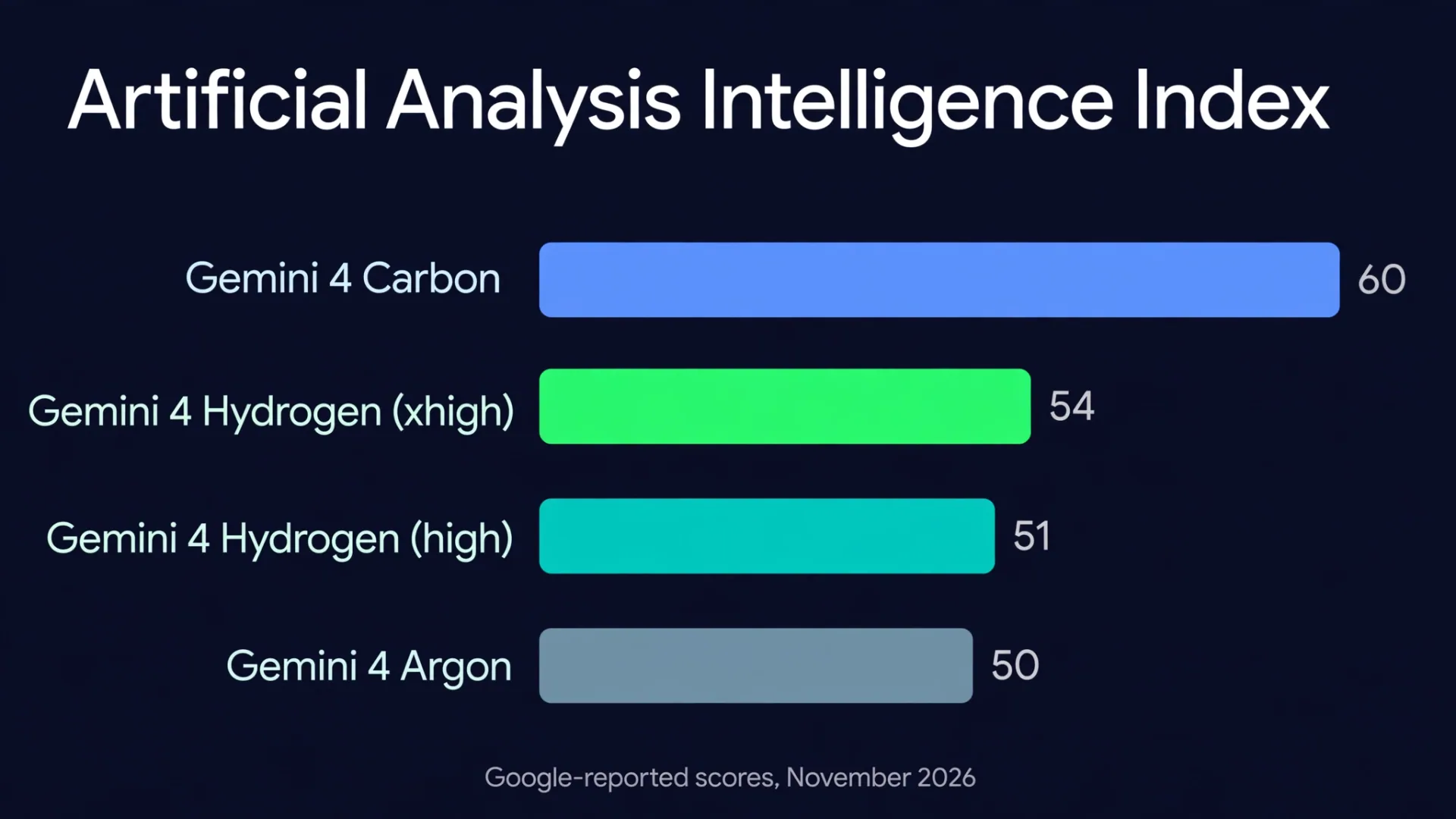
| AI Index (high) | 51, one point above Argon |
| AI Index (xhigh) | 54 |
| Terminal-Bench 4.1 | 57% vs 18.2% for Gemini 3.8 Flash |
| Free API tier | Yes, unlike Carbon |
| Knowledge cutoff | March 2026 |
Hydrogen vs Carbon vs Argon: the Gemini 4 family
Google now has three Gemini 4 models, and they are not three sizes of the same thing. They are three jobs. Carbon plans and reasons over long horizons, Argon handles frontier reasoning, and Hydrogen executes fast. Google's own framing is that Carbon and Argon do the long-horizon thinking while Hydrogen does the rapid execution.
| Model | Role | AI Index | Input price per 1M |
|---|---|---|---|
| Gemini 4 Carbon | Long-horizon engineering and security | 60 | $2.00 |
| Gemini 4 Hydrogen (xhigh) | Fast execution, max thinking | 54 | $1.50 |
| Gemini 4 Hydrogen (high) | Fast execution, default thinking | 51 | $1.50 |
| Gemini 4 Argon | Frontier reasoning | 50 | Not stated |
Hydrogen beating Argon by a point on the Intelligence Index at default settings is the surprise of this launch. Argon launched only about four weeks earlier as the bigger frontier model. Hydrogen also sits close to Claude Sonnet 5.5 and GPT-6.1 Sol on the same index at xhigh, while Artificial Analysis puts its cost per task at about $1.87 at high thinking and $3.16 at xhigh, roughly a third of what Claude Sonnet 5.5 (max) costs at a similar intelligence level.
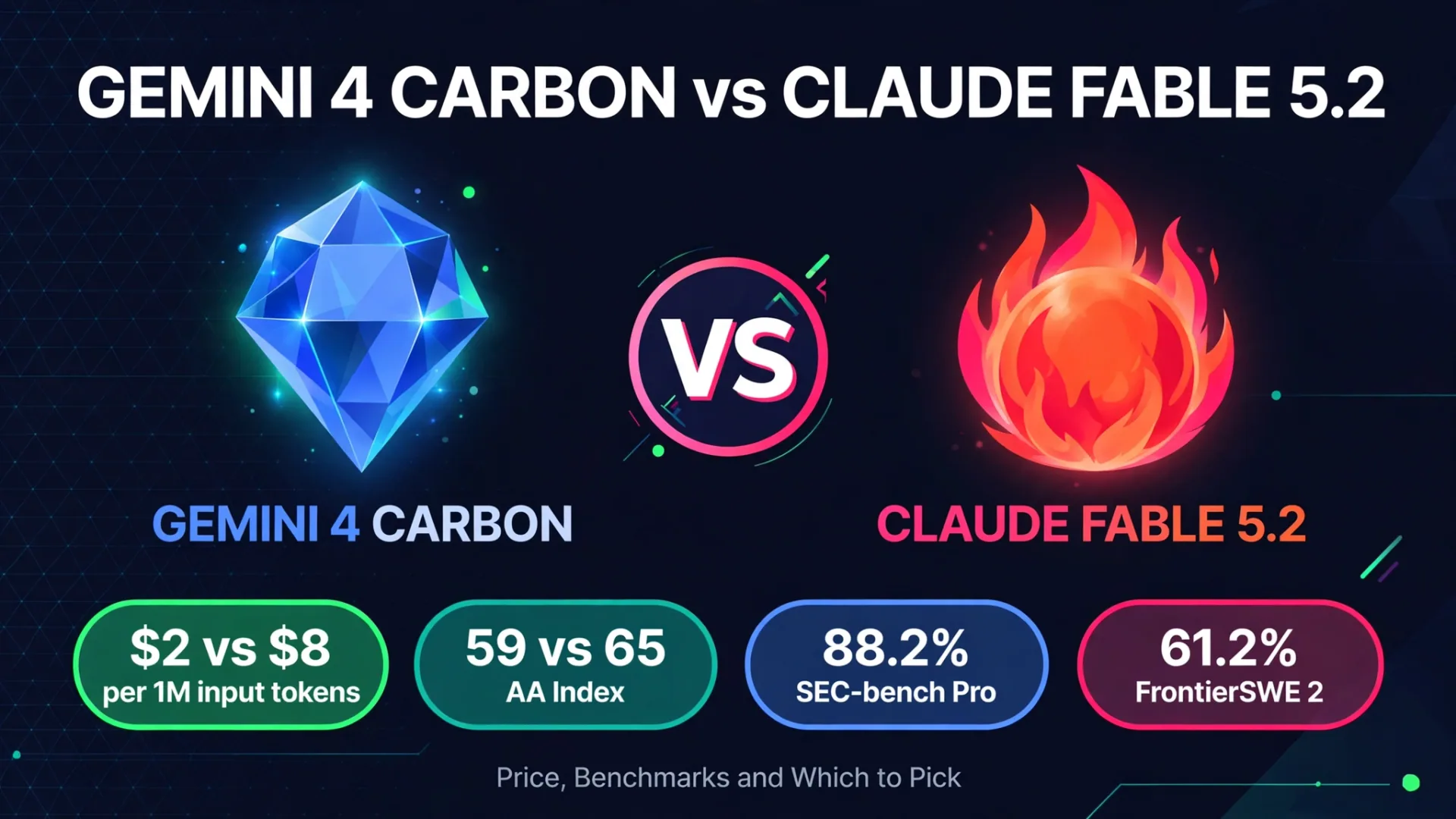
If you want the Carbon side of the family, read our Gemini 4 Carbon vs Claude Fable 5.2 comparison, where Carbon's $2 input price meets Claude's $8.
Benchmarks: where Hydrogen wins, and where it does not
Google's reported numbers are strong, but they are Google's numbers, and the model card itself notes that non-Gemini comparisons use providers' self-reported figures unless stated otherwise. Treat this table as a vendor-reported snapshot, not an independent verdict.
| Benchmark | Gemini 4 Hydrogen | What it means |
|---|---|---|
| Terminal-Bench 4.1 | 57% (Flash: 18.2%) | Terminal coding tasks, more than 3x Flash |
| Terminal-Bench 4.0 | 54% | Weaker than Carbon's 65.2% here |
| Artificial Analysis Intelligence Index | 51 (high), 54 (xhigh) | Above Argon (50), below Carbon (60) |
| HLE-Diamond | 58.8% | Leads its class on hard reasoning |
| Vals Tax Agent Bench | 52.3% | Ranked 1st of 85 models |
| Vals Legal Research Bench | 55.8% | Tied for 1st overall |
| Multimodal Knowledge Agent | 53.4% | Long documents, spreadsheets, video |
| Agents' Last Exam v1.1 | 71.6% | Long-horizon agent tasks |
| Terminal-Bench-Science 0.1 | 51.4% | Below Carbon's 64.8% |
Two caveats matter. First, on Terminal-Bench 4.0 and Terminal-Bench-Science, Hydrogen trails Carbon clearly, so the 4.1 headline does not mean it beats Carbon at terminal work. Second, Google says partners testing complex graphs, SQL, and data-heavy enterprise workflows saw Hydrogen run 2x to 2.8x faster with 12% to 23% lower token usage than 3.8 Flash, which is a partner result, not a public benchmark.
Pricing: $1.50 in, $7.50 out, flat across 1M tokens
| Model | Input per 1M | Output per 1M | Notes |
|---|---|---|---|
| Gemini 4 Hydrogen | $1.50 | $7.50 | Free API tier available; cache hits $0.075 |
| Gemini 3.8 Flash | $0.75 | $3.75 | Until Dec 31, 2026, then rises to $1.50/$7.50 |
| Gemini 4 Carbon | $2.00 | Not stated | Paid tier only, no free tier |
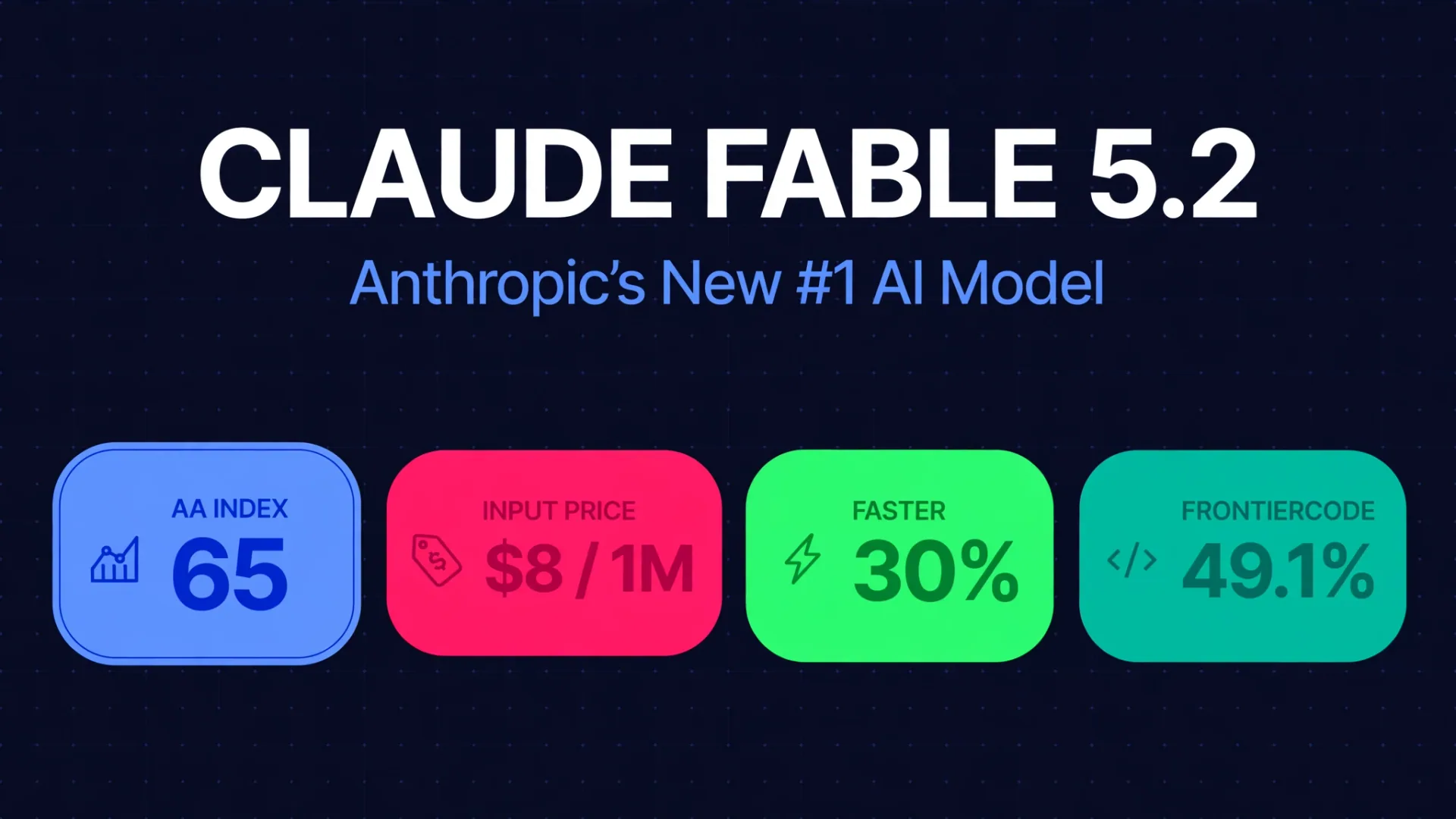
| Claude Fable 5.2 | $8.00 | Not stated | Anthropic flagship, Nov 9 launch |
The pricing is flat across the whole 1-million-token window, which is unusual. There is no long-context surcharge. Cached input costs just $0.075 per million tokens.
The catch is the Flash price rise. Gemini 3.8 Flash costs $0.75/$3.75 today, half of Hydrogen, but Google raises Flash to exactly Hydrogen's $1.50/$7.50 on January 1, 2027. After that date there is no price reason left to stay on Flash, and Hydrogen is the better model on every benchmark Google published. If you run Flash in production, plan the switch before the new year.
The four thinking levels are the real cost control. Artificial Analysis puts the cost per task at about $0.80 on low thinking, $1.87 on high, and $3.16 on xhigh. Pick the level per job instead of paying for maximum reasoning on every call.
The Antigravity Orchestrator: Carbon plans, Hydrogen executes
Hydrogen's most interesting feature is not the model alone, it is how Google pairs it with Carbon in Antigravity's new Orchestrator. Carbon starts in a read-only phase, explores dependencies, resolves ambiguities, and builds a concrete plan with explicit re-planning triggers. Hydrogen then takes over to write edits, update packages, and run tests. If Hydrogen hits friction, it hands back to Carbon to inspect the state, repair the plan, and resume execution.
Google says Orchestrator reached near-Carbon task success on Terminal-Bench 4.0 while using 24% less quota and finishing 19% faster on average. That is the multi-model routing idea made concrete: pay frontier prices only for the planning step, and let the fast model do the volume work. Tens of thousands of swarms have already launched on Antigravity since Carbon and the swarm feature debuted, according to Google.
Safety and reliability: built for agents that touch real systems
Agent models that run tools need guardrails, and Google published unusual detail here. Hydrogen cuts agentic overreach by up to 81% and under-service by up to 79% versus 3.8 Flash, which means fewer cases of the model doing too much or too little on its own. It is also more than 2.3 times more resilient to indirect prompt injection on the Gray Swan IPI benchmark, where attackers plant instructions in tool output rather than in the user's prompt. Google also reports a 12x cut in misaligned actions and task shortcutting, 96.7% honesty, and 99.9% chain-of-thought legibility. All vendor-reported, but the direction is clear: this model is tuned to be supervised safely, not just to be fast.
Where to use it, and where not to
Hydrogen is available now in Google AI Studio, the Gemini API, the Gemini app, Google Search, Gemini for business, and Antigravity for paid Google AI Pro and Ultra subscribers. It is the first Gemini 4 model on the free tier, so anyone can test it without a paid plan.
Use Hydrogen when: you run coding agents, repository work, debugging, interactive web development, or high-volume multimodal workflows where latency and cost per task matter more than maximum reasoning depth. Use it as the execution worker under Carbon in Antigravity Orchestrator.
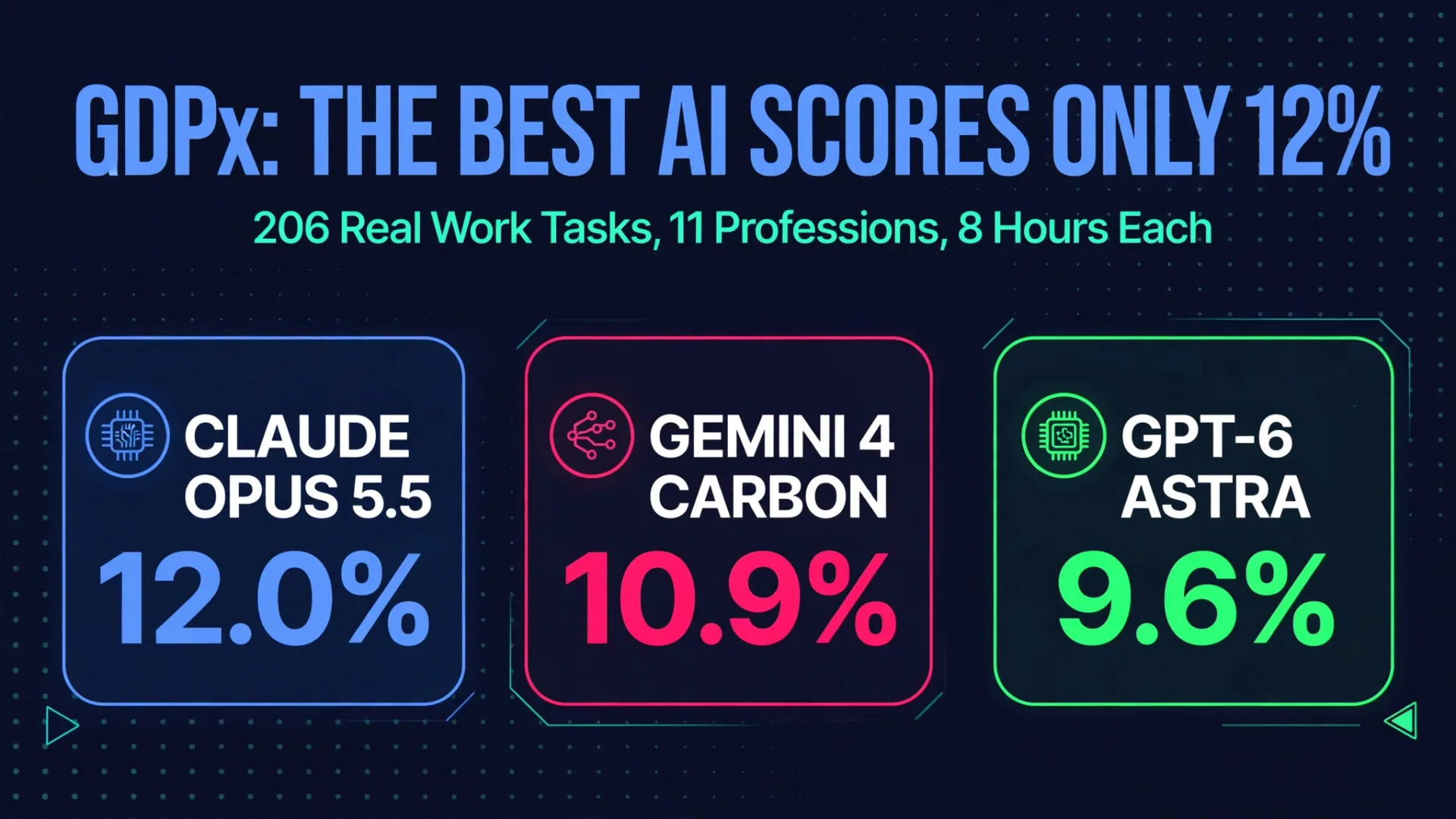
Use Carbon or Argon instead when: the task needs long-horizon planning, deep scientific reasoning, or the hardest terminal benchmarks, where Carbon's 65.2% on Terminal-Bench 4.0 and 64.8% on Terminal-Bench-Science still lead. If you need the strongest Claude option for the same kind of work, see our Claude Opus 5.5 breakdown.
For teams building production agents on top of models like this, our AI agent development services cover the eval-first workflow that keeps agents working after launch, and if you want a team to run it for you, here is how to hire an AI automation agency.
Which to pick: the short version
| Your situation | Pick |
|---|---|
| Daily coding, debugging, fast agent loops | Gemini 4 Hydrogen (high) |
| Maximum quality per task, cost is secondary | Gemini 4 Hydrogen (xhigh) or Carbon |
| Long-horizon planning and architecture | Gemini 4 Carbon, or Orchestrator |
| Still on Gemini 3.8 Flash | Switch to Hydrogen before Jan 1, 2027 |
| Just testing the Gemini 4 family | Hydrogen free tier |
FAQ
Is Gemini 4 Hydrogen free?
Partly. Hydrogen is the first Gemini 4 model with a free API tier, rate-limited, in Google AI Studio. It is also rolling out to free users in the Gemini app and Google Search. Paid API use costs $1.50 per million input tokens and $7.50 per million output tokens.
How fast is Gemini 4 Hydrogen compared to Gemini 3.8 Flash?
Google says Hydrogen finishes tasks 2.5 times faster than Gemini 3.8 Flash at its default high thinking level. On Terminal-Bench 4.1 it scores 57% against Flash's 18.2%, and Google reports it makes up facts more than five times less often. These are Google-reported figures.
What is the difference between Gemini 4 Hydrogen, Carbon, and Argon?
Carbon is the long-horizon engineering and security flagship with the highest scores (AI Index 60). Argon is the frontier reasoning model (AI Index 50). Hydrogen is the fast execution model for coding and agents (AI Index 51 at high, 54 at xhigh), adapted from Carbon, cheaper than both at $1.50 per million input tokens, and the only one with a free tier.
What are the four thinking levels in Gemini 4 Hydrogen?
Low, medium, high (the default), and a new xhigh setting. Higher thinking raises quality and cost: Artificial Analysis puts the cost per task at about $0.80 on low, $1.87 on high, and $3.16 on xhigh. Pick the level per job to control spend.
Should I switch from Gemini 3.8 Flash to Hydrogen now?
Yes, if you use Flash for coding or agents. Hydrogen beats Flash on every benchmark Google published, and Flash's price rises to match Hydrogen exactly on January 1, 2027. Test Hydrogen on the free tier first, then move production workloads before the price rise removes the reason to stay.
When did Gemini 4 Hydrogen launch?
November 12, 2026, announced by Google DeepMind. It rolled out the same day across Google AI Studio, the Gemini API, the Gemini app, Google Search, Gemini for business, and Antigravity for paid Pro and Ultra subscribers.
- Gemini 4 Hydrogen
- Google Gemini
- Gemini 4 Carbon
- AI benchmarks
- AI pricing