AI News7 min readBy JH Akash
Gemini 4 Carbon vs Claude Fable 5.2: $2 vs $8
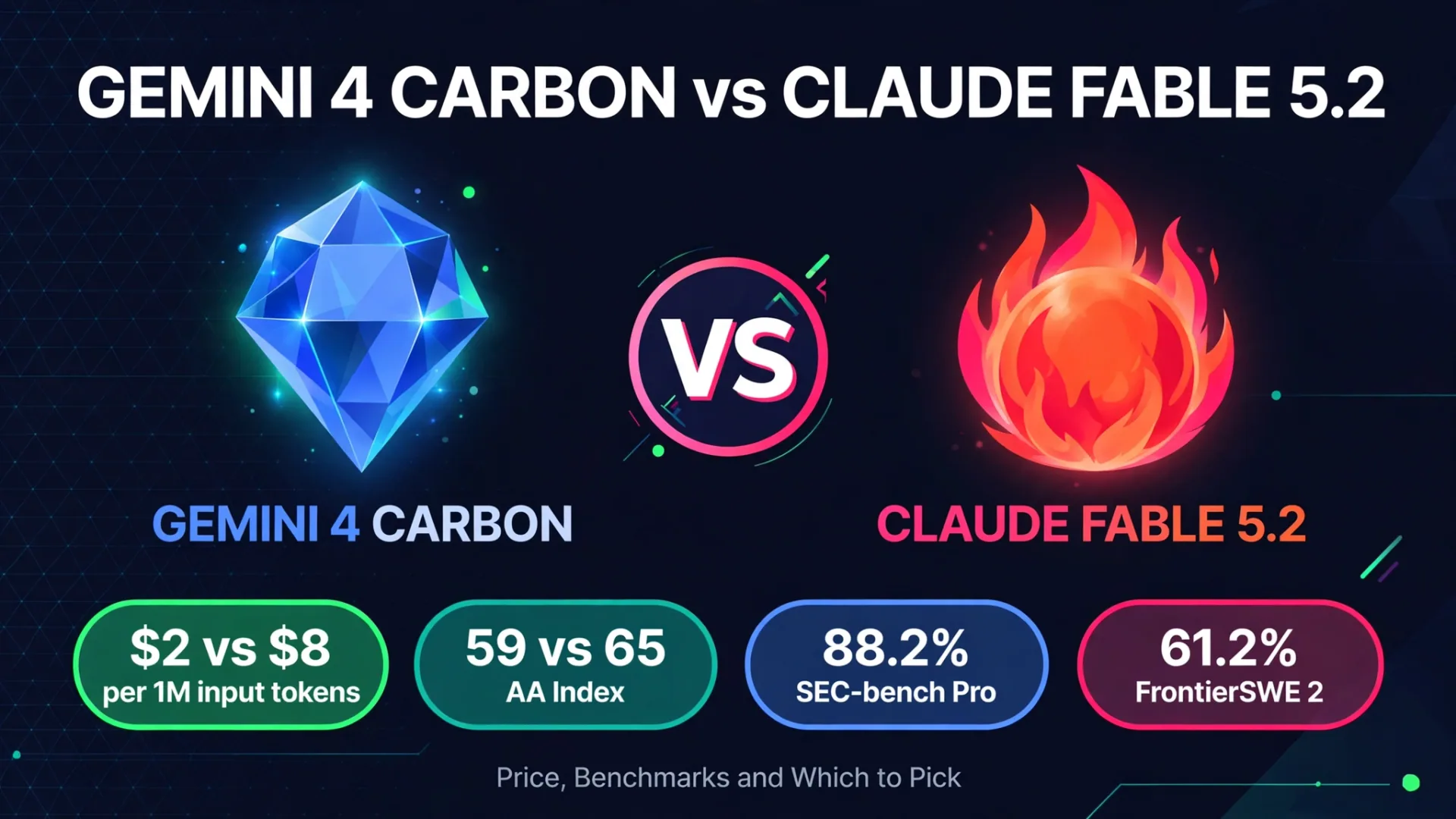
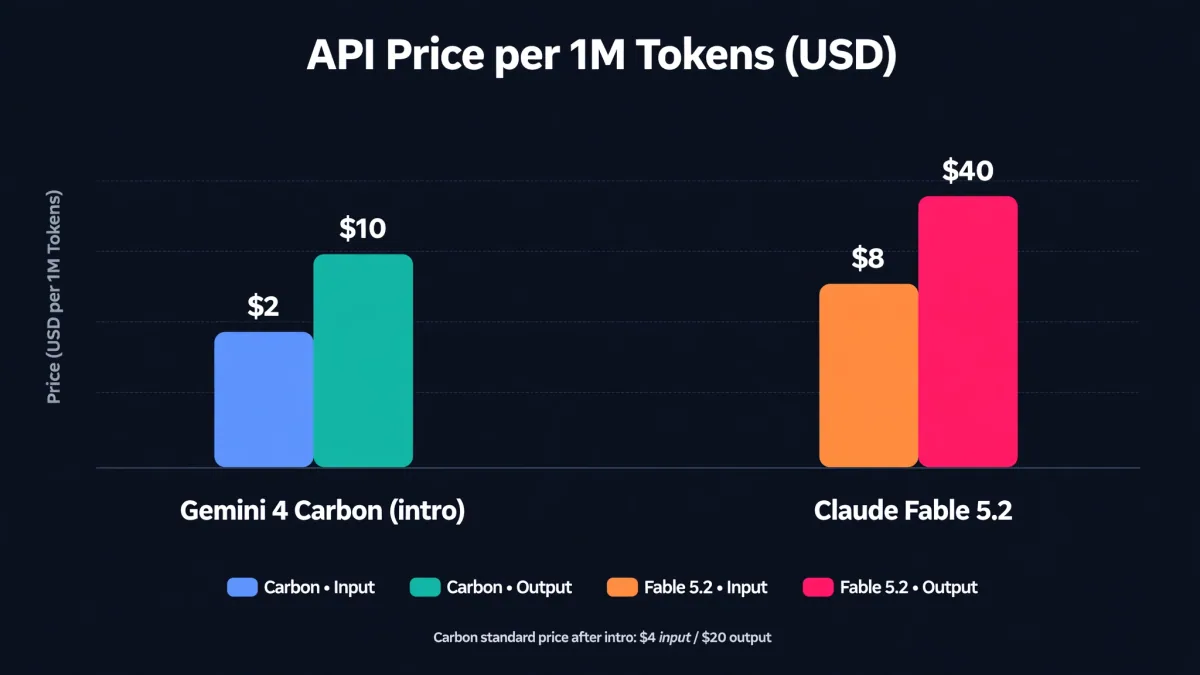
Gemini 4 Carbon went generally available on Nov 10 at $2 per 1M input tokens, a quarter of Claude Fable 5.2's $8. Here is how the two flagships compare on benchmarks, price, and real work.
Gemini 4 Carbon vs Claude Fable 5.2: $2 vs $8
Google opened Gemini 4 Carbon to everyone on November 10, 2026, just one day after Anthropic launched Claude Fable 5.2. Two flagship models, one week, and a price gap that is hard to ignore: Carbon costs $2 per million input tokens on its introductory rate, exactly one quarter of Fable 5.2 at $8.
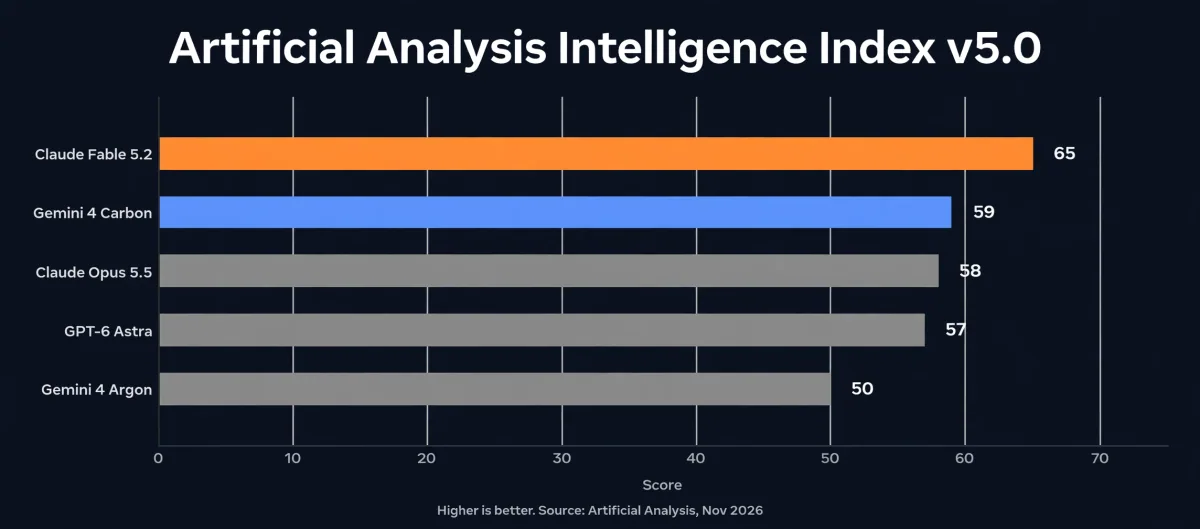
Carbon is Google DeepMind's strongest model, built for cybersecurity and long-horizon work. Fable 5.2 is Anthropic's new flagship and the current leader on the independent Artificial Analysis Intelligence Index at 65, ahead of Carbon at 59. So the real question is not which model is "best" in the abstract. It is which one is worth your money for the work you actually do.
Quick verdict
| Gemini 4 Carbon | Claude Fable 5.2 | |
|---|---|---|
| Launched | Announced Oct 28, generally available Nov 10, 2026 | Nov 9, 2026 |
| Artificial Analysis Index v5.0 | 59 | 65 |
| Input price per 1M tokens | $2 intro, $4 standard | $8 |
| Output price per 1M tokens | $10 intro, $20 standard | $40 |
| Context window | 1M tokens | Not disclosed in launch materials |
| Built for | Cybersecurity, long coding jobs, multi-day agent work | General flagship work, freelance-grade tasks |
Short version: if you run high-volume coding or security work through an API, Carbon's price is the story. If you want the highest-scoring general model right now, Fable 5.2 holds the top index score. Read on for the numbers behind that call.
What changed this week
Carbon was announced on October 28, 2026, but for its first two weeks only cyber defenders and vetted partners could touch it through Google's Fairwind Program. On November 10 it went generally available: paid API access in Google AI Studio and Android Studio, access for businesses through Gemini for Business, and availability in the Gemini app and AI Mode in Google Search for Google AI Ultra subscribers. It is also appearing in Google Antigravity, where Google added a new /swarm feature that launches multiple AI agents on one task in parallel.
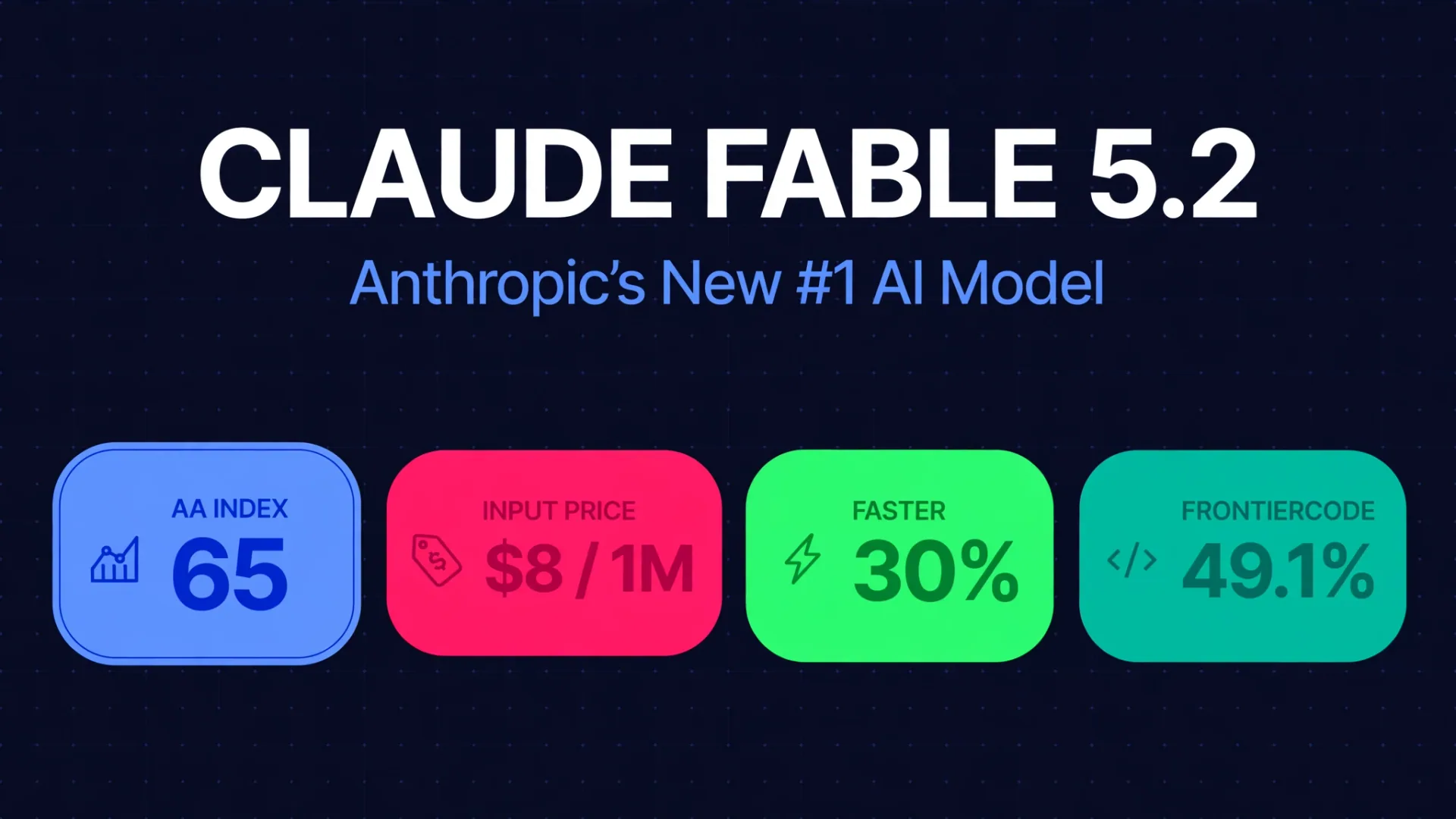
Fable 5.2 launched on November 9, 2026, alongside Claude Mythos 5.2. Anthropic says it tops the Artificial Analysis Intelligence Index at 65, costs 20% less than Fable 5.1, and runs up to 30% faster. We covered that launch in detail in our Claude Fable 5.2 breakdown.
Pricing: Carbon is a quarter of the price, then half
| Model | Input per 1M tokens | Output per 1M tokens |
|---|---|---|
| Gemini 4 Carbon (introductory) | $2 | $10 |
| Gemini 4 Carbon (standard) | $4 | $20 |
| Claude Fable 5.2 | $8 | $40 |
Google also prices cached input tokens at 95% off the input rate, which matters for long agent sessions that re-read the same context. Even after Carbon's introductory period ends and its price doubles to $4 and $20, it stays half the price of Fable 5.2. Google has not confirmed an end date for Carbon's introductory period, while Argon's ends November 30, 2026.
For a rough sense of scale: 10 million uncached input tokens plus 1 million output tokens costs $30 on Carbon's introductory rate, and $120 on Fable 5.2. That gap compounds fast in agentic workflows that burn tokens on every step.
Benchmarks: Fable leads the index, Carbon leads security
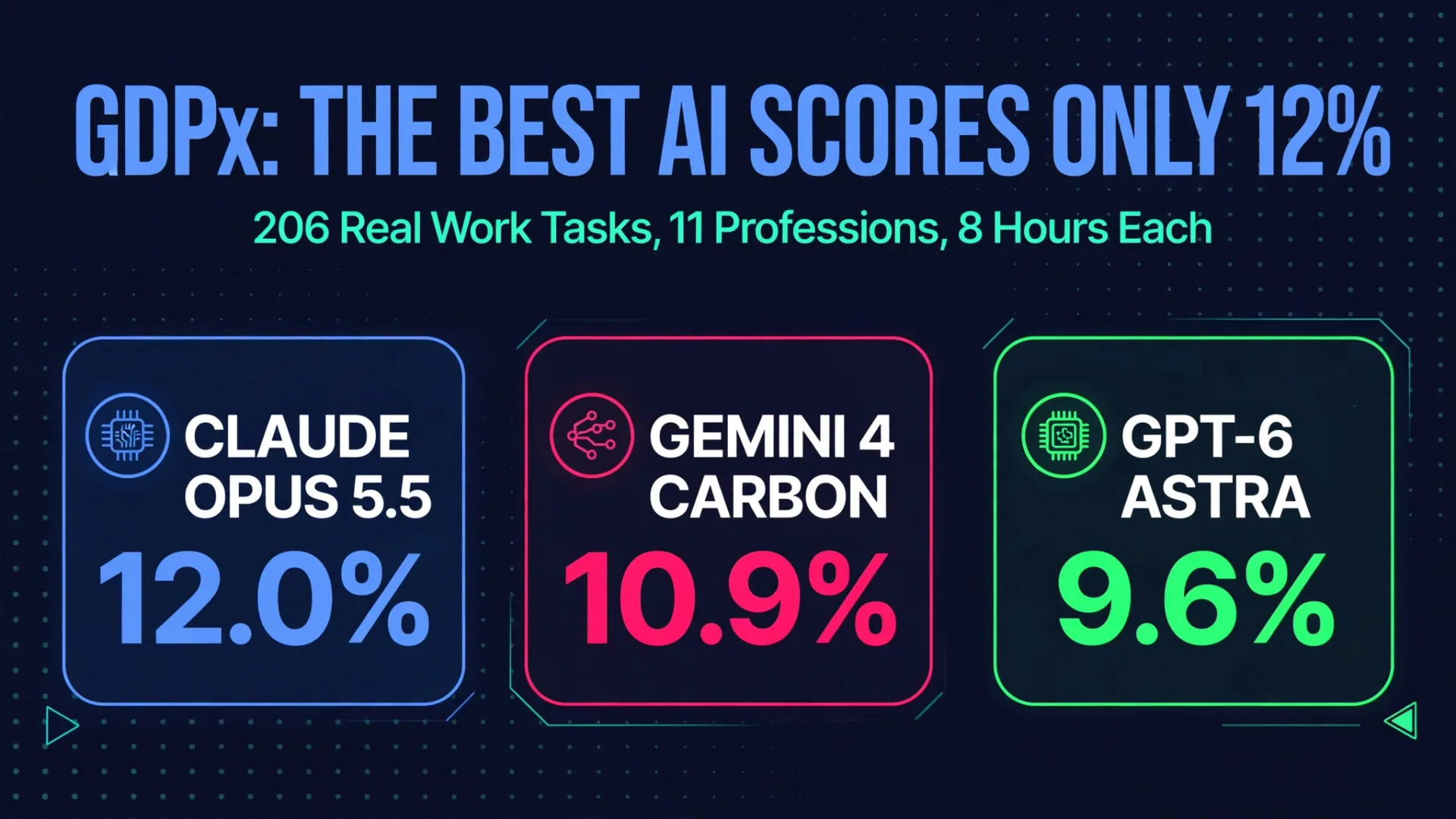
The independent Artificial Analysis Intelligence Index v5.0 puts Fable 5.2 first at 65, Carbon at 59, Claude Opus 5.5 at 58, GPT-6 Astra at 57, and Gemini 4 Argon at 50. At Carbon's announcement it topped that index at 59. Fable 5.2, launched a day before Carbon went generally available, has since taken the lead.
Google's own 17-benchmark table, which is vendor-reported and should be read that way, gives Carbon the top score on 15 of 17 rows:
| Benchmark | Gemini 4 Carbon | Claude Fable 5.2 | GPT-6 Astra | Claude Opus 5.5 |
|---|---|---|---|---|
| Artificial Analysis Index v5.0 | 59 | 65 | 57 | 58 |
| FrontierSWE 2 | 61.2% | Not published | 65.5% | 62.3% |
| SWE-sweep | 9.6% | Not published | 9.5% | 3.6% |
| SEC-bench Pro (vulnerability detection) | 88.2% | Not published | 85.4% | Not published |
| Vending-Bench 2 (simulated balance) | $16,484 | Not published | $15,515 | $9,235 |
| GraphWalks (1M-token reasoning) | 96.2% F1 | Not published | Not published | Not published |
| Real-world freelance tasks | Not published | 41.3% | Not published | Not published |
Three things stand out. First, Carbon's lead on SWE-sweep is real but tiny: 9.6% against Astra's 9.5%, and every model is still in single digits. Second, Astra still beats Carbon on FrontierSWE 2, 65.5% to 61.2%. Third, Carbon's security numbers are its clearest edge: 88.2% on SEC-bench Pro and the top spot on CursorBench 4.0, Perplexity WANDR, and Zapier AutomationBench, all Google-reported. Google also claims the cost to complete a single task on Carbon is more than twice as low as the nearest competing model.
Carbon's security story is the part worth watching
Carbon's most concrete results are in cybersecurity, and they go beyond benchmark tables. During testing in the Wiz Scan for Good program, Carbon found previously unknown zero-day vulnerabilities in two major cloud software vendors in under two hours. Google Cloud's Vulnerability Research team used it to confirm that two bugs in popular open-source software could actually be exploited. In an internal test of the Project Fortify system, Carbon reached 100% recall and 95% precision when validating discovered issues, though those numbers apply to Google's specific test set, not to all vulnerabilities.
Google is giving Carbon's specialized cybersecurity capabilities to vetted professionals through the Fairwind Program. For everyone else, the model is now in the regular API, so security teams can test it on their own codebases.
Carbon also showed up in scientific research: in an experiment across seven protein families, it found on average 40 times more related protein sequences than previous approaches, which could help other models predict protein structure more accurately.
Which to pick
Pick Gemini 4 Carbon if: you run agents or coding pipelines at volume and the token bill matters, you work in security or code auditing, or you need long-horizon jobs over a 1M-token context. At $2 input, it is the cheapest frontier-class model per token in this comparison, and its security scores are genuinely strong.
Pick Claude Fable 5.2 if: you want the highest-scoring general model on the independent index, you do freelance-grade knowledge work where Anthropic reports a 41.3% expert-level task completion rate, or you already build on Claude and value its 20% price cut and up to 30% speed gain over Fable 5.1.
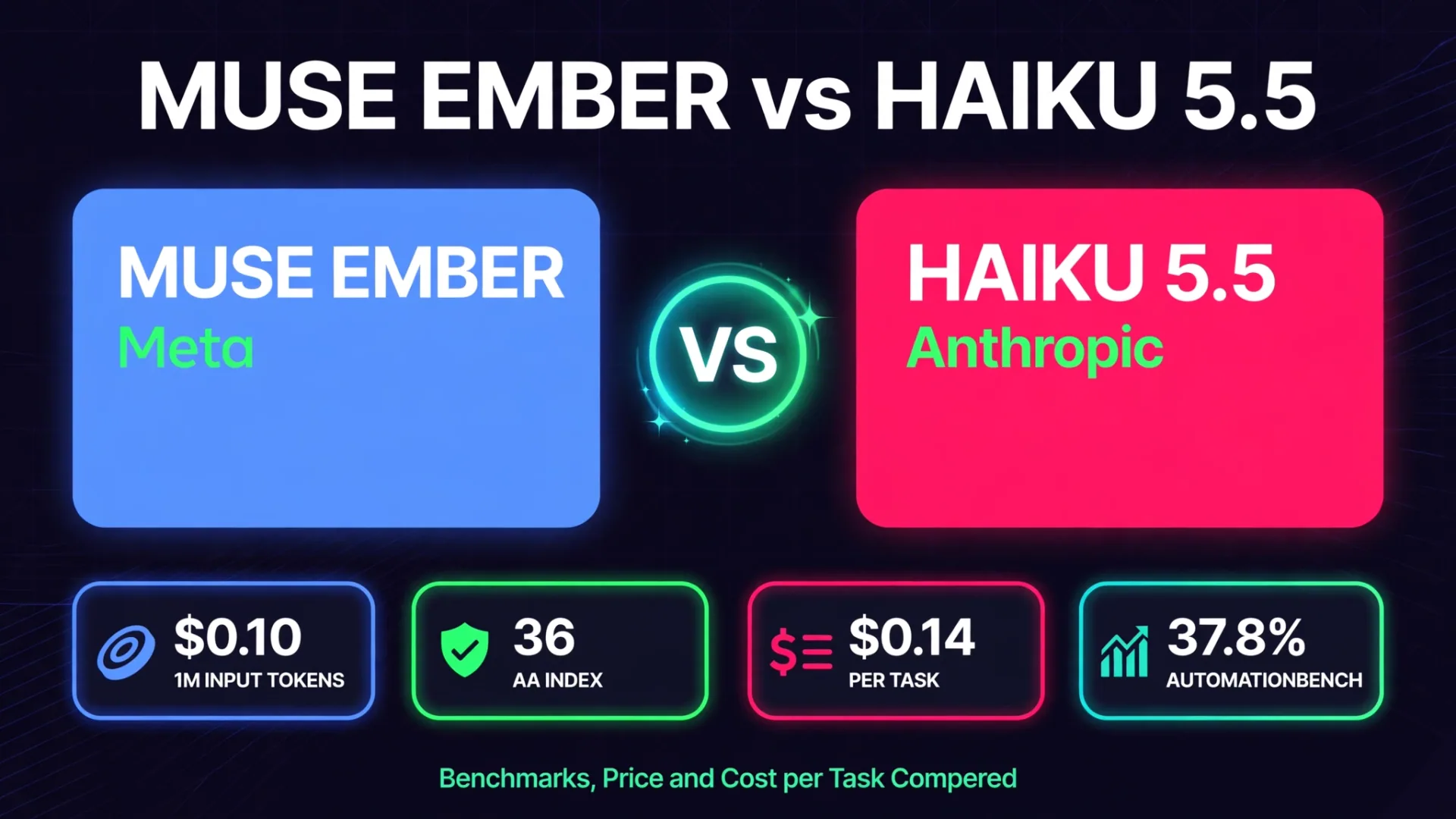
Pick neither yet if: you need a small, cheap model for high-volume simple work. Meta's Muse Ember, which we covered in our Muse Ember breakdown, matches Claude Haiku 5.5 at 36 on the same index for about a third of the cost per task. And if you are choosing between the other flagships, our GPT-6 Astra overview covers the model that still leads FrontierSWE 2.
The honest summary: Fable 5.2 wins the headline intelligence score, Carbon wins the price and the security benchmarks. For most teams building AI agents, the bill decides, and right now Carbon's bill is a quarter of Fable's.
If you want help putting either model into a real workflow, our AI agent development services cover exactly that, from picking the model to shipping the agent.
FAQ
Is Gemini 4 Carbon free?
No. Carbon is a paid API model at $2 per million input tokens and $10 per million output tokens on its introductory rate, rising to $4 and $20 after the introductory period. In the Gemini app it is rolling out to Google AI Ultra subscribers, not to free users.
How much cheaper is Gemini 4 Carbon than Claude Fable 5.2?
On input tokens, Carbon's $2 introductory rate is 75% cheaper than Fable 5.2's $8. On output tokens, $10 against $40 is also 75% cheaper. Even at Carbon's standard $4 and $20 rates, it stays 50% cheaper than Fable 5.2.
Which model scores higher, Gemini 4 Carbon or Claude Fable 5.2?
Claude Fable 5.2 leads on the independent Artificial Analysis Intelligence Index v5.0 at 65, against Carbon's 59. Carbon leads on Google's own security benchmarks, including 88.2% on SEC-bench Pro, and on SWE-sweep at 9.6%.
What is Gemini 4 Carbon best at?
Cybersecurity and long-horizon work: finding vulnerabilities, auditing large codebases, multi-step coding jobs, and reasoning over a 1-million-token context. Google reports it found unknown zero-day vulnerabilities in two major cloud vendors in under two hours during testing.
When did Gemini 4 Carbon become generally available?
Google announced Carbon on October 28, 2026, limited it to cyber defenders and vetted partners for two weeks, and opened general access on November 10, 2026, through the paid API, Google AI Studio, Gemini for Business, and Google AI Ultra.
Should I switch from Claude Fable 5.2 to Gemini 4 Carbon?
Switch if your workload is API-heavy and price-sensitive, or security-focused. Stay on Fable 5.2 if you need the top general intelligence score or you are already deep in the Claude ecosystem. Many teams will end up using both: Carbon for bulk agent work, Fable 5.2 for the hardest reasoning tasks.
- Gemini 4 Carbon
- Claude Fable 5.2
- Gemini vs Claude
- AI benchmarks
- AI pricing