IA2 min de lecturaPor JH Akash
AMD Is Buying Fei-Fei Li's World Labs for $8.2 Billion
AMD is acquiring Fei-Fei Li's World Labs in an $8.2 billion all-stock deal. Here's why a chip company buying a spatial-intelligence lab matters for anyone building AI agents and automation.
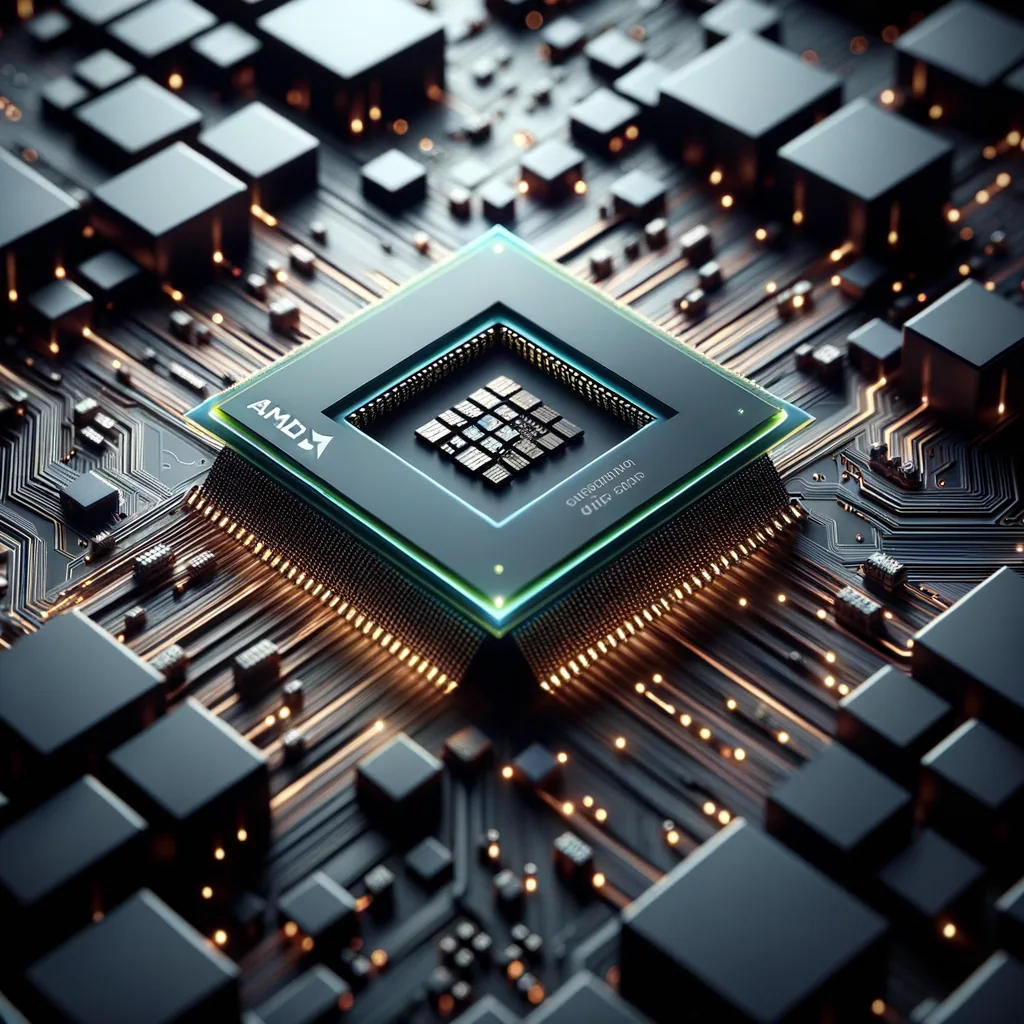
On Monday, AMD announced it is acquiring World Labs, the AI startup founded by Stanford professor Fei-Fei Li, in an all-stock deal valued at $8.2 billion. The deal is expected to close by the end of 2026.
If you only follow the model race, this one might look strange. A chip company buying a startup? But look closer and it makes perfect sense.
Fei-Fei Li, often called the godmother of AI for her work on ImageNet, founded World Labs in 2024 to build what she calls spatial intelligence: AI models that perceive, generate, and reconstruct 3D environments. This is "physical AI", the kind of intelligence that understands the real world well enough for robotics, simulation, and design work.
As part of the deal, Li joins AMD as executive vice president and chief scientist, reporting directly to CEO Lisa Su. That is not a ceremonial title. AMD is putting one of the most respected AI researchers in the world in charge of its scientific direction.
Su said it plainly: "Building the compute platforms for the next generation of AI requires a deep understanding of how models are evolving."
That quote is the whole story. The two companies already started a technical partnership last year, working on model training and inference optimization on AMD GPUs. AMD was also an investor in World Labs' $1 billion funding round earlier this year. Earlier this month, World Labs unveiled "Atlas", a model that processes text, images, video, and 3D data together.
So why does this matter to the rest of us, the people building AI agents and automation for real businesses?
Three takeaways from where we sit at CodeMyPixel.
First, the compute wars are becoming model wars. Chip giants no longer want to just sell GPUs. They want a say in how models are designed, because whoever shapes the models shapes the hardware demand. Expect more acquisitions in this direction, not fewer.
Second, spatial intelligence is the next frontier after language. Most business AI today lives in text: chatbots, document processing, email triage. But the companies moving into warehouses, factories, construction sites, and retail floors will need AI that understands physical space. Robotics, digital twins, and simulation are going to be a huge automation market, and this deal is a signal that the infrastructure is being built now.
Third, the agent stack is consolidating. Big players are buying up every layer, from chips to models to agent platforms. For businesses, that means the safest bet is not locking into one giant's stack, but building automation on open patterns that can run anywhere. That is exactly how we build for our clients: custom agents that work regardless of which model or chip is fashionable this quarter.
$8.2 billion is a lot of money for a two-year-old startup. But when the godmother of AI joins a chip giant to build physical AI, it is worth paying attention. The next wave of automation will not just read your documents. It will understand your warehouse.
- AMD
- World Labs
- AI news
- spatial intelligence