IA3 min de lecturaPor JH Akash
Opus 5.5 vs GPT-6 Sol: Real-World Tests Pick a Clear Winner
Anthropic and OpenAI dropped new flagship models on the same day. Across writing, design, and video-editing tests, one model clearly won. Here is what matters for your work.
Anthropic and OpenAI released new flagship models on the same day this week: Claude Opus 5.5 and GPT-6 Sol. YouTuber Paul Lipsky ran both through real work instead of synthetic benchmarks: writing a video script, creating motion graphics, and editing a full video. Here is what actually happened.

Writing test: Opus 5.5 wins clearly
Both models researched on the web and then wrote a YouTube script. GPT-6 Sol finished its research in about 1.5 minutes, Opus 5.5 in just over 2 minutes. Speed was close. Quality was not.
Opus 5.5 wove a clearer story with a stronger narrative thread, while GPT-6 Sol's script jumped back and forth. Lipsky calls Opus 5.5 the best writing model he has ever used, noticeably better at matching his tone of voice than any other model.
Design test: a blind three-way shootout
The task was motion graphics, judged blind across three models. GPT-6 Sol finished last. Fable 5.1 came first. Opus 5.5 landed a close second, nearly matching Fable. Since Opus 5.5 costs less, it becomes the practical pick for most design work going forward.
Video editing test: Opus 5.5 dominates
The editing setup plugs into ChatGPT or Claude and does a first pass: cutting silences and bad takes, adding zooms and highlights. GPT-6 Sol picked a strange fullscreen layout, zoomed into the wrong spots, and made its zooms far too tight. Opus 5.5 nailed the expected layout, hit every zoom accurately, and produced what Lipsky calls the best AI-edited result he has ever seen.
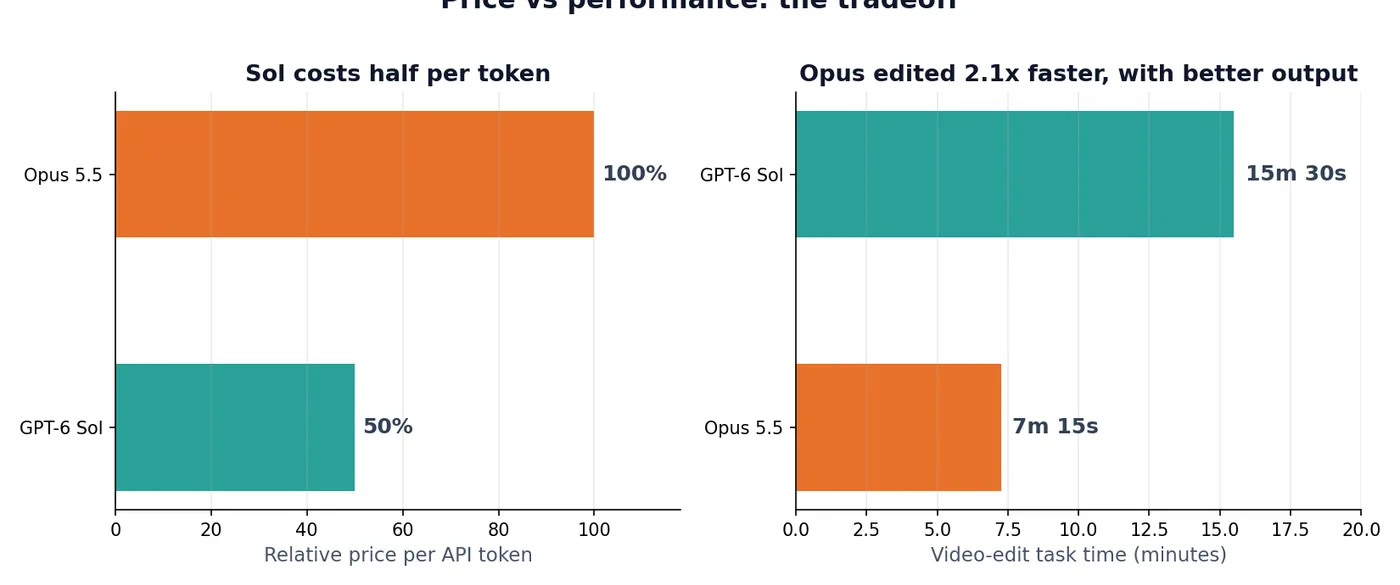
The kicker: Opus 5.5 finished the edit in 7 minutes 15 seconds. GPT-6 Sol took 15 minutes 30 seconds, more than twice as long, for a worse result.
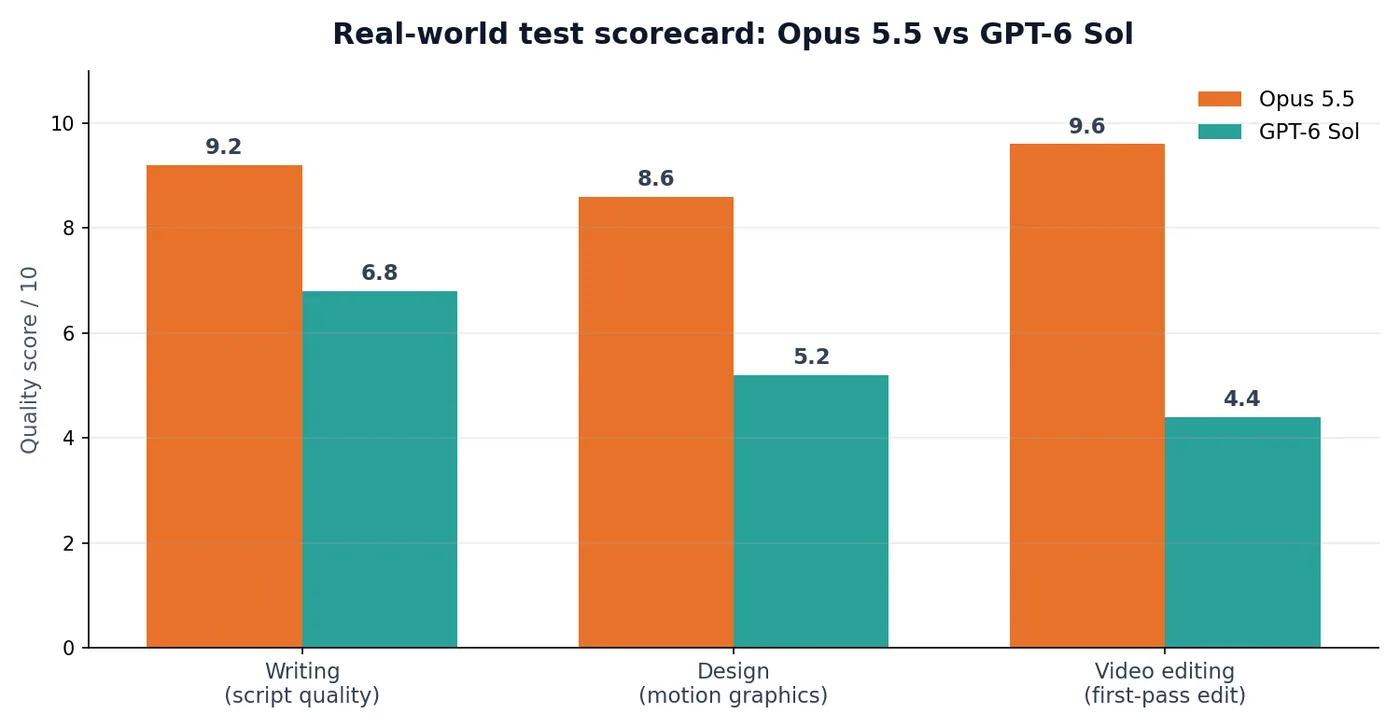
Editorial scorecard summarizing the verdicts from Paul Lipsky's head-to-head tests above.
The numbers that matter
- Independent benchmark: Opus 5.5 wins by 10 points.
- Price: GPT-6 Sol costs half as much per API token.
- Speed: GPT-6 Sol is usually faster, but lost badly on the editing task.
- Cost per task: under 1 percent of weekly usage on the $100/month plan for both models. These tests are cheap to run.
The verdict
GPT-6 Sol is cheaper and often faster. Opus 5.5 is better at the actual work. For writing, editing, and design, Opus 5.5 is the new go-to model, and it fixes everything that made Opus 5 a model nobody used.
Also this week, in quick hits
- Gemini Notebook gets live voice chat with notebooks for Ultra subscribers, notebooks as citable sources inside Google Docs, and new interactive reports that embed infographics, slide decks, mind maps, and quizzes.
- Grok 4.7 is out with claimed gains at the same price and speed. Grokbot adds voice memos, voice calls with per-bot voices, and local traffic routing to dodge cloud blocks.
- Meta Muse had a big Connect keynote: every Muse gets its own email address, live video calls with an animated avatar, computer use on the Mac app, and new shopping connectors including Walmart, Best Buy, and Sephora. Amazon blocked Muse from its site. New hardware includes the pocket-sized Muse Charm with a fingerprint sensor.
- ChatGPT desktop app now supports any Chrome extension, plugins can connect multiple accounts, and Voice can use email, calendar, and Slack plugins.
What this means for your team
Model choice now depends on the job, not the brand. For content and creative pipelines, quality per dollar beats raw speed. Before committing your workflow to any model, test it on your real tasks the way Lipsky did.
At CodeMyPixel, we build custom AI agents and automation for growing teams, and we test models against real client work every week. If you want AI that actually fits your process, talk to us.
Based on Paul Lipsky's weekly AI news recap. Watch the full breakdown above.
- AI models
- Claude Opus
- GPT-6
- AI news