AI5 min readBy JH Akash
Canva Craft Explained: Canva's First AI Image Model Plans Before It Renders
Canva launched Craft on Oct 22, 2026, its first in-house AI image model. It plans the design first, then renders at up to 2K in 30 aspect ratios. Full breakdown of how it works and how it compares.
What happened
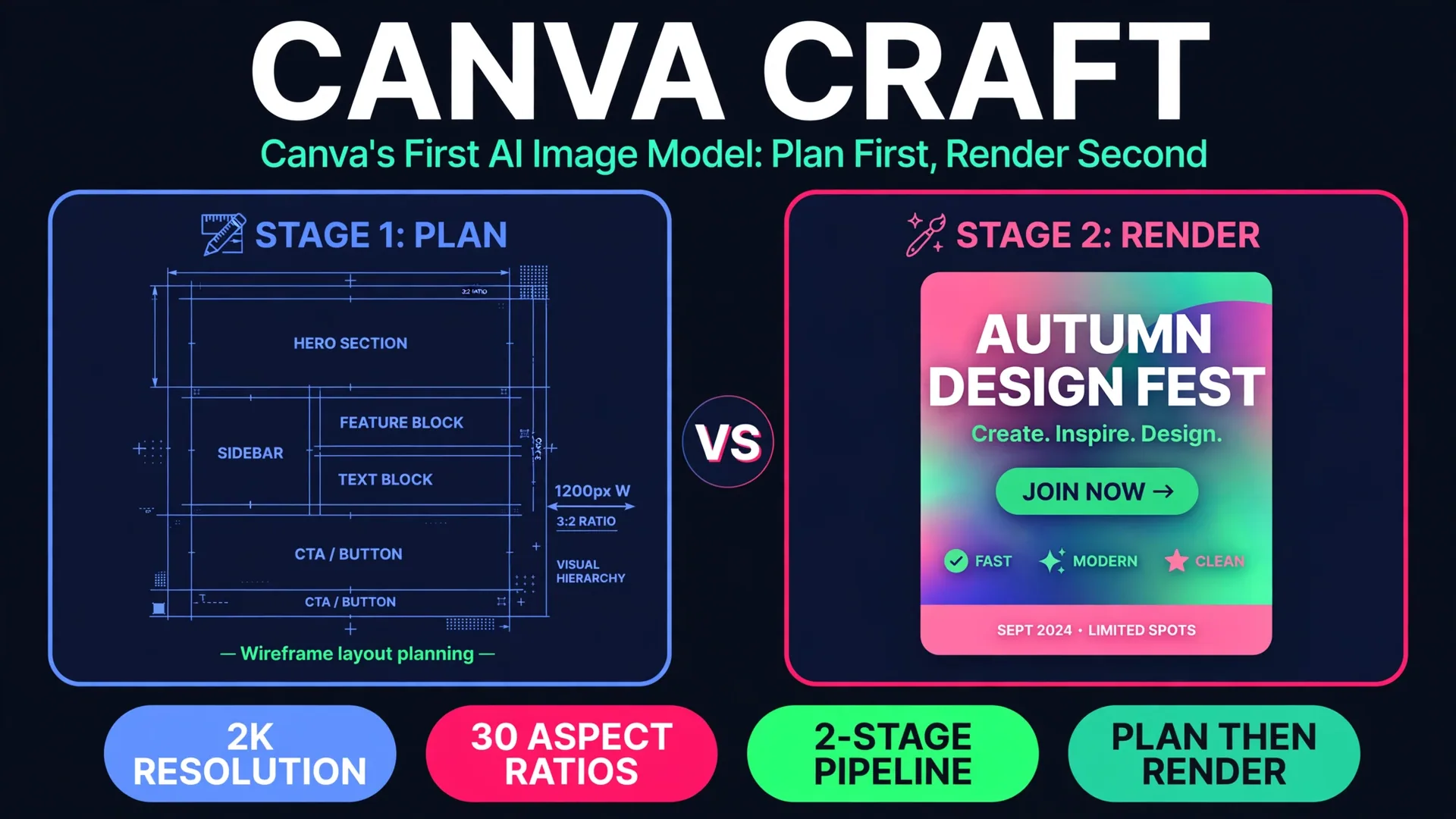
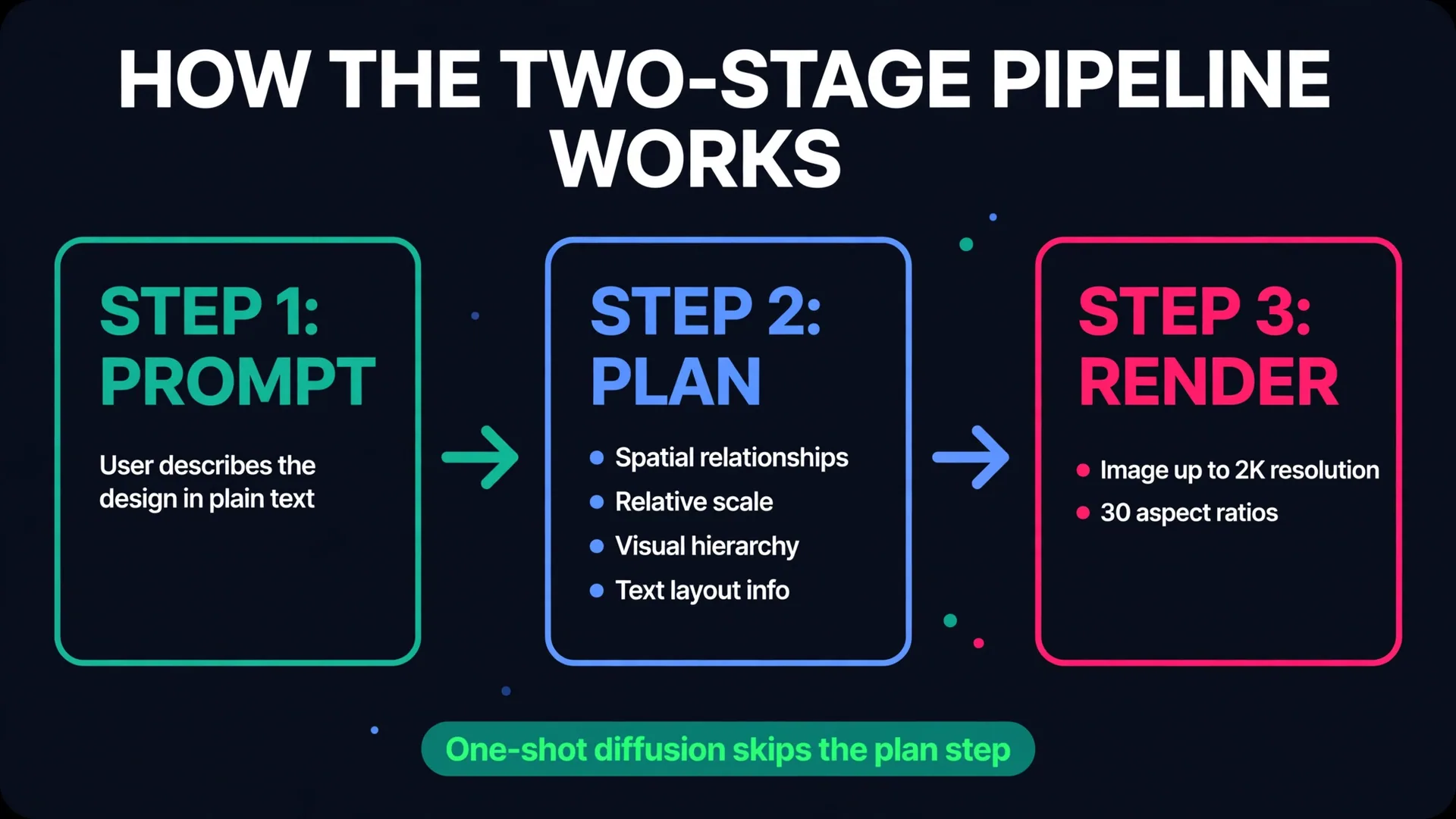
On October 22, 2026, Canva released its first in-house image generation model: Canva Craft. It is built to compete with image models from Google, OpenAI, ByteDance and Meta, and it works differently from all of them. Instead of generating pixels straight from a prompt, Craft runs a two-stage pipeline: it plans the design first, then renders the image around that plan.
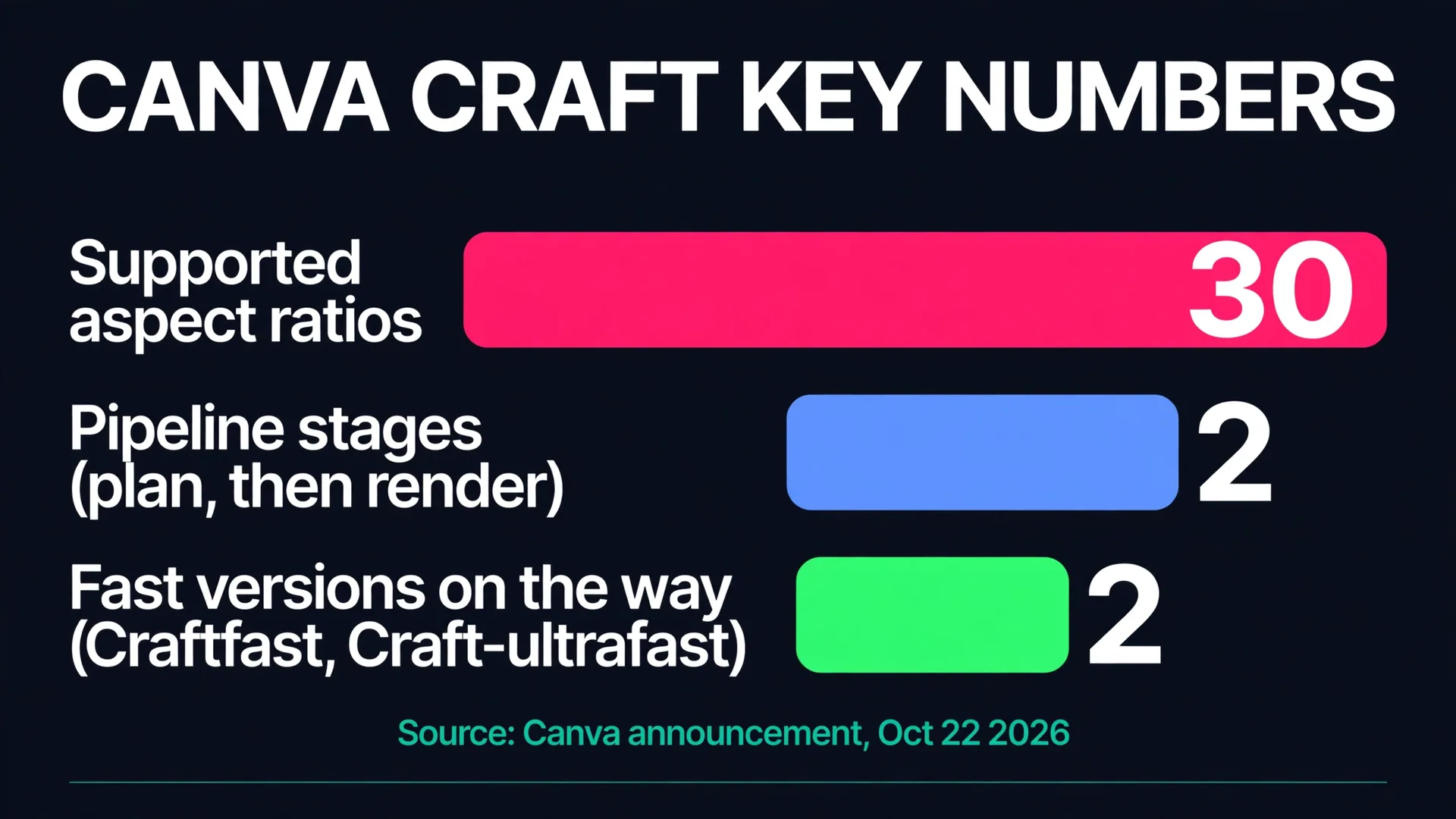
Stage one interprets your prompt and builds a design plan covering spatial relationships between elements, relative scale, visual hierarchy, and information for text generation. Stage two then generates the image at up to 2K resolution in one of 30 aspect ratios. Canva says researchers from Leonardo.ai, the media generation platform it acquired in 2024, contributed to the new model.
Why the plan-first approach matters
Most consumer image tools use a one-shot approach: prompt in, pixels out. That is great for novelty images but unreliable for marketing work, where you need legible text, exact object placement and consistent branding. Craft was trained on millions of human-designed templates from Canva's own library (posters, social posts, presentations, infographics, menus and typography-rich layouts) rather than photographs, so the model is optimized for editable, repeatable design output.
Canva says the plan-first design also allows precise edits without changing other parts of the image, and generated images can be converted into layered designs using Canva Magic, the company's image-to-design transformer. Beyond quality, there is a business motive: Canva has been paying for third-party image models, and owning the model gives it cost savings plus better control over quality and speed.
Canva Craft: confirmed specs at launch
| Spec | Canva Craft |
|---|---|
| Launch date | October 22, 2026 |
| Pipeline | 2 stages: plan, then render |
| Plan step covers | Spatial relationships, relative scale, visual hierarchy, text generation info |
| Max resolution | Up to 2K (vendor-reported) |
| Aspect ratios | 30 (vendor-reported) |
| Training data | Millions of human-designed templates (posters, social posts, presentations, infographics, menus), not photographs |
| Text rendering | Designed for legible text in designs |
| Editing | Precise edits without touching other parts of the image |
| Layered output | Converts to layered designs via Canva Magic |
| Access | Dream Lab tab for all Canva users; Canva API; MCP support in third-party chatbots like ChatGPT and Gemini planned |
| Pricing | Not disclosed at launch |
| Team | Canva research team, with contributors from Leonardo.ai (acquired 2024) |
Craft vs one-shot image generators: quick comparison
| Canva Craft | Typical one-shot diffusion tools | |
|---|---|---|
| Generation approach | Plan first, then render | Pixels generated directly from prompt |
| Trained on | Design templates | Mostly photographs and general web images |
| Legible text | A core design goal | Still inconsistent in many tools |
| Output editing | Precise per-part edits, converts to layers | Usually regenerates the whole image |
| Built-in distribution | Inside Canva's editor, 30 aspect ratios for social, print and presentations | Standalone apps or API |
No independent head-to-head benchmarks exist yet, so treat every capability claim as vendor-reported for now. The real test will be whether plan-first generation actually produces fewer broken text blocks and warped layouts in real marketing work.
Which should you pick
- You make marketing content inside Canva: Try Craft in the Dream Lab tab. It is purpose-built for your workflow, and the layered output means you can fix anything it gets wrong.
- You need photorealistic images of people or products: Craft is trained on designs, not photographs. A general-purpose image model will likely fit better for now.
- You build products on image APIs: Watch the Canva API launch. Two cost-efficient versions, Craftfast and Craft-ultrafast, are coming soon, which suggests Canva is serious about API usage and speed tiers.
- You run an agency producing client designs at scale: The combination of legible text, 30 aspect ratios and layered output is aimed squarely at you. For teams building custom AI content workflows, our AI agent development services cover exactly this kind of automation.
The bigger picture
Canva building its own model instead of licensing one is a signal: the platforms closest to end users, the ones that own the distribution and the templates, are turning from customers into competitors. For context, TechCrunch reported Canva was on track for $4 billion in revenue last year, though it cut its 2026 growth forecast and external analysts reportedly pegged its valuation down from $42 billion to $35 billion. Owning the image model stack is one way to protect margins while pushing deeper into AI.
Related reading: our breakdowns of GPT-6 Astra, the model that changed everything and Claude Opus 5.5. If you want help putting AI image and content generation into a real business workflow, talk to us: hire an AI automation agency.
FAQ
What is Canva Craft?
Canva Craft is Canva's first in-house AI image generation model, launched October 22, 2026. It generates images for designs using a two-stage pipeline that plans the layout before rendering pixels, competing with image models from Google, OpenAI, ByteDance and Meta.
How does Canva Craft's two-stage pipeline work?
Stage one interprets your prompt and creates a design plan with details like spatial relationships of elements, relative scale, visual hierarchy and information for text generation. Stage two renders the image at up to 2K resolution in one of 30 aspect ratios.
Is Canva Craft better than Midjourney or OpenAI's image models?
They are built for different jobs. Craft is optimized for editable design output with legible text inside Canva's editor. Artistic tools like Midjourney optimize for aesthetics. No independent benchmarks compare them yet, so any "winner" claim would be premature.
How do I access Canva Craft?
It is available to all Canva users from the Dream Lab tab. Canva also plans to offer it through the Canva API and through MCP connections in third-party chatbots like ChatGPT and Gemini.
What are Craftfast and Craft-ultrafast?
Two cost-efficient versions of the Craft model that Canva says are coming soon. Details on speed, pricing and availability have not been disclosed yet.
Is Canva Craft free?
Canva has not disclosed pricing. The model is available on the company's platform to all users via the Dream Lab tab, which suggests it ships within Canva's existing plans, but API pricing is still unknown.
- canva craft
- ai image generation
- canva
- leonardo.ai
- ai design tools