Key Points
- Research suggests that MCP, or Model Context Protocol, is a new standard for connecting AI to real-world tools like databases and APIs, which was announced in November 2024.
- It seems likely that MCP simplifies AI integrations, making them faster and more scalable, with over 1,000 community-built servers by February 2025.
- The evidence leans toward MCP being adopted by companies like Block and Replit, with the potential to revolutionize AI development across industries.
What is MCP?
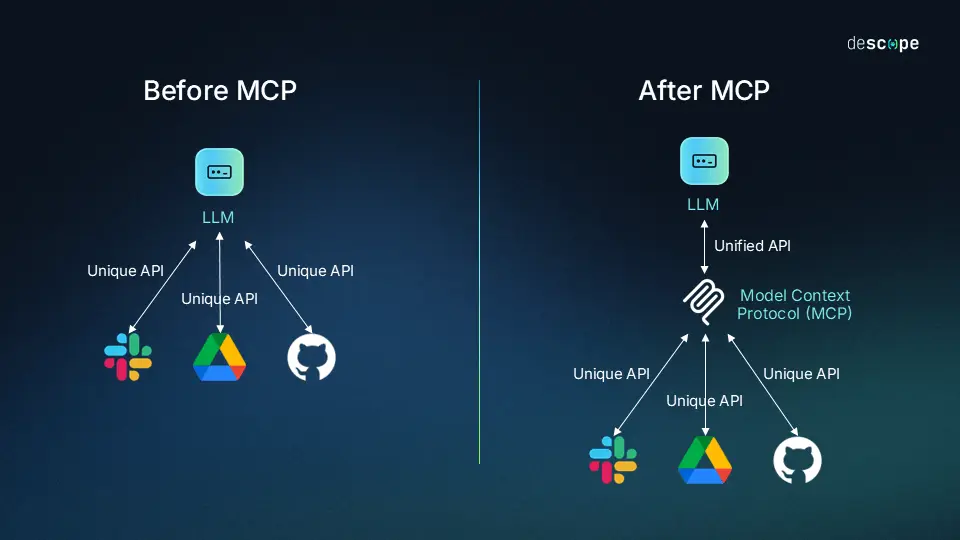
MCP stands for Model Context Protocol, a framework that helps AI models connect with external tools and data sources, such as file systems, databases, and APIs. Think of it like a universal adapter that lets AI assistants access real-time information and perform actions, like checking a calendar or updating a CRM system, without needing custom setups for each tool.
Why It Matters
MCP was created to solve the problem of integrating AI with external systems, which used to be time-consuming and complex. It standardizes this process, making it easier for developers to build AI applications that work seamlessly with various tools. This is especially useful in software development, business, and personal productivity, where AI can now interact more effectively with the tools we use daily.
Unexpected Detail: Rapid Community Growth
What’s interesting is how quickly MCP has grown—within just a few months, over 1,000 community-built servers were available, showing strong support from developers and companies alike.
Comprehensive Analysis of MCP: Model Context Protocol
Introduction
In the dynamic landscape of artificial intelligence, the Model Context Protocol (MCP) has emerged as a pivotal innovation, addressing the critical need for seamless integration between AI models and real-world tools. Announced by Anthropic in November 2024, MCP is gaining significant traction, with over 1,000 community-built servers by February 2025, highlighting its potential to transform AI development. This report provides a detailed exploration of MCP, its purpose, functionality, adoption metrics, and future implications, written in a professional tone suitable for a WordPress blog post.
Defining MCP: A Standardized Framework for AI Integration
MCP, or Model Context Protocol, is an open standard designed to enable AI models to interact with external data sources and tools through a unified interface. It allows AI assistants to go beyond their static training data, accessing real-time information from systems like file systems, databases, APIs, and applications. For instance, an AI coding assistant can use MCP to retrieve code snippets from a developer’s local repository or execute functions within an IDE, while a business AI can connect to a CRM system to fetch customer data.
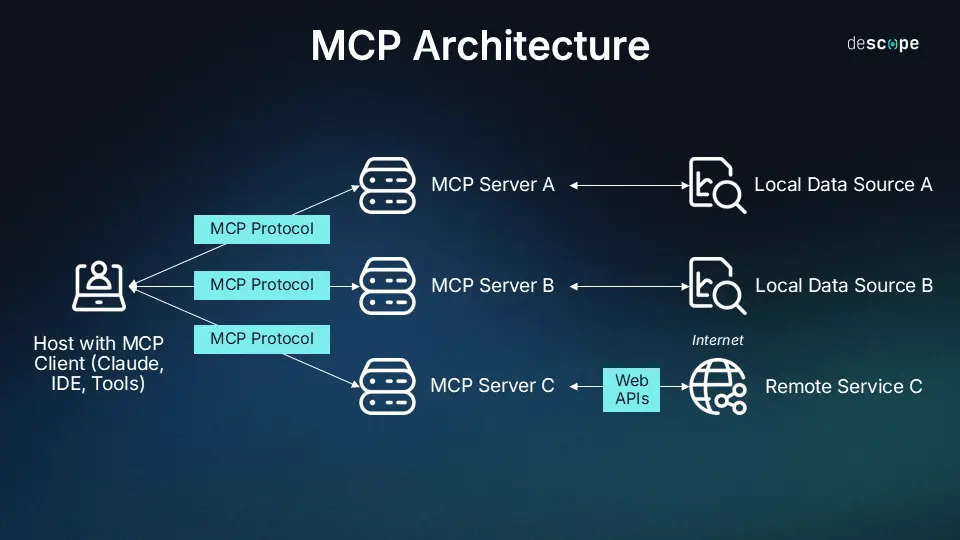
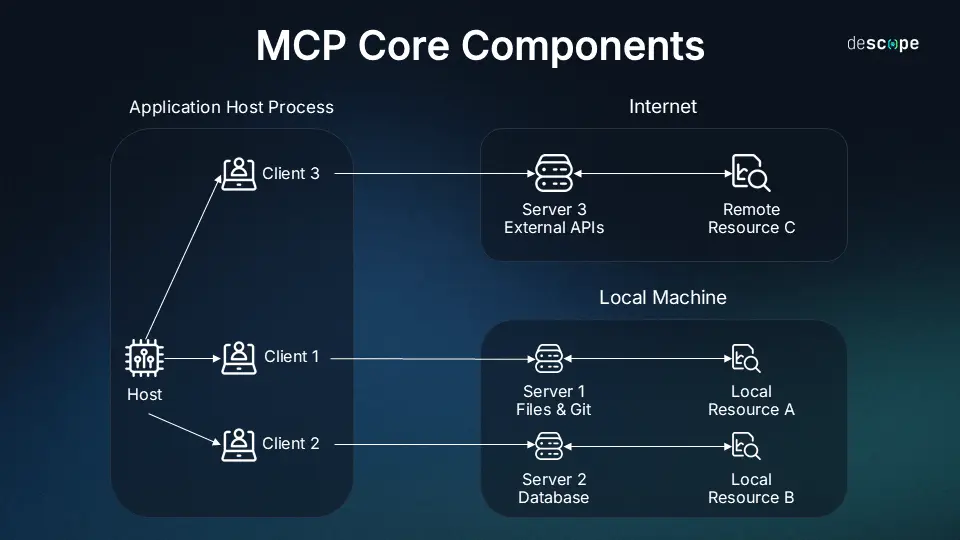
This standardization is akin to USB-C for hardware, providing a common interface that simplifies connectivity. The protocol operates on a client-server architecture, where MCP servers (e.g., development tools like Zed or Replit) expose tools and data, and MCP clients (AI models) request information or trigger actions, enabling two-way communication.
| Aspect | Description |
|---|---|
| What is MCP? | A protocol for connecting AI to external tools and data sources, was announced in November 2024. |
| Key Feature | Standardizes access, replacing custom integrations with a universal interface. |
| Example Use | AI coding assistant accessing local files or business AI updating CRM records. |
Purpose and Benefits: Addressing Integration Challenges
The primary purpose of MCP is to address the integration challenges faced by AI developers, where connecting AI models to external systems traditionally required bespoke code, leading to inefficiencies and scalability issues. MCP replaces this with a standardized protocol, offering several benefits:
- Standardization: A single protocol works across multiple tools, reducing complexity and development time.
- Scalability: Developers can easily add or remove tools without altering the core AI workflow, making it adaptable to growing needs.
- Vendor-Agnostic: MCP allows switching between AI providers (e.g., Anthropic, OpenAI) without reconfiguring integrations, enhancing flexibility.
- Dynamic Discovery: AI models can automatically detect and utilize available tools, improving adaptability and context-awareness.
- Two-Way Communication: Supports both retrieving data (e.g., checking a calendar) and performing actions (e.g., sending an email), enhancing functionality.
These benefits make MCP a game-changer for creating intelligent, autonomous AI systems, with applications spanning software development, business, personal productivity, healthcare, and education.
| Benefit | Impact |
|---|---|
| Standardization | Reduces integration complexity, saves time. |
| Scalability | Supports growing toolsets without rework. |
| Vendor-Agnostic | Enhances flexibility across AI providers. |
| Dynamic Discovery | Improves AI adaptability and context-awareness. |
| Two-Way Communication | Enables both data retrieval and action execution. |
Adoption and Metrics: Rapid Growth and Industry Support
Since its announcement on November 24, 2024, by Anthropic, MCP has seen rapid adoption, reflecting its relevance and utility. By February 2025, over 1,000 community-built MCP servers (connectors) were available, demonstrating strong community engagement. Early adopters include prominent companies such as Block (Square), Apollo, and development tool providers like Zed, Replit, Codeium, and Sourcegraph, which have integrated MCP to enhance their platforms.
Anthropic has also released pre-built MCP servers for popular tools like Google Drive, Slack, GitHub, Git, Postgres, and Puppeteer, further accelerating adoption. This widespread support suggests MCP is on track to become a de facto standard for AI-tool integration, with metrics indicating:
- Community Servers: Over 1,000 by February 2025, showcasing developer enthusiasm.
- Early Adopters: Companies like Block and Replit, with development tools like Zed and Codeium integrating MCP.
- Pre-Built Servers: Available for Google Drive, Slack, and others, easing implementation.
These metrics highlight MCP’s potential to revolutionize AI development, with its open-source nature fostering further innovation.
| Metric | Details |
|---|---|
| Community Servers | Over 1,000 by February 2025. |
| Early Adopters | Block, Apollo, Zed, Replit, Codeium, Sourcegraph. |
| Pre-Built Servers | Google Drive, Slack, GitHub, Git, Postgres, Puppeteer. |
Case Studies and Examples: Real-World Applications
MCP’s practical applications are already evident in various use cases. One notable example is Tezlab’s Tesla monitoring service, as discussed by Will Schenk. Here, an AI assistant connects to Tezlab’s API via MCP to retrieve real-time data about a user’s Tesla vehicle, such as battery status or location, and perform actions like preconditioning the car. This demonstrates MCP’s ability to bridge AI with specialized services, enhancing functionality.
Another example is in software development, where MCP enables AI coding assistants to access developers’ local file systems, retrieve code snippets, or execute functions within IDEs. This improves code accuracy and development efficiency. In business, MCP can integrate AI with CRM systems or project management tools, enabling automated workflows and informed decision-making.
These case studies illustrate MCP’s versatility, with potential applications in healthcare (accessing patient records), education (personalizing learning experiences), and personal productivity (connecting to calendars and email clients).
MCP’s Potential Across Industries
While still in its early stages, MCP’s potential spans multiple industries:
- Software Development: Enhances AI coding assistants by accessing code repositories and executing functions, improving development efficiency.
- Business: Integrates AI with CRM systems, project management tools, and financial databases, enabling data-driven decisions.
- Personal Productivity: Connects AI to calendars, email clients, and note-taking apps, streamlining daily tasks.
- Healthcare: Allows AI to access patient records or medical databases for accurate diagnoses and treatment recommendations.
- Education: Enables AI tutors to access learning materials and student progress data, personalizing educational experiences.
These use cases highlight MCP’s ability to transform how AI is used, making it more integrated and context-aware across domains.
Research and Future Outlook
As a relatively new protocol, MCP has not yet been the subject of extensive academic research, given its announcement in November 2024. However, its rapid adoption and growing number of community-built servers suggest significant interest. Anthropic positions MCP as a foundational standard for AI-tool integration, with its open-source nature encouraging further development.
While specific research papers are limited, tech blogs and forums provide insights into its impact. For instance, the Hugging Face blog (🦸🏻#14: What Is MCP, and Why Is Everyone – Suddenly!– Talking About It?) highlights MCP’s role in solving the “integration problem” for AI agents, while the Appwrite blog (What exactly is MCP, and why is it trending?) emphasizes its ability to simplify AI workflows. These discussions suggest MCP’s potential to become a universal standard, with future research likely to focus on its impact on AI development and deployment.
Looking ahead, as MCP gains traction, we can expect more case studies, benchmarks, and analyses, further solidifying its role in the AI ecosystem.
The Model Context Protocol (MCP) represents a significant advancement in AI integration, standardizing how AI models interact with external tools and data sources. MCP is poised to revolutionize AI development across industries with over 1,000 community-built servers by February 2025 and early adopters like Block and Replit. Its benefits—standardization, scalability, and vendor-agnosticism—make it a cornerstone for creating intelligent, autonomous systems. As adoption continues, MCP’s potential to transform software development, business, healthcare, and more will likely become even more apparent, marking a new era for AI applications.