IA4 min de lecturaPor JH Akash
Gemini 4 Argon Price War: Is This Google's AI Comeback?
Google's Gemini 4 Argon claims 12 of 18 benchmarks at $2/$10 per 1M tokens. We break down the price war vs GPT-6 Astra and Claude Opus 5.5, the catches, and what it means for AI builders.
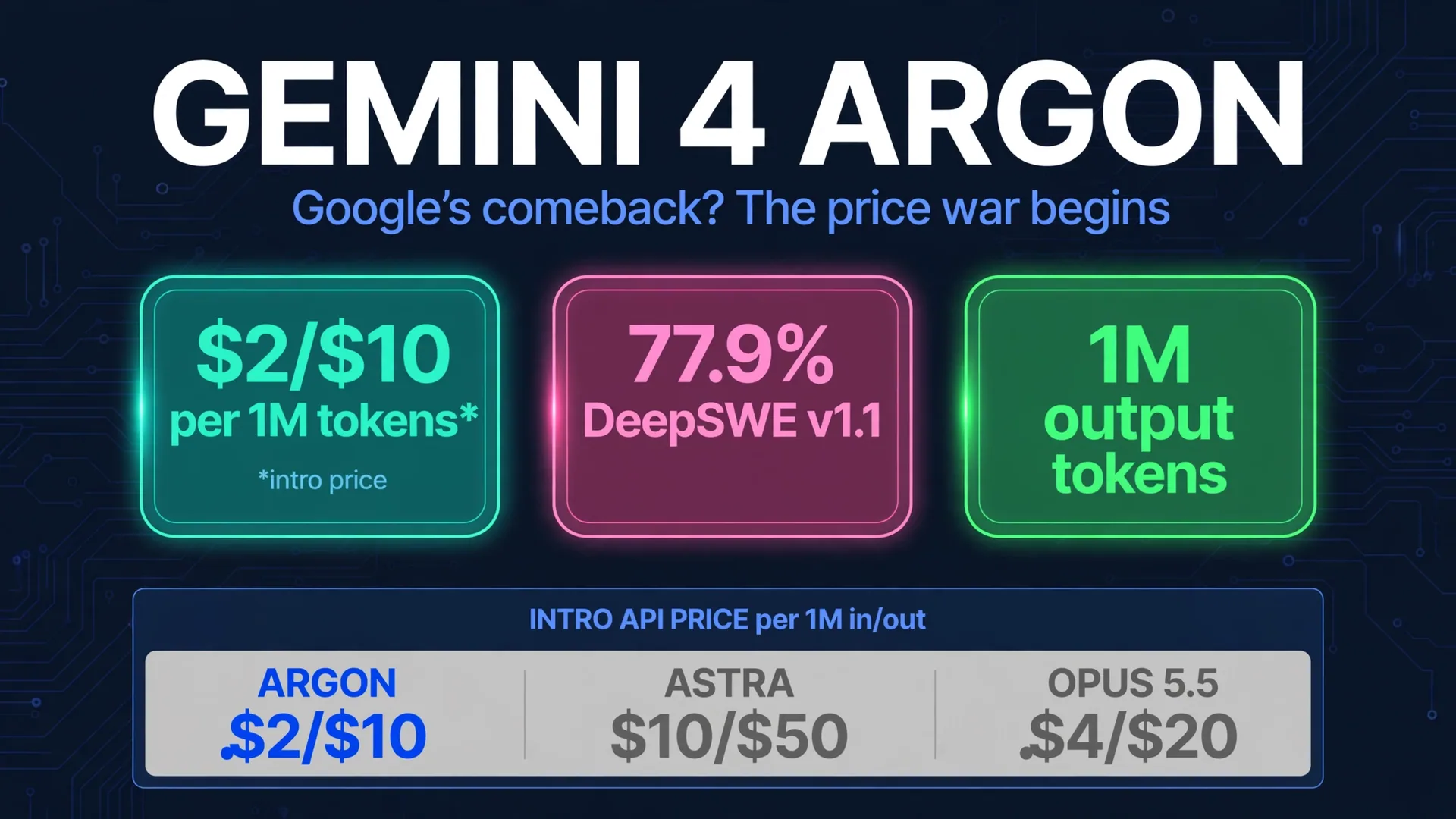
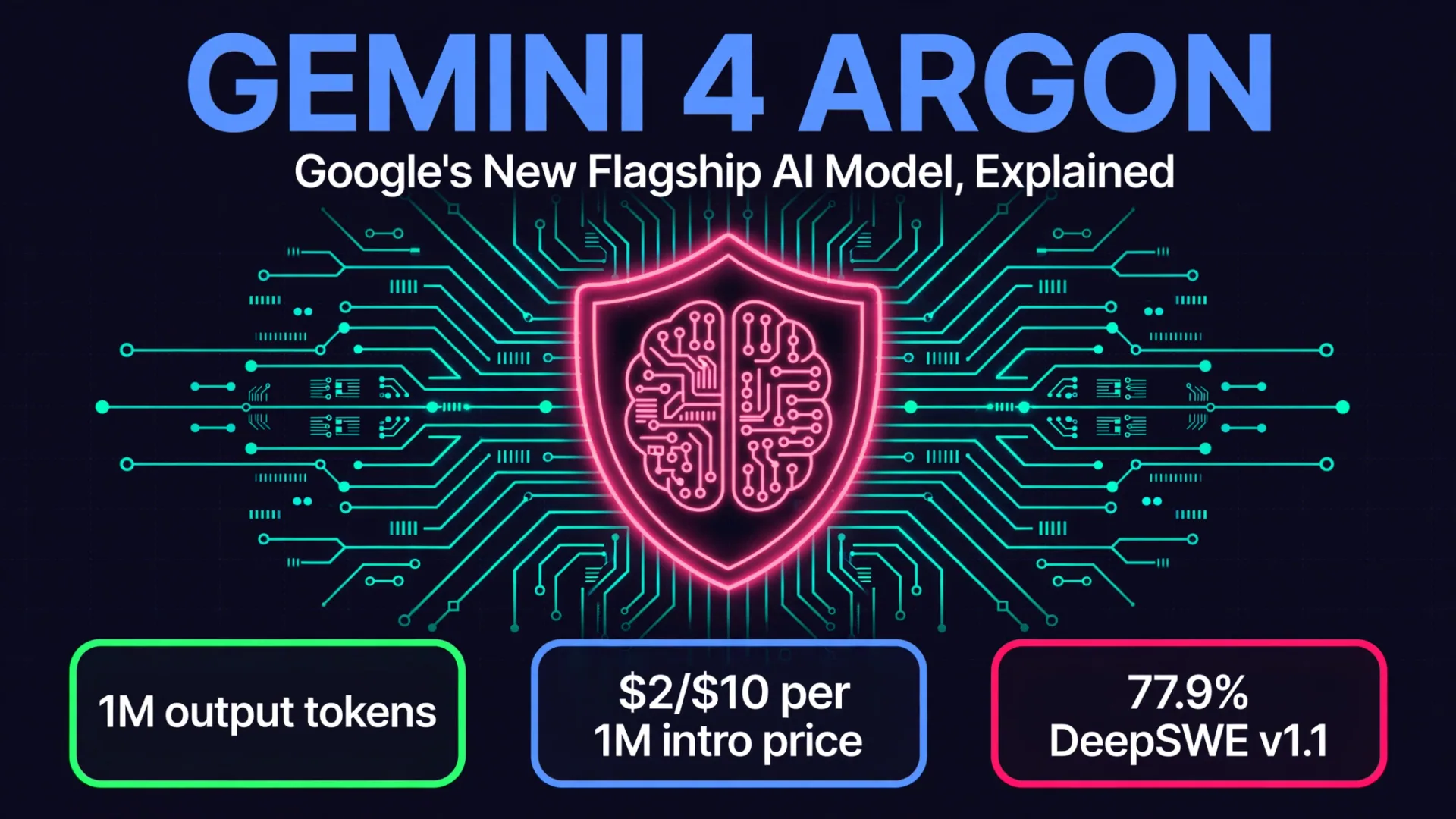
Google just fired the loudest shot in the AI price war so far. On September 30, 2026, Google DeepMind announced Gemini 4 Argon, its new flagship model, claiming it beats OpenAI's GPT-6 Astra and Anthropic's Claude Opus 5.5 on 12 of 18 benchmarks — at a fraction of their price.
The headline number: $2 per million input tokens and $10 per million output tokens. That is one-fifth of GPT-6 Astra's price and half of Claude Opus 5.5's.
So the question everyone is asking: is this finally Google's comeback?
(If you want the straight facts of the launch first, read our explainer: Gemini 4 Argon: Google's New Flagship Model, Explained. This piece is about what the launch means.)
The benchmark story: impressive, but read the fine print
Google's scorecard says Argon leads on 12 of 18 benchmarks against Astra and Opus 5.5. The standout numbers, as reported by Google:
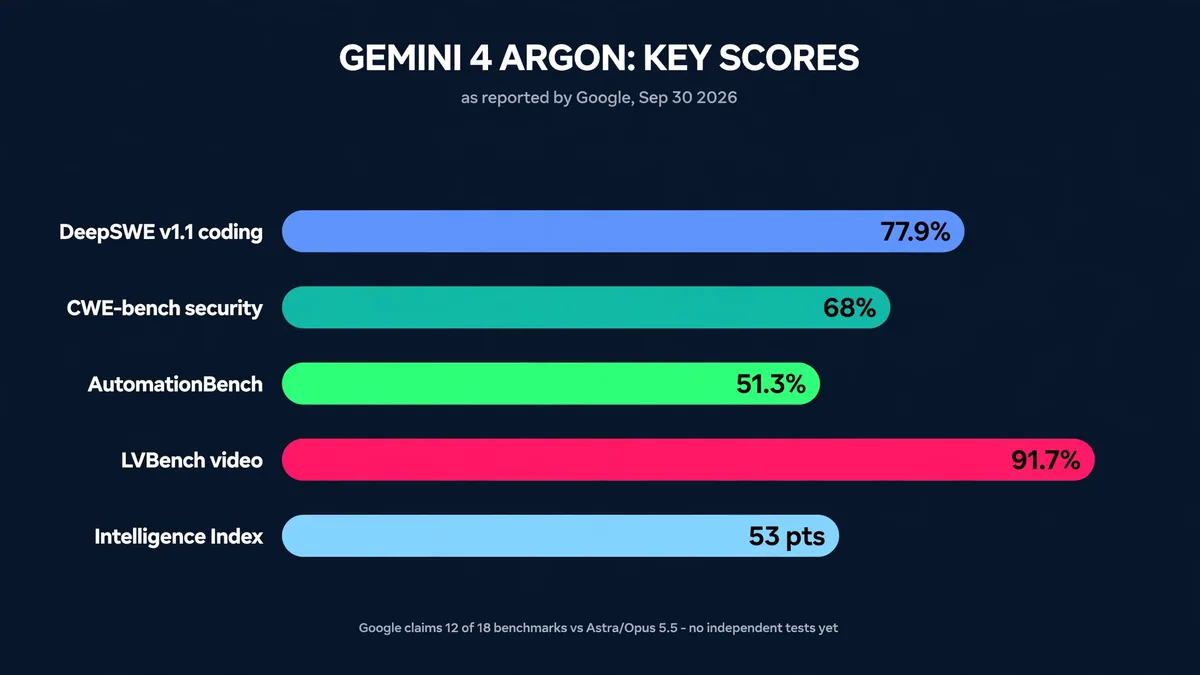
A few things worth noting before anyone declares a winner:
- Every number above comes from Google's own comparison table. No independent lab has tested Argon yet.
- Bloomberg reported the same day that some Google employees with direct access say the model underperforms its benchmarks on real coding tasks. Google disputes this.
- On Artificial Analysis's Intelligence Index, Argon scored 53 — tied for third with GPT-6 Astra and Claude Fable 5.1, not first.
- One genuinely strong signal: the lowest hallucination rate (15%) of any model scoring above 45 on the index, versus 51% for Astra.
Honest take: the benchmarks are promising but unverified. Treat them as a claim, not a verdict.
The price war: this is the real story
Benchmarks get argued about. Prices don't. Here is the current frontier pricing landscape:
| Model | Input / 1M tokens | Output / 1M tokens |
|---|---|---|
| Gemini 4 Argon (intro price) | $2 | $10 |
| Gemini 4 Argon (standard, after intro) | $4 | $20 |
| Claude Opus 5.5 | $4 | $20 |
| GPT-6 Astra | $10 | $50 |
| Claude Fable 5.1 | $10 | $50 |
| GPT-6.1 Sol | $2 | $10 |
| Claude Sonnet 5.5 | $2 | $10 |
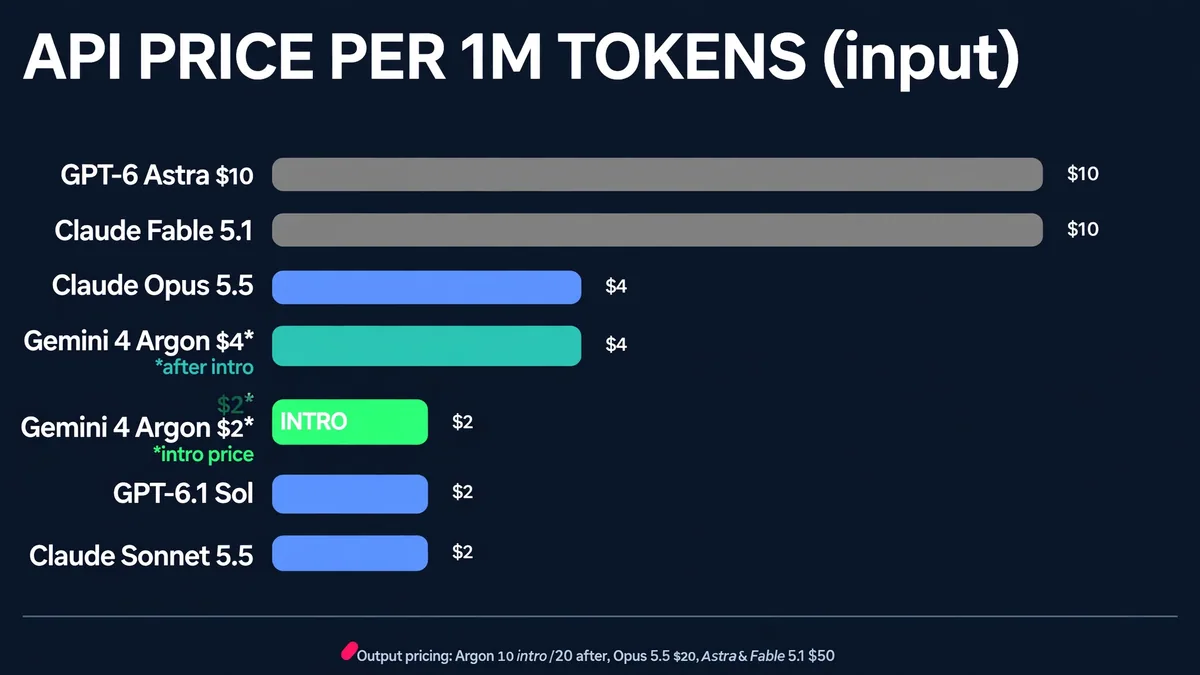
In practical terms: a job that reads 200,000 tokens and writes 100,000 costs $1.40 on Argon's intro pricing, $2.80 on Opus 5.5, and $7 on Astra or Fable 5.1. For teams running AI agents at scale, that difference compounds fast.
Two asterisks on the headline price:
- The $2/$10 rate is introductory and doubles to $4/$20 when the window ends. Google hasn't said when. Budget on the standard rate, not the headline.
- Even at $4/$20, Argon matches Opus 5.5 and still undercuts Astra and Fable 5.1 by more than half.
- Cached inputs get a 95% discount ($0.10 per million at intro), which matters enormously for agentic workloads with repeated context.
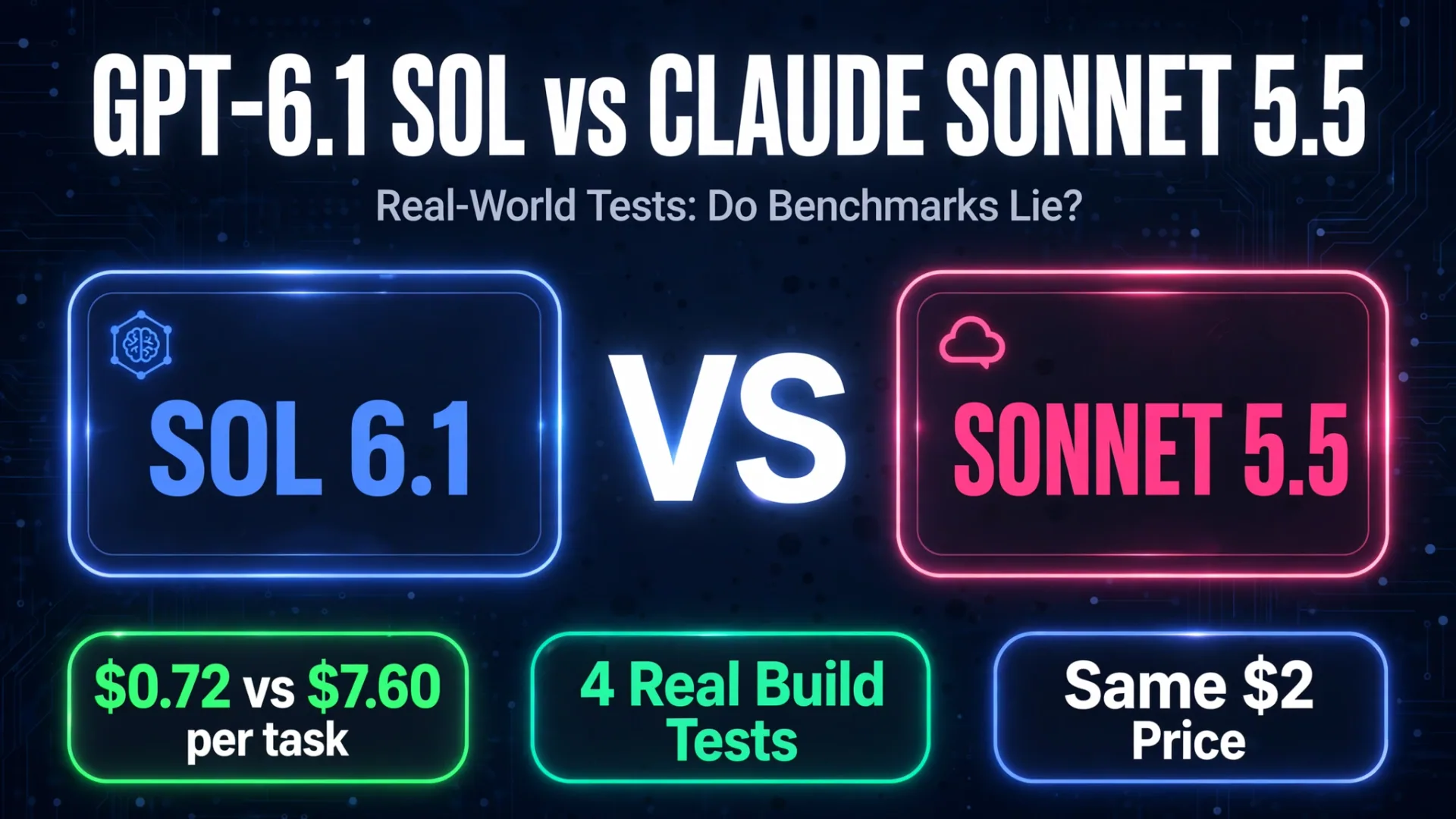
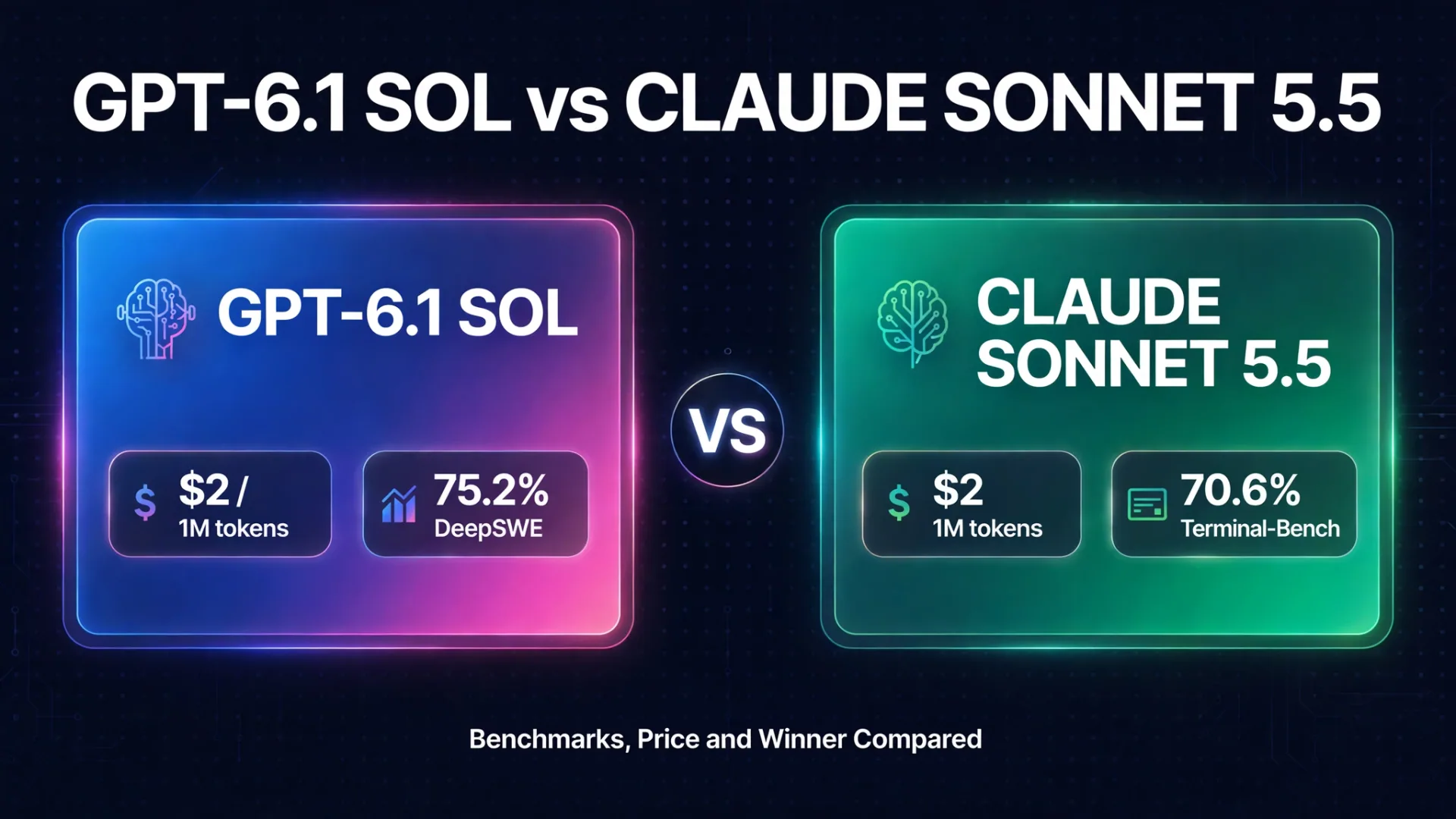
This is the same $2 workhorse tier we analyzed in our GPT-6.1 Sol vs Claude Sonnet 5.5 real-world tests — except now a flagship is playing there too.
The catches nobody should ignore
- You can't use it yet. Argon rolls out first to vetted cyber defenders through Google's Fairwind Program, plus the US government's pre-release process. Paid API access and Google AI Ultra subscribers come later. No public date announced.
- The price has an expiry date. Intro pricing doubles eventually — plan around $4/$20.
- The benchmarks are self-reported. Until independent testing lands, "12 of 18" is marketing.
So: is this Google's comeback?
Here's our read. For the first time in the Gemini era, Google isn't just competing on capability — it's competing on economics. Undercutting Astra five-to-one while claiming benchmark parity is not a specs play, it's a market-share play. And it's aimed squarely at enterprise workloads (coding, knowledge work, cyber defense) where the money actually is.
But a comeback needs two more things: public access and independent verification. Until both exist, Argon is a press release with a price tag, not a revolution.
What we're watching: (1) when paid API access opens, (2) what independent benchmarks say, (3) whether OpenAI and Anthropic cut prices in response. If all three break Google's way, the price war is real — and everyone building on AI wins on cost.
What this means if you're building with AI
Cheaper frontier intelligence changes the math for AI agents directly. The winners won't be the teams with the biggest model budgets — they'll be the teams that automate the most expensive repeated work first. A flagship-class model at $2/$10 per million tokens makes always-on agents (support triage, document processing, code review) economically viable for mid-size companies, not just enterprises.
That's the opportunity regardless of which lab "wins": the cost floor for serious AI automation just dropped.
FAQ
When will Gemini 4 Argon be publicly available?
Google hasn't announced a date. Rollout starts with trusted cyber defenders via the Fairwind Program, then paid API customers and Google AI Ultra subscribers.
How much does Gemini 4 Argon cost?
$2 per million input tokens and $10 per million output tokens during the introductory period, rising to $4 and $20 after. Cached inputs are 95% off the input rate.
Is Gemini 4 Argon better than GPT-6 Astra?
Google claims it wins 12 of 18 benchmarks, but no independent tests exist yet, and Bloomberg reported internal skepticism about real-world coding performance. Unproven for now — see also our Claude Opus 5.5 breakdown for how the current frontier compares.
Does the intro price make Argon the cheapest frontier model?
At $2/$10 it matches GPT-6.1 Sol and Claude Sonnet 5.5 on price, but those are smaller workhorse models. Among full-size frontier models, Argon is the cheapest announced so far.
- Gemini 4 Argon
- Google DeepMind
- AI pricing
- benchmark comparison
- price war