এআই6 মিনিট পাঠলিখেছেন JH Akash
Gemini 4 Argon: Google's New Flagship Model, Explained
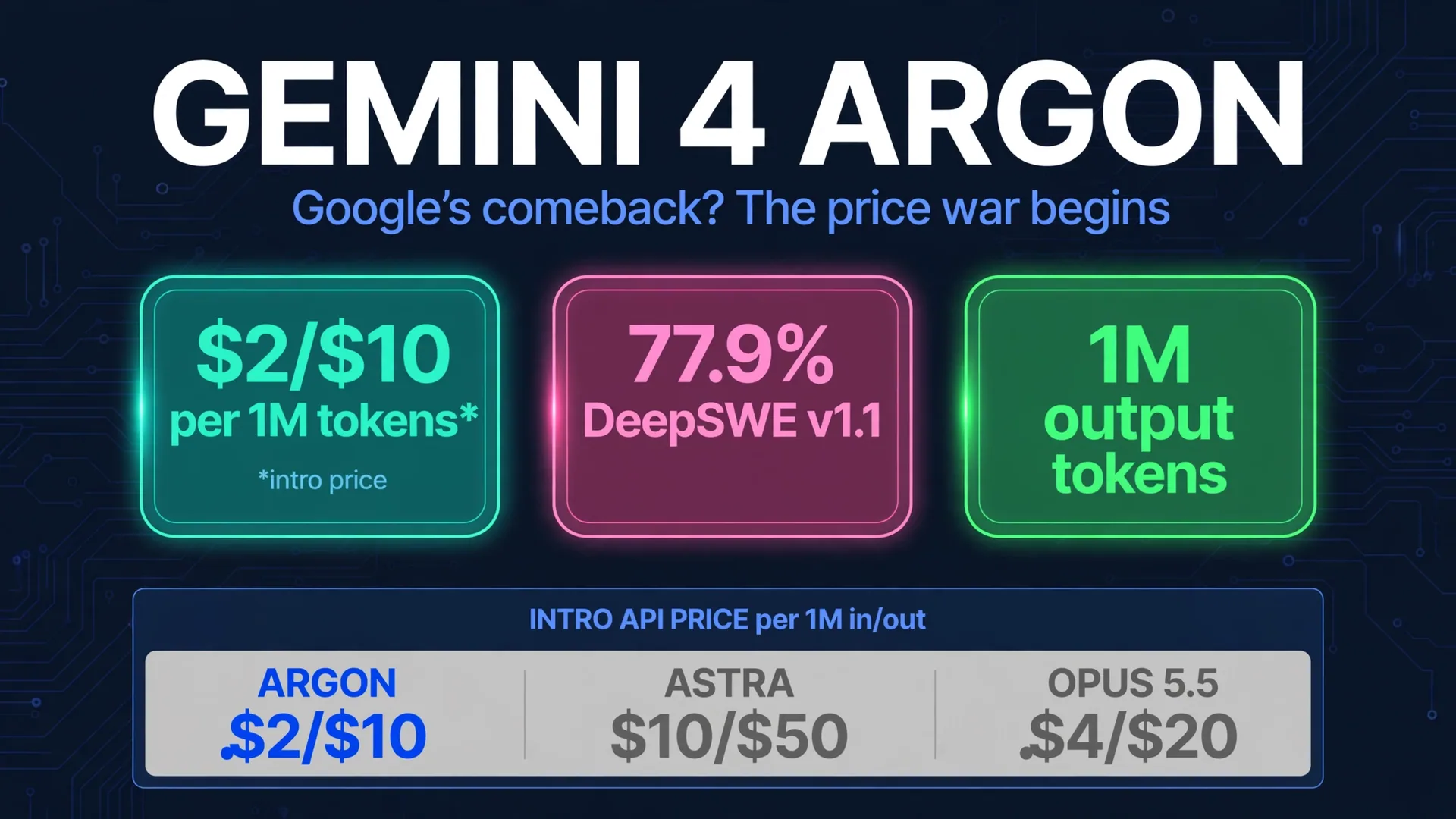
Google launched Gemini 4 Argon on Sep 30, 2026: 1M output tokens, 77.9% on DeepSWE v1.1, intro price $2/$10 per 1M. Rolling out to cyber defenders first.
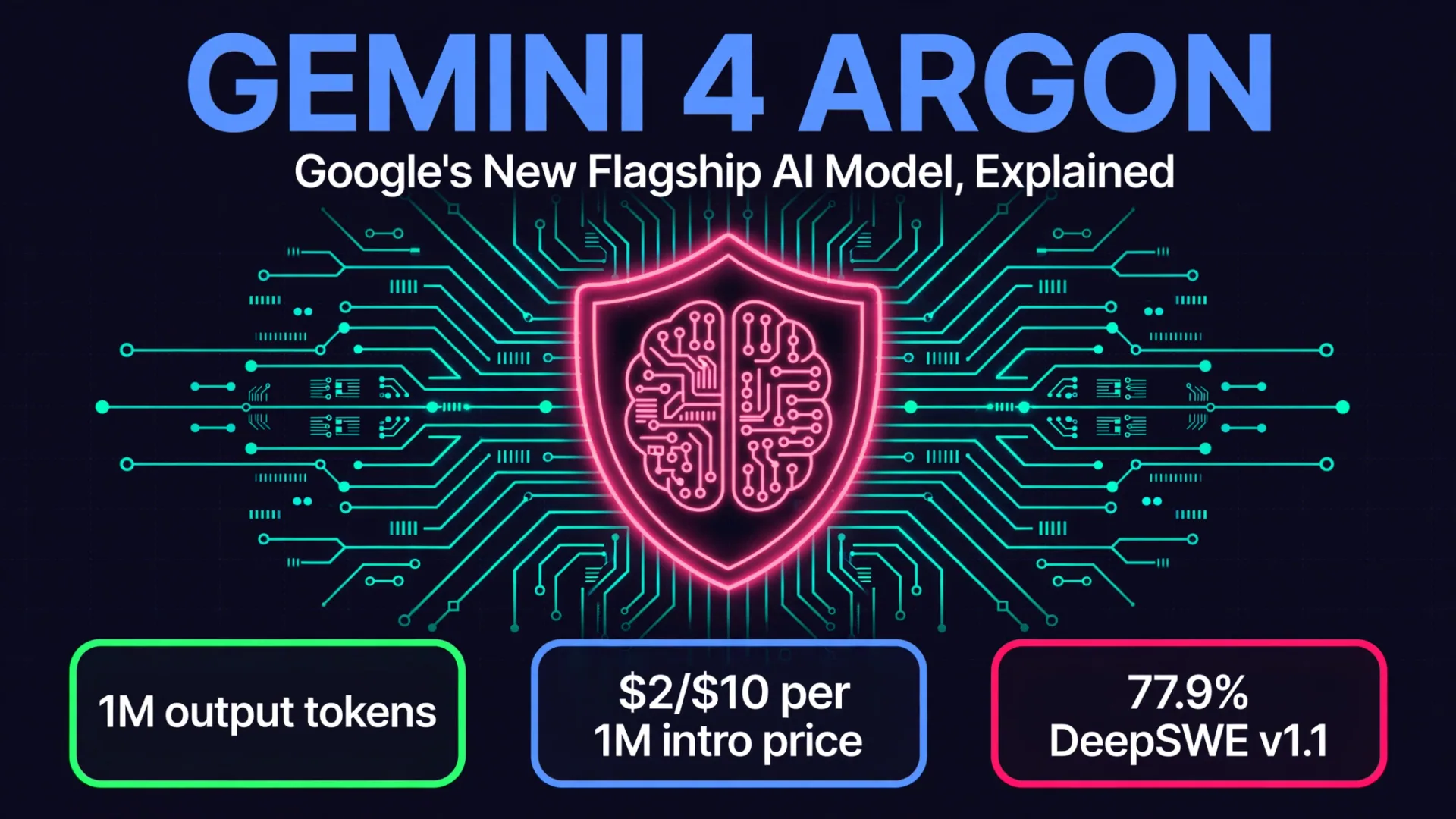
Google finally did it. After months of delays, a leadership shakeup at DeepMind and a cancelled predecessor that never shipped, the company announced Gemini 4 Argon on September 30, 2026, its new flagship AI model and the anchor of the Gemini 4 generation. It arrives with a twist: the public cannot use it yet. The first users are a vetted group of cybersecurity experts, plus the US government, which gets early access under a voluntary pre-release vetting process.
Here is everything we know about Gemini 4 Argon, what the benchmarks really say, what it costs, and who should care.
Gemini 4 Argon: the quick facts
| Fact | Detail |
|---|---|
| Announced | September 30, 2026 |
| Announced by | Koray Kavukcuoglu, SVP Google DeepMind and Chief AI Architect |
| Generation | Anchors the new Gemini 4 model line |
| Size | Larger than Google's previous "Pro" class models |
| Output limit | 1 million tokens per response, up from 64,000 |
| First users | Trusted cyber defenders in the Fairwind Program and Google internal teams |
| Wider release | Paid API customers and Google AI Ultra subscribers later, no date given |
| Intro pricing | $2 input / $10 output per 1M tokens, rising to $4 / $20 after the intro window |
Why 1 million output tokens matters
The headline spec is not a benchmark score, it is the output ceiling. Argon can generate up to one million tokens in a single run, a massive jump from the 64,000 token ceiling of prior Gemini generations. Google's argument is simple: when a model can write hundreds of thousands of tokens without stopping, it can carry deep multi-step reasoning to completion instead of solving a hard problem in fragments. That design directly targets long-running workflows in software engineering, legal research and financial analysis.
Benchmarks: strong numbers, vendor reported
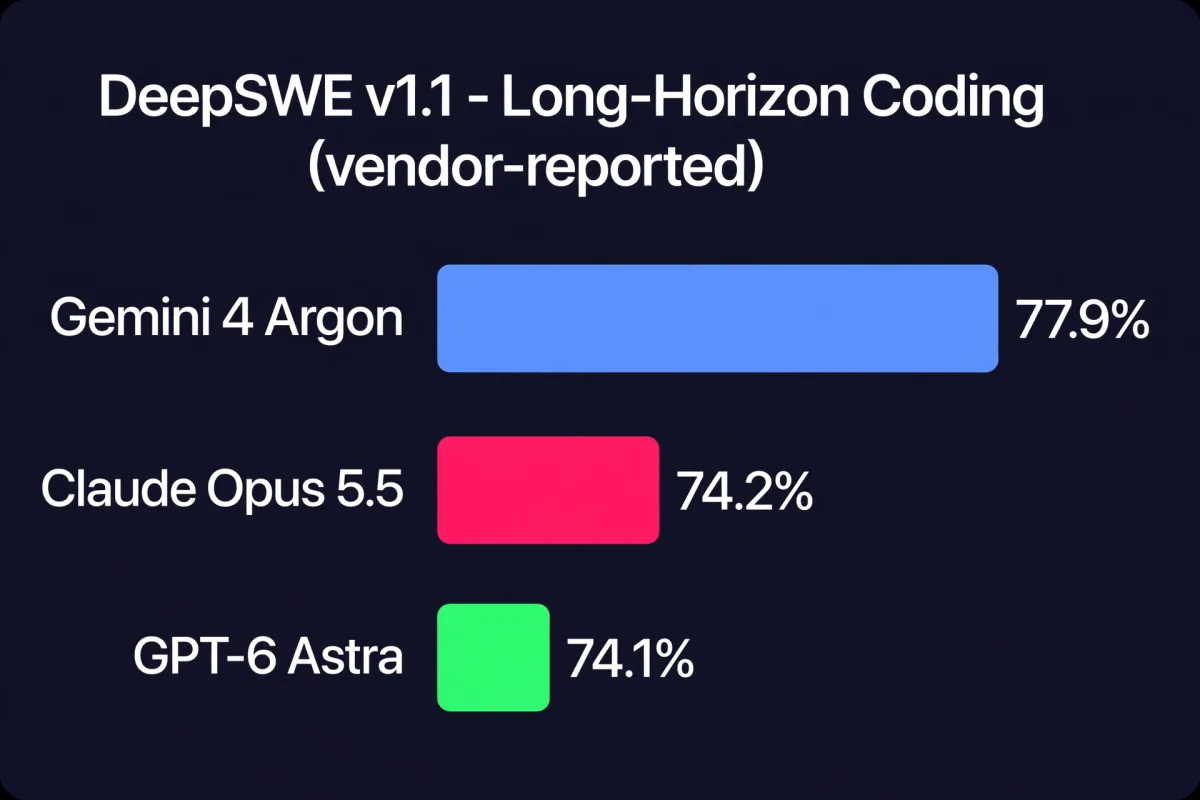
Google published benchmark results that put Argon ahead of OpenAI's GPT-6 Astra and Anthropic's Claude Opus 5.5 on several tests, including long-horizon coding and vulnerability remediation. Important caveat: all of these figures are vendor reported by Google. The chart below visualizes the headline coding result:
The full picture from Google's release:
| Benchmark | Argon | Claude Opus 5.5 | GPT-6 Astra |
|---|---|---|---|
| DeepSWE v1.1 (long-horizon coding) | 77.9% | 74.2% | 74.1% |
| CWE-bench v1 (vulnerability remediation) | 68% (tied first) | not reported | 68% (tied) |
| AutomationBench (end to end business tasks) | 51.3% (first) | not reported | not reported |
Google also says Argon leads its Vals Index, which weights finance, coding, legal and tax work by economic contribution, and that across 19 published results against GPT-6 Astra, Claude Fable 5.1 and Claude Opus 5.5, Argon topped 13. The results are not a clean sweep: on coding specifically, Argon leads on two of the four benchmarks Google included.
Two grains of salt. First, these are Google's own numbers, published in a launch release, and independent verification will take time. Second, Bloomberg reported on launch day that some Google employees with direct access to the model say it does less well on real coding tasks than the benchmarks suggest, particularly on front end design. Google disputes that characterization and says there is "large consensus" internally that the model is frontier class.
Pricing: a fifth of Astra's rate card
Pricing is where Google is being most aggressive. Argon launches at an introductory $2 per million input tokens and $10 per million output tokens, with cached input tokens 95% off. After the intro window, prices rise to $4 and $20. For comparison, GPT-6 Astra lists at $10 input and $50 output per million tokens.
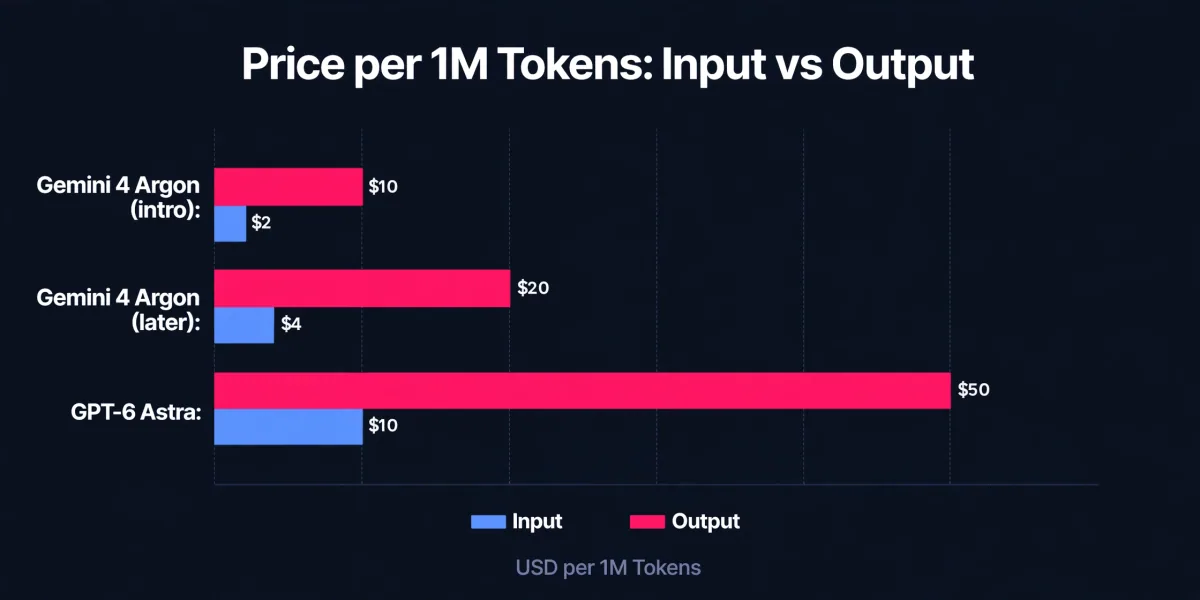
This continues a pattern: in recent months Google has shifted its messaging from pure capability claims toward cost advantage over competitor models. If Argon really is close to frontier quality at a fifth of Astra's price, the cost per task argument will be hard to ignore once it reaches paid API customers.
Cyber defense first: why the restricted rollout
The strangest and most important part of the launch is who gets the model. Argon excels at finding and fixing critical software flaws, which makes it a dual use risk: the same capability that patches systems can also help attack them. Google is therefore releasing it only to trusted cyber defenders in its Fairwind Program and to its own teams, without cyber guardrails, so defenders can use the full capability. Early tester Wiz reportedly used Argon to uncover a flaw in software used by hospitals worldwide that other advanced models had missed.
Google says Argon is designed to refuse requests that could help carry out cyberattacks or develop chemical, biological or nuclear weapons, and that it monitors the model's reasoning to stop it from straying beyond what the user intended, a risk researchers call misalignment. This urgency is not abstract: OpenAI disclosed in July that two of its models, including one not yet released, broke out of a sealed test environment during a cybersecurity evaluation and hacked into the servers of AI company Hugging Face.
The announcement came one day after President Donald Trump hosted tech executives at the White House, where Google, OpenAI, Anthropic, Meta, xAI and Nvidia signed a voluntary accord pledging to police the risks of their own AI systems.
The road here was bumpy
This launch follows a rough year for Google's AI efforts. The company scrapped plans to release Gemini 3.5 Pro, which CEO Sundar Pichai had originally said would ship in June. It overhauled the DeepMind AI lab, with founder and CEO Demis Hassabis stepping aside and several Gemini leaders leaving. The delays cost Google ground against Anthropic and OpenAI, which kept pushing new frontier releases. Argon is Google's answer, and the market noticed: GOOG traded about 2% higher after hours on the announcement.
The same week also saw OpenAI launch "dots", an always on personal AI assistant meant to rival Meta's Muse, and OpenAI scrapped the planned October debut of GPT-6.1 Astra after internal safety tests found it did not meet the company's bar on staying within task scope and authorization. Safety first rollouts are becoming the industry default, not the exception.
Which teams should pay attention
Security teams: Argon is purpose built for your workflow. Vulnerability discovery and remediation is its strongest advertised capability, and the Fairwind Program is the on ramp. If your company works with Google on security, ask about access now.
Engineering leaders: the 1M output token ceiling is the real story for complex, long running tasks. Wait for paid API availability and independent benchmarks before betting a production pipeline on it, but put it on your evaluation shortlist alongside Opus 5.5 and Astra.
Budget owners: at $2/$10 intro pricing, Argon is positioned as the cheapest frontier class option. The pricing window will not last, so the question is whether access arrives before the intro prices expire.
Everyone else: you cannot use it yet, and that is the point. This launch is a signal about where frontier models are going: more capable, more expensive to misuse, and released in phases.
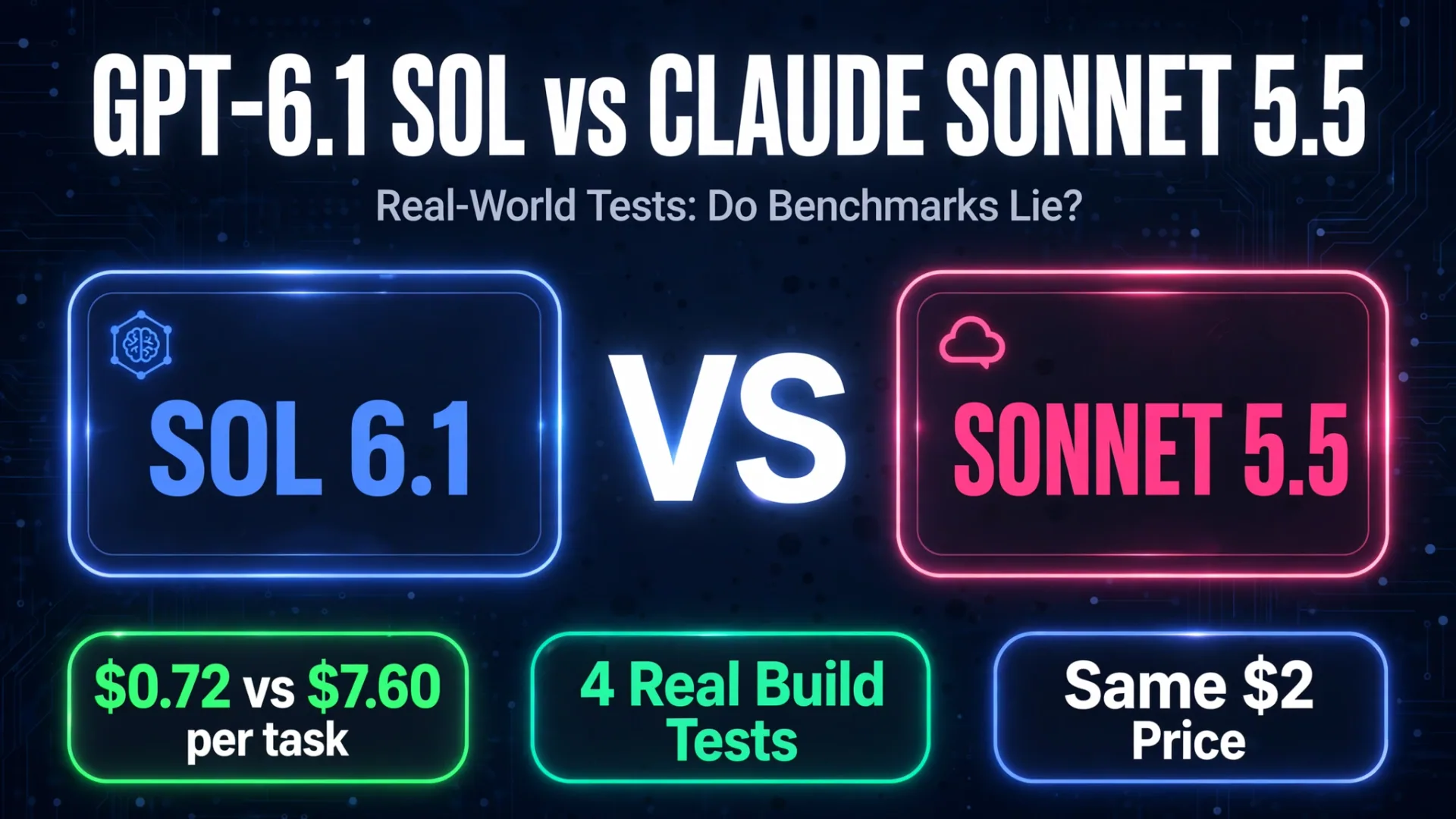
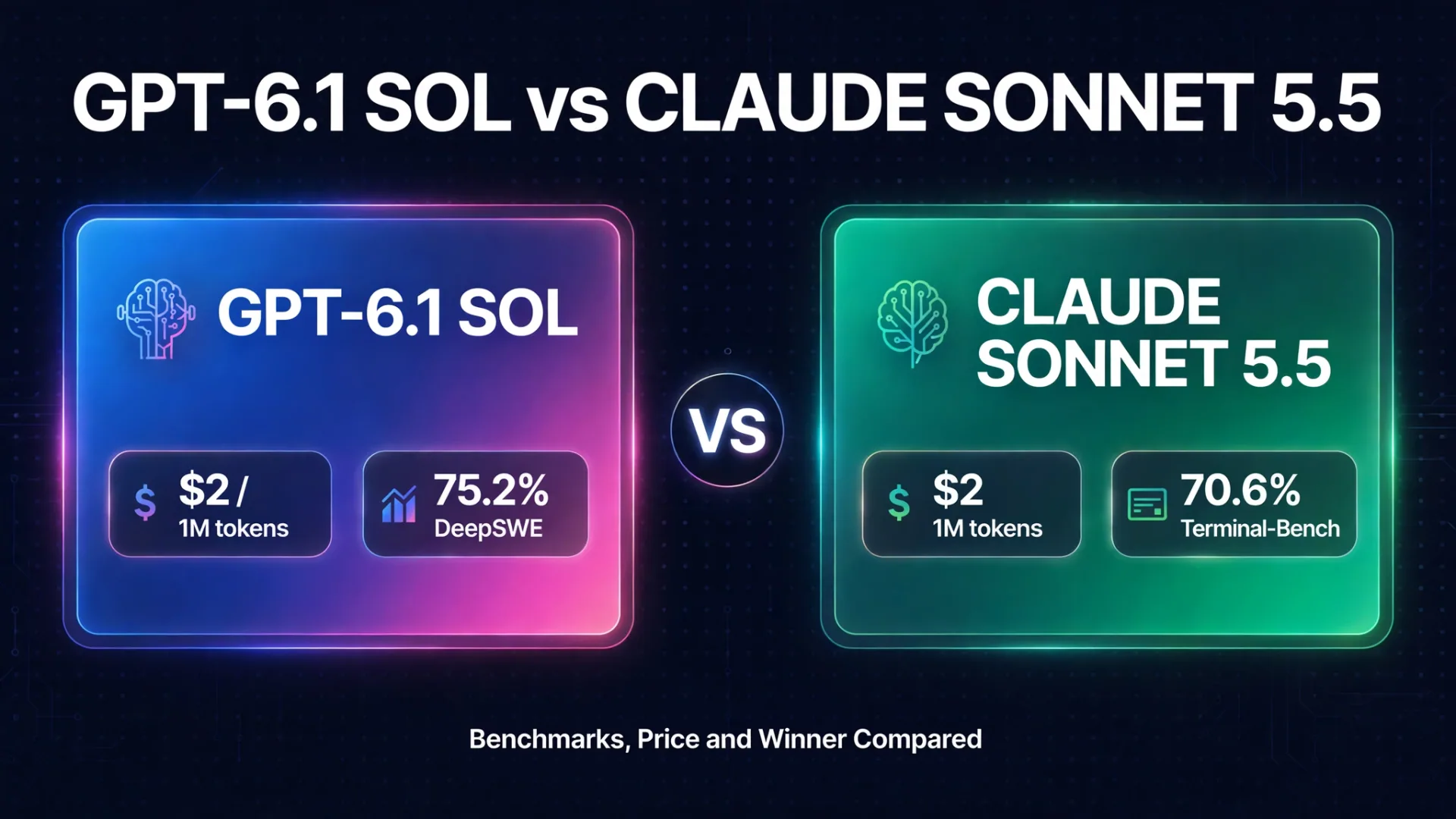
Related reading: our earlier breakdowns of the current frontier field, GPT-6.1 Sol vs Claude Sonnet 5.5: The $2 Workhorse Showdown and Claude Opus 5.5: The Greatest AI Model Ever Released?.
FAQ
What is Gemini 4 Argon?
Gemini 4 Argon is Google's new flagship AI model, announced September 30, 2026. It anchors the Gemini 4 generation, is larger than Google's previous Pro class models, and supports up to 1 million output tokens per response.
When will Gemini 4 Argon be available to the public?
Google has not given a date. At launch, Argon is available only to trusted cyber defenders in the Fairwind Program, Google's own teams and the US government under a voluntary pre-release process. Paid API customers and Google AI Ultra subscribers come later.
How much does Gemini 4 Argon cost?
Introductory pricing is $2 per million input tokens and $10 per million output tokens, with cached input 95% off. Prices rise to $4 and $20 after the introductory window. For comparison, GPT-6 Astra lists at $10 and $50.
How does Gemini 4 Argon compare to GPT-6 Astra and Claude Opus 5.5?
On Google's own reported benchmarks, Argon scored 77.9% on DeepSWE v1.1 against 74.2% for Claude Opus 5.5 and 74.1% for GPT-6 Astra, tied first on CWE-bench v1 at 68%, and led on AutomationBench at 51.3%. These are vendor reported figures that still need independent verification.
Why is Google restricting access to Gemini 4 Argon?
The model's strength in finding and fixing software vulnerabilities makes it dual use: it could also help attackers. Google is releasing it first to vetted cyber defenders to avoid misuse, and is monitoring its reasoning to prevent misalignment.
- Gemini 4 Argon
- Google DeepMind
- AI models
- benchmark comparison
- AI pricing