Built to be handed over
Voiceflow rather than something bespoke, because at the end of the job the agent exports and moves into the client's own account — and stays editable by them.
Redesign and AI chatbot case study
A ducted vacuum specialist with forty years of trade knowledge and a website that could not answer "which one do I need?". Now the site does, in a chat window, from their own catalogue.
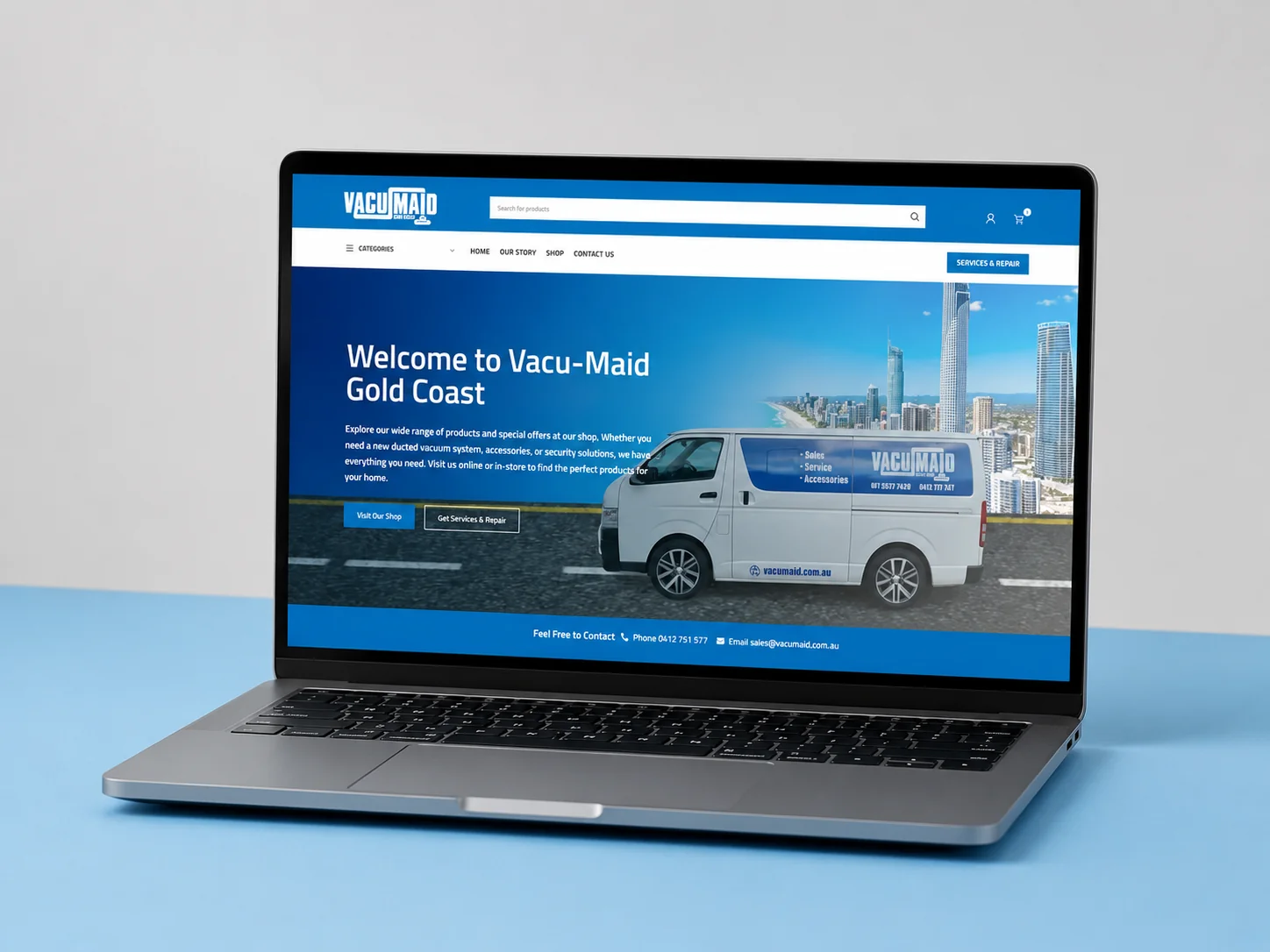
Vacu-Maid Gold Coast sell, install and service ducted vacuum systems — plus intercoms, security and CCTV. Their customers arrive knowing they want something built into the house and not much else, which makes almost every enquiry the same enquiry: which system, for what house, at what price.
The work was a redesign and an assistant. A modernised, mobile-responsive landing page and a rebuilt story page; the contact page left alone because it was doing its job.
The assistant was built in Voiceflow with a knowledge base drawn from the site, and a product database behind it so a recommendation names a product the shop actually stocks rather than a category.
The redesign, the product database and the assistant that reads from it.
A landing page that competes
Rebuilt mobile-first, with the range, the services and the shop reachable from the first screen instead of a menu.
An assistant that recommends products
Voiceflow, with the site's content as its knowledge base — it answers about ducted systems, then names one.
The catalogue is a table, not a paragraph
Every product in a database table with search behind it, so a recommendation resolves to a real listing.
It copes with how people actually type
Misspelled models and half-remembered names still find the right product rather than returning nothing.
Handed over, not held hostage
The agent exports as a file and moves to the client's own Voiceflow account, with a knowledge base they can extend in plain text.
Ducted vacuum is a considered purchase that almost nobody has made before. The questions barely vary — what fits a single storey, what a retrofit costs, whether the hose reaches the garage — and each one used to arrive as a call or an email to a small team who also install. Meanwhile the website listed products without ever connecting them to the question the visitor was actually asking, so the catalogue was a wall of similar-looking cannisters to anyone who did not already know the answer.
The same questions, all day
A small team answering identical enquiries by phone is a team not on site installing.
A catalogue that assumes you already know
Product listings are useful to somebody comparing models and useless to somebody choosing a category.
Forty years of knowledge, undocumented
The advice that actually sells a system lived in the heads of the people giving it, and only during business hours.
The assistant is the point, and the redesign is what makes the assistant reachable. It was built in Voiceflow so the client could own it afterwards, given the site's own content as its knowledge base, and pointed at a product table so it can move from explaining a category to naming a product. Its openers are pre-written text and images rather than a blank prompt, because a chat window with nothing in it asks the visitor to know what to ask.
Voiceflow rather than something bespoke, because at the end of the job the agent exports and moves into the client's own account — and stays editable by them.
The product table is what turns "you want a ducted system" into a specific unit with a price, rather than a helpful-sounding paragraph.
Pre-made text and image responses greet the visitor with the questions people actually ask, so the first move is a click rather than a blank field.
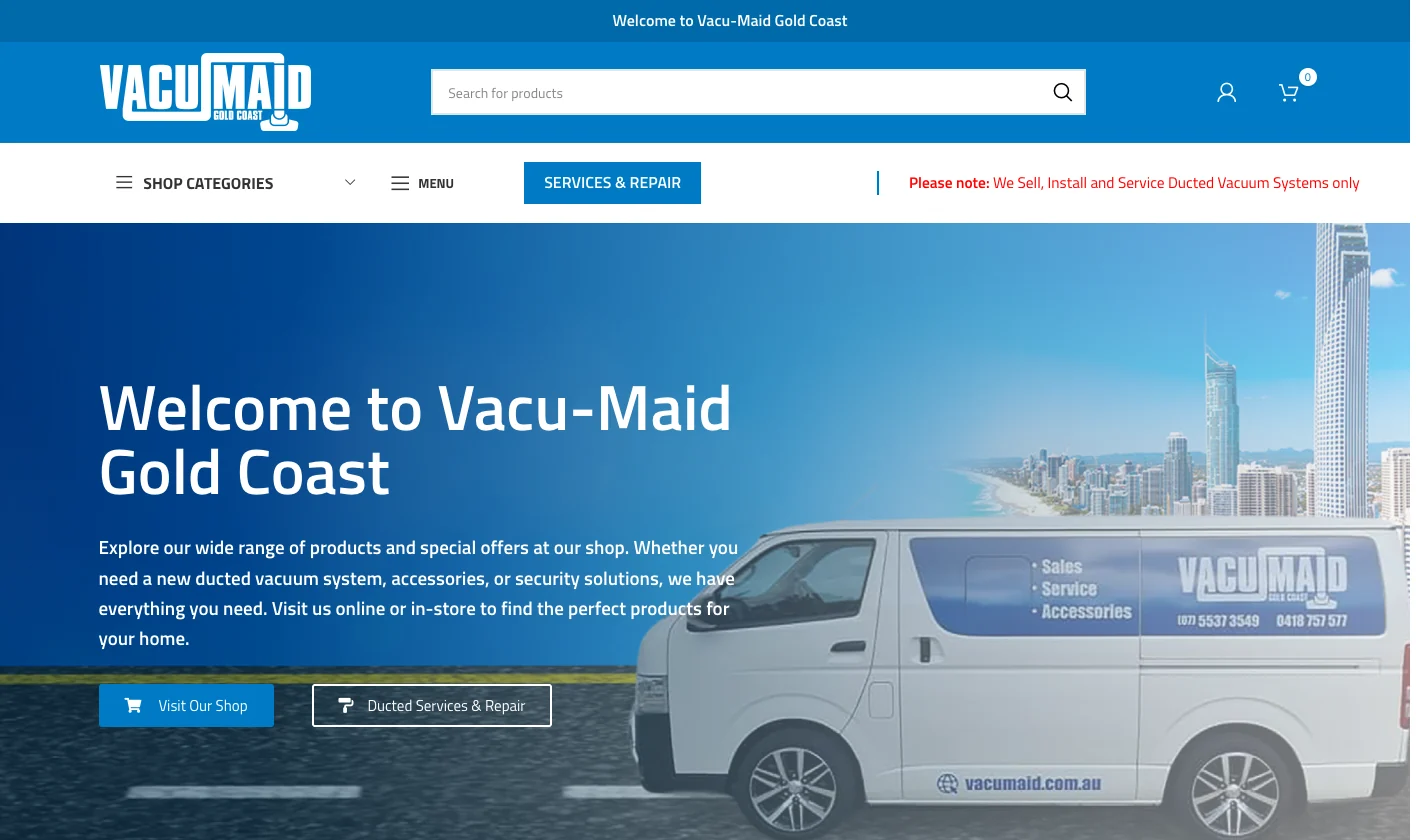
Search, categories and the two things visitors want — buy something, or book a repair — all above the fold. The van is the client's own, which does more for a local trade business than any stock photograph.
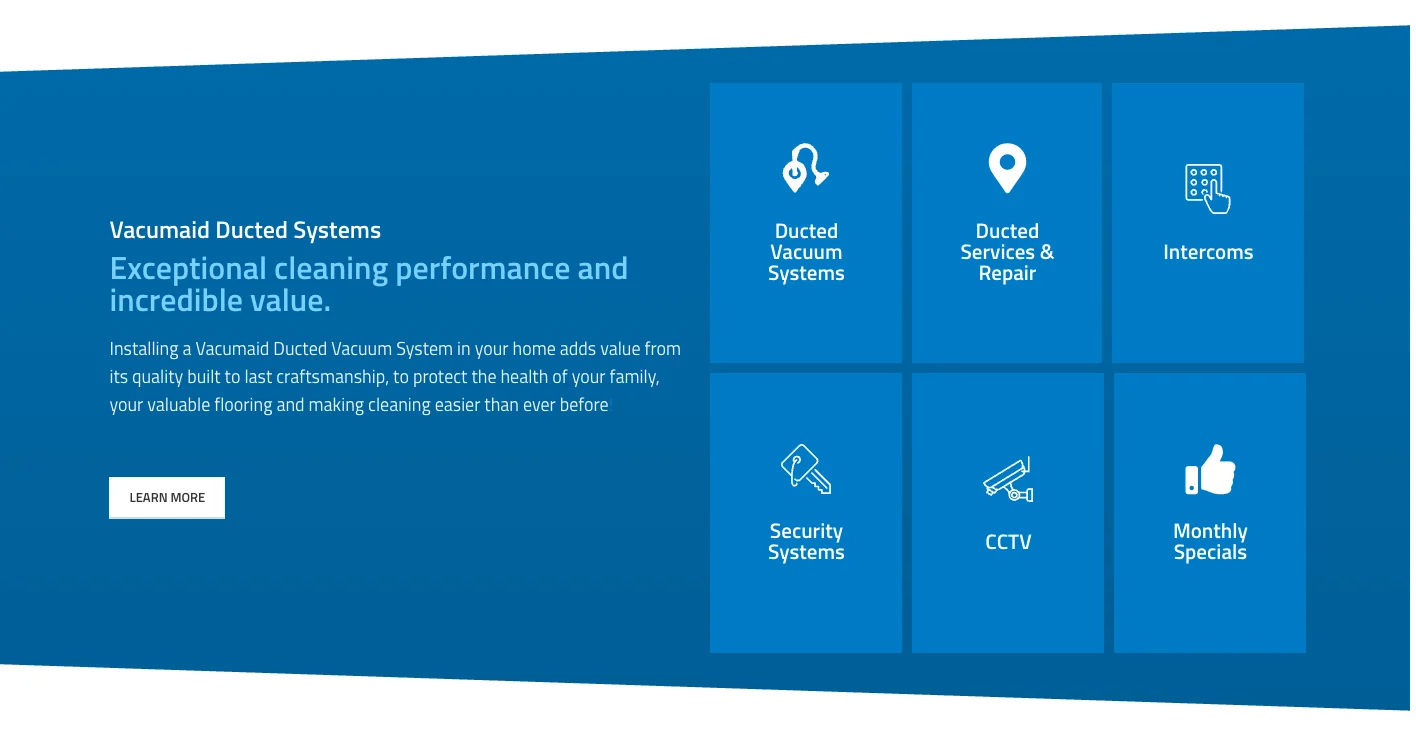
The business is wider than its name suggests, and this grid is where that gets said. Each tile is a route into the shop, so a visitor who arrived about vacuums can leave having found the CCTV.
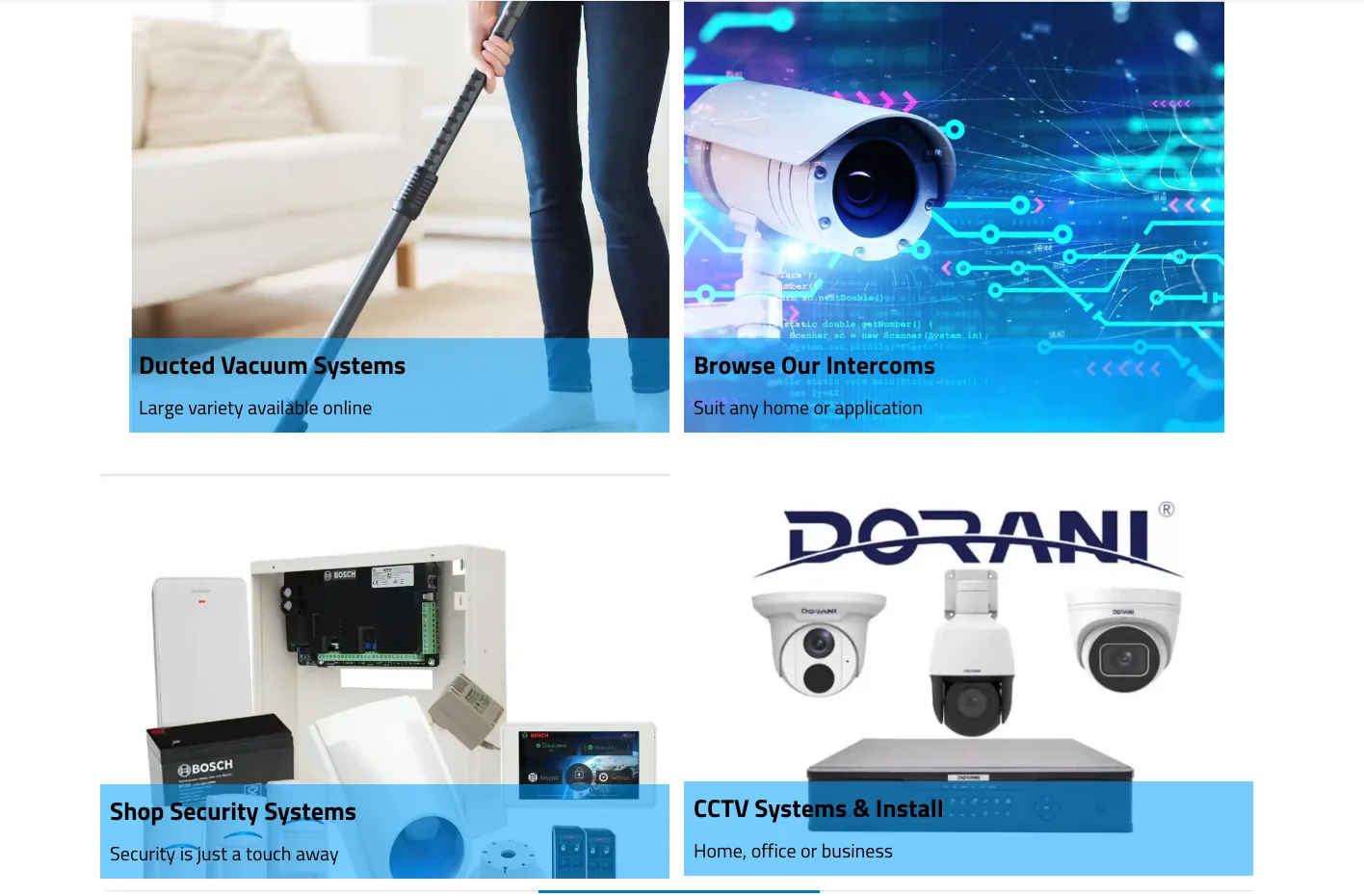
The same products the assistant recommends from, arranged the way somebody browses rather than the way a database stores them. Choosing a category first is what makes the rest of the shop legible.
Solution: An assistant that talks about categories is a brochure with a text box. Every product went into a database table with search over it, so the agent moves from explaining ducted systems to naming a unit that is actually listed — and cannot recommend something the shop does not sell.
Solution: Queries arrive misspelled, abbreviated and half-remembered. The lookup tolerates that and corrects toward the closest real product, because the alternative — no results — reads to the visitor as "they do not stock it".
Solution: A blank prompt asks the visitor to already know the vocabulary. The agent opens with pre-written text and image responses covering the questions the client answers by phone every week, so the first interaction is a choice rather than a composition.
Solution: The agent exports as a file and imports into the client's own Voiceflow workspace, and its knowledge base takes plain text entries. That is what makes it theirs — extendable without us, and not dependent on an account we hold.
They has been a pleasure to work with and I am sure I will work with again! Thank you!
Vacu-Maid Gold Coast
Client, via Fiverr
Let's put it on your website instead.