Catalogue first, design second
The products land intact before anything is restyled, so a design decision is never also a data decision.
Ecommerce replatform case study
A working Shopify store, moved to WooCommerce and redesigned on the way across — because a replatform that ships the old design has only changed where the bills come from.
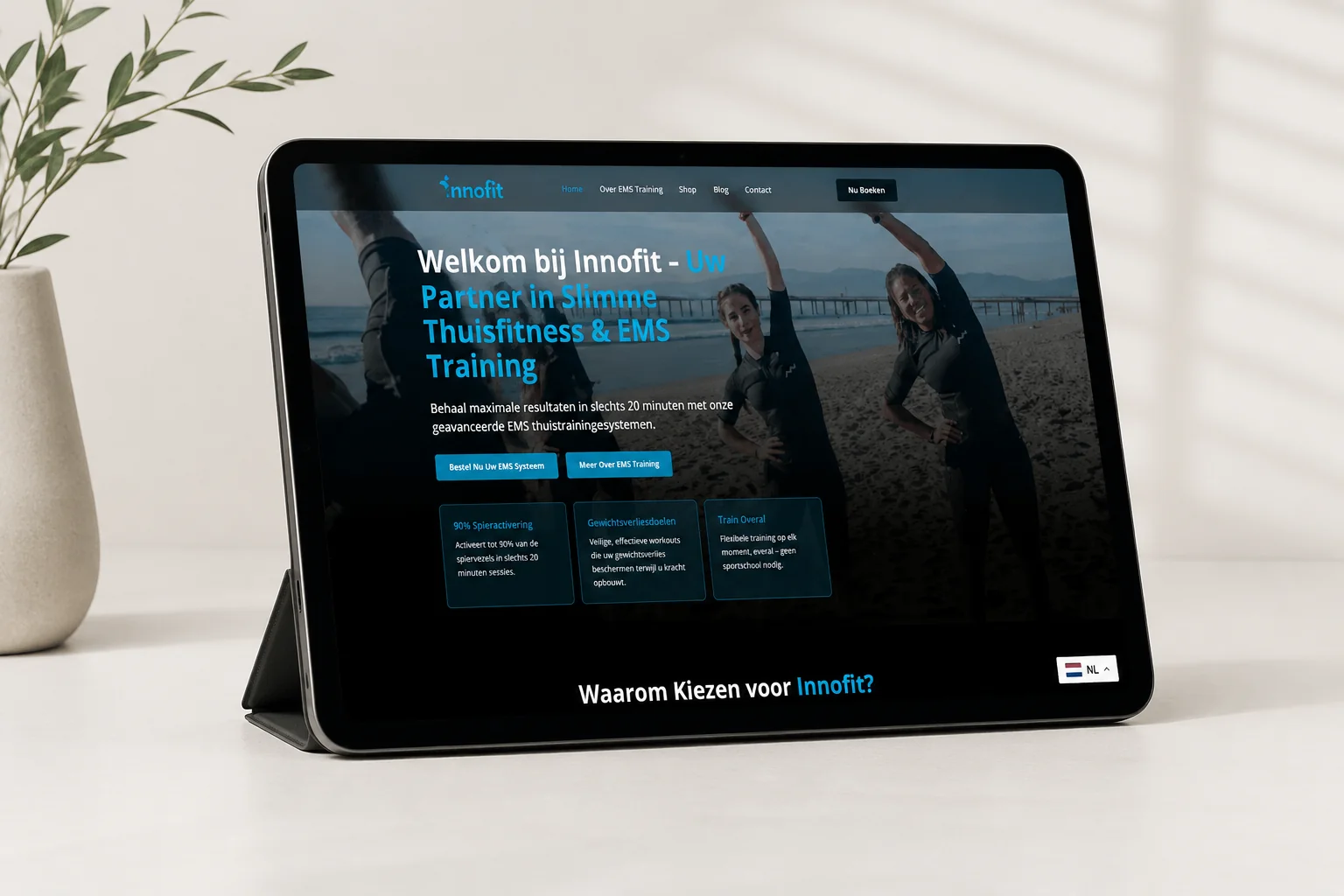
Innofit sell physical products online, and the store worked. The reason to move it was not that Shopify had broken; it was that the monthly cost, the limits on how the storefront could be built and the ownership of the whole thing had stopped suiting the business.
So the job was two jobs at once. Move the catalogue, the pages and the customer-facing structure onto WordPress and WooCommerce without losing anything, and redesign the storefront rather than reproducing the one being left behind.
The measure of success is the boring one: the store still sells, the products are all present and correct, and the people running it can now change the storefront themselves.
The old store, the new one, and what moved between them.
The catalogue moves intact
Products, variants, images and descriptions transferred to WooCommerce — the part where a replatform is judged.
A storefront rebuilt, not copied
The new shop is designed for what the business sells now rather than reproducing a theme it had outgrown.
Editable by the people who own it
Pages, sections and products all change from the WordPress editor, without a platform deciding what is possible.
Nothing quietly left behind
Pages, structure and the paths customers already use are accounted for, because a migration that loses them loses the traffic too.
Replatforming a shop that is already taking orders is a different problem from building one. There is a live catalogue with real product data in it, customers with links and habits, and a business that cannot afford a week of "we are migrating". Every product, variant, image and description has to arrive on the other side intact, and the storefront has to be recognisably the same shop while being visibly a better one. Get it wrong and the cost is not a delay — it is orders that do not happen.
A live catalogue is not a spreadsheet
Products carry variants, images, descriptions and relationships, and all of it has to survive the move in one piece.
The shop cannot close for the work
A migration measured in days of downtime is a migration that costs more than the platform it was escaping.
A redesign is a second project
Moving the store and improving it are separate risks, and doing both at once means neither can hide behind the other.
WordPress and WooCommerce because the constraint being escaped was ownership: a storefront that can be built any way the business needs, on infrastructure and data it controls, without a monthly floor for the privilege. The catalogue moved first and completely — products, variants, images, descriptions — and the redesign happened on top of a store that was already whole, so the two risks were never taken at the same time.
The products land intact before anything is restyled, so a design decision is never also a data decision.
Designed around what Innofit actually sells rather than fitted into whichever theme was closest.
The whole point of the move: pages and products are theirs to edit, on a stack nobody is renting.
Solution: Shopify and WooCommerce model variants, options and images differently, and a naive export leaves gaps that only show up on a product page weeks later. The catalogue was mapped deliberately and checked product by product, because "most of it came across" is not a state a shop can trade in.
Solution: Reproducing the previous storefront would have delivered the same shop with a different invoice. Rebuilding it is what makes the migration worth the risk — and doing it after the data had landed meant the redesign could be judged on its own.
Solution: Existing links, bookmarks and indexed pages point at the old structure. Preserving what customers and search engines already know about the store is the difference between a migration and a relaunch nobody can find.
Let's move the shop, properly.