Temperature instead of prompt craft
One dial covers the distance between a literal reading and a loose one, without teaching anybody a syntax.
AI SaaS case study
An image generator with a memory. Every prompt and every result stays on the account, so a piece of work can be picked up again weeks later instead of started over.
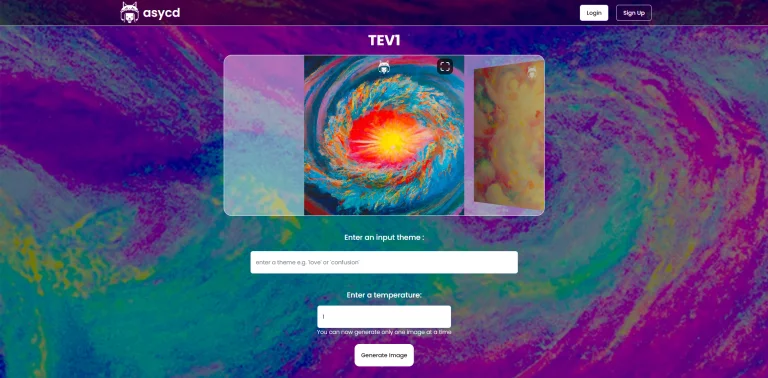
ASYCD generates images from a theme and a temperature — the theme is what you want, the temperature is how far it is allowed to wander from it. Two fields, deliberately, on a platform aimed at people exploring an idea rather than specifying one.
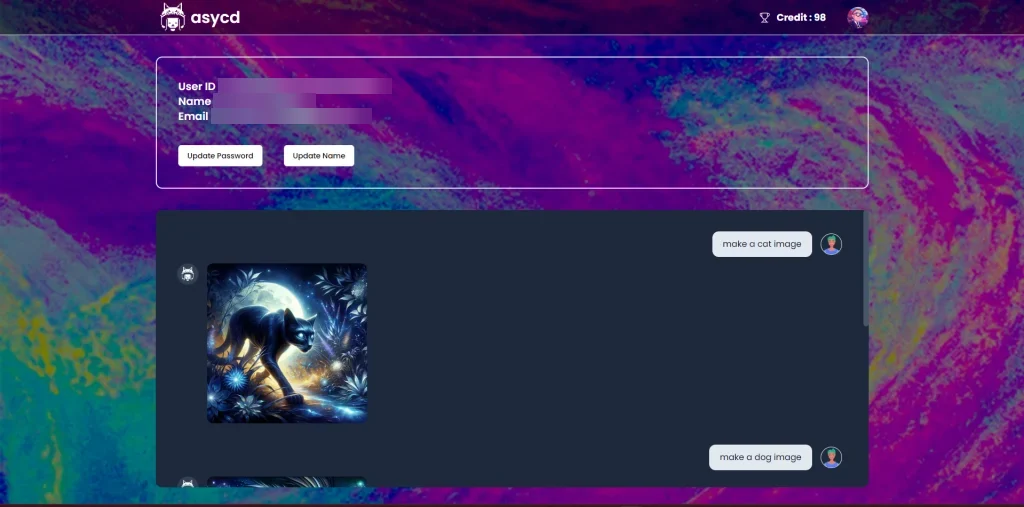
The part that makes it a product rather than a demo is the history. Prompts and the images they produced are kept against the account, so a direction from last week can be found, reused and pushed further.
Generation is metered in credits, which is what makes an image generator with real GPU costs behind it something that can be sold rather than merely launched.
Generating from a theme, and the history the account keeps of it.
A theme and a temperature
Two fields instead of a prompt-engineering tutorial. The temperature is the dial that decides how literal the result is.
The account remembers
Prompts and the images they produced are kept, so an idea from a fortnight ago can be reopened rather than reconstructed.
Credits, one image at a time
Generation draws on a credit balance shown in the header, and runs one image per request so the cost of a click is never ambiguous.
Signed in or just looking
The gallery and the form are visible before an account exists. Signing up is what buys credits, not what unlocks the page.
Making an image is rarely one attempt. It is a direction, then a variation, then a variation on that — and most tools treat each request as unrelated to the last, so the thread of what was being explored lives in the user's memory and in a folder of downloads named by timestamp. Come back a week later and the work is not resumable; it is repeatable at best, if you can remember what you typed. Meanwhile every one of those attempts costs real GPU time, which the interface has to account for without turning the experience into a meter.
The thread of an idea is lost
Without a history, refining last week's direction means remembering the prompt that produced it.
Generation is not instant
A request takes real time on real hardware, and a screen that does not say so reads as broken.
Prompting is a skill nobody asked to learn
A blank text field rewards people who already know the vocabulary and quietly loses everybody else.
The form is two inputs because the audience is exploring, and a temperature dial expresses "how far from what I said" better than any adjective a beginner would think to type. Behind it, the account keeps every prompt and every image, which turns a series of one-off requests into a body of work. Credits sit in the header rather than behind a billing page, so the cost is present without being the subject, and generation is deliberately one image per request — a clear price per click beats a grid of four where three are discarded.
One dial covers the distance between a literal reading and a loose one, without teaching anybody a syntax.
Prompts and results are kept against the account, so the platform accumulates value the longer somebody uses it.
A single generation per request keeps the credit arithmetic obvious and stops a batch being spent on results nobody wanted.
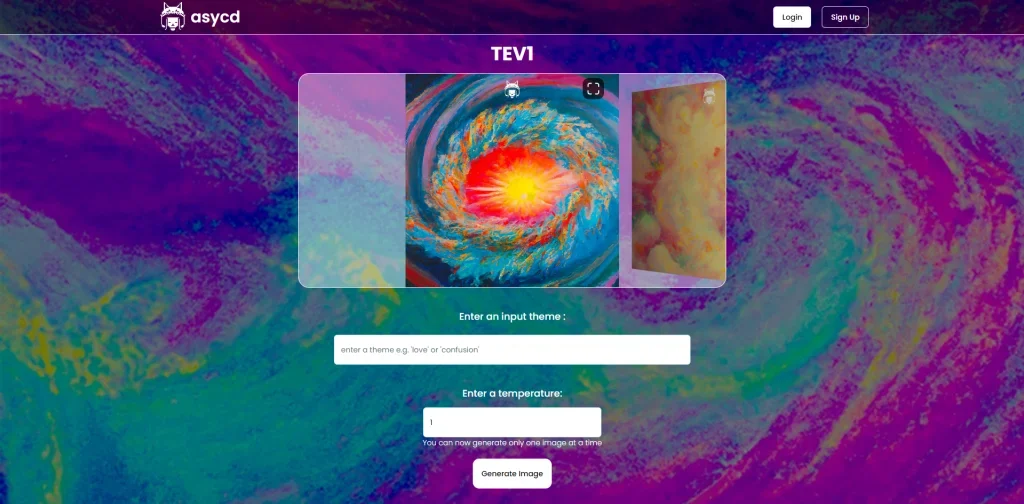
A theme, a temperature, a button. The featured work sits above it so a visitor sees what the platform produces before being asked for an account — signing in buys credits rather than access.
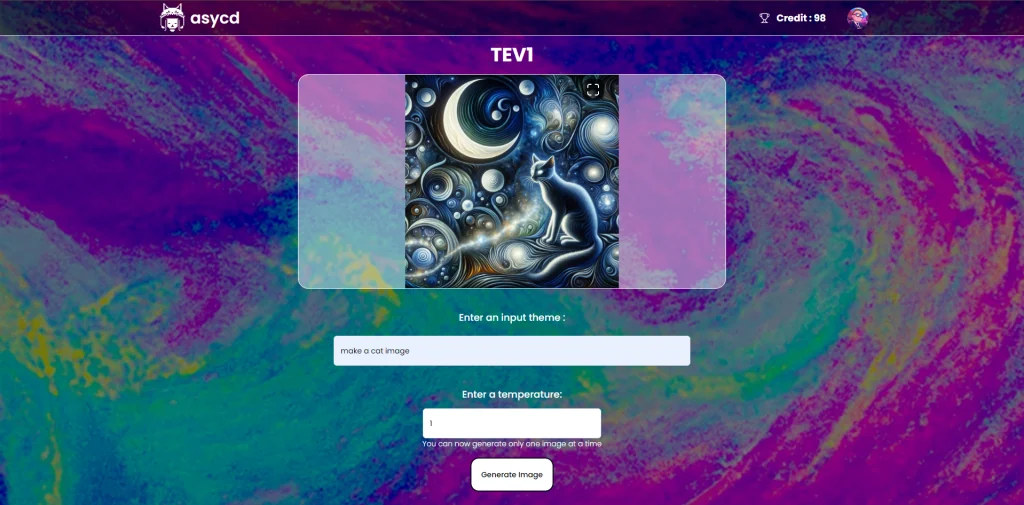
The theme that produced the image stays where it was typed, so the next attempt is an edit rather than a retype. The credit balance in the header ticks down by one — visible, and never the loudest thing on screen.
Account details above, and below them the history — each prompt with the image it produced, in order. This is what a session of exploring looks like a week later, which is the difference between a tool and a place to work. Personal details are blurred here; they are not on the real screen.
Solution: Image generation has a floor cost per request that a flat subscription either subsidises or gouges. Credits deduct per generation against a visible balance, which prices the compute honestly and lets somebody spend a little without committing to a plan.
Solution: Storing prompts is easy; making them useful is not. Prompt and result are kept together against the account and shown in order, so the history reads as a sequence of decisions rather than a folder of files with no context.
Solution: Generation is slow enough that a static screen reads as a failure. The viewer holds the frame and shows that work is happening in place, so the wait is legible as progress rather than as nothing.
Let's build the part that ships.