Structured input, structured output
Fields for the constraints, a prompt for the subject. The formatting is applied by the app rather than requested in a sentence and hoped for.
AI SaaS case study
Two jobs in one app: write the document, then ask the document questions. Both metered on credits, both ending in a PDF.
Alpha Drafts writes long-form work to a brief — subject, length, formatting style, whether it needs citations — and hands back an editable draft rather than a wall of chat. When the draft is right, it exports as a PDF.
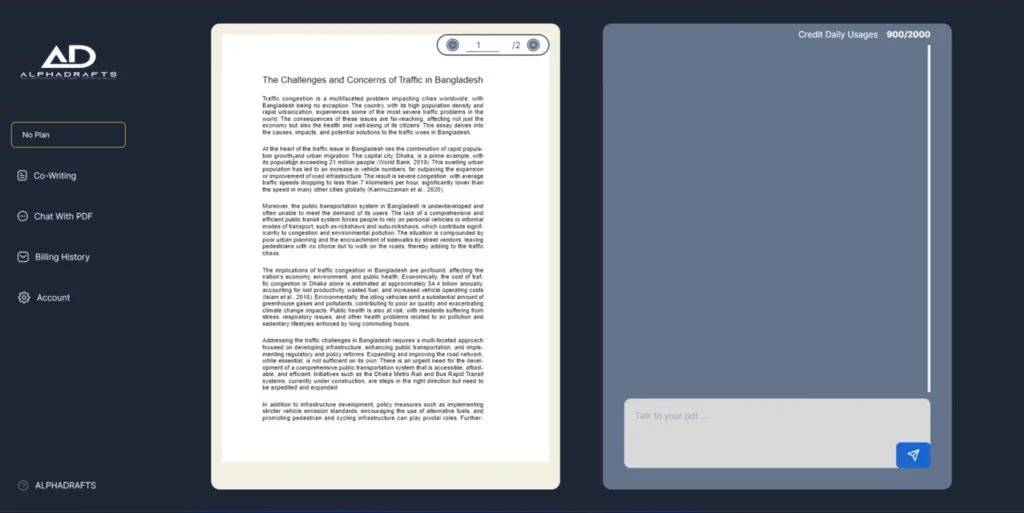
The other half runs the same relationship backwards. Upload a PDF and ask it questions: what does this say about X, where is the figure, summarise section three. The document stays on screen beside the conversation, so an answer can be checked against the page it came from.
Everything is metered on credits against a daily allowance, with three plans behind it — which is the part that turned a demo into a product.
The drafting flow, the PDF conversation and the credit model behind both.
A brief, not a prompt
Type of piece, length, formatting style and citation handling are fields — so the person writing does not have to know how to ask.
The draft lands in an editor
Headings, emphasis, lists and alignment, in place. The output is a document being worked on rather than a message to copy out.
Chat with a PDF you uploaded
Ask a document what it says, with the page open beside the answer so it can be checked rather than trusted.
Credits, visible at all times
A daily allowance in the header of every screen. Nobody discovers the limit by hitting it.
A chat box will write an essay, and then the work starts: it is the wrong length, the citation style is not the one required, the formatting has to be rebuilt somewhere else, and turning it into a file to submit is a manual job every single time. The gap between "a model can write this" and "I have a finished document" is where the effort actually goes, and it is a gap made of small, repetitive, unglamorous steps.
A chat transcript is not a document
Formatting is lost on the way out, and rebuilding it in a word processor undoes most of the time saved.
The requirements come as an afterthought
Length, style and citations are decided before writing, and a prompt box asks for them last, if at all.
Usage nobody can see is usage nobody can budget
Unmetered AI is either a bill that surprises the operator or a limit that surprises the user.
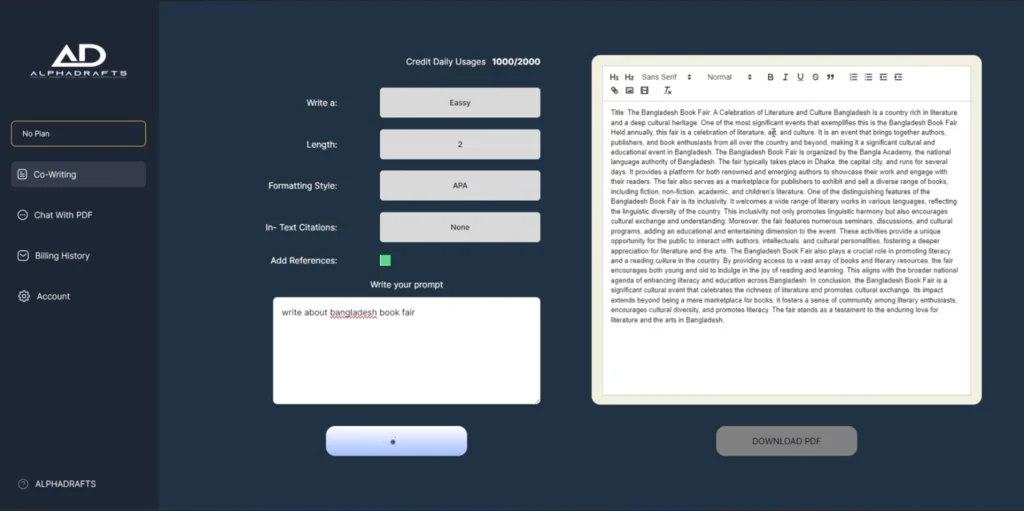
The generator asks the questions a writer would be asked anyway — what are you writing, how long, in whose formatting style, with or without in-text citations — and only then takes the subject. What comes back is not a message but a document in a rich-text editor, ready to edit and one button from a PDF. The PDF conversation is the same design running the other way, and the credit counter sits above both so the cost of a piece of work is visible while it is being done.
Fields for the constraints, a prompt for the subject. The formatting is applied by the app rather than requested in a sentence and hoped for.
Both halves end in the same place: a downloadable document. It is the step that makes the tool finish a job rather than assist with one.
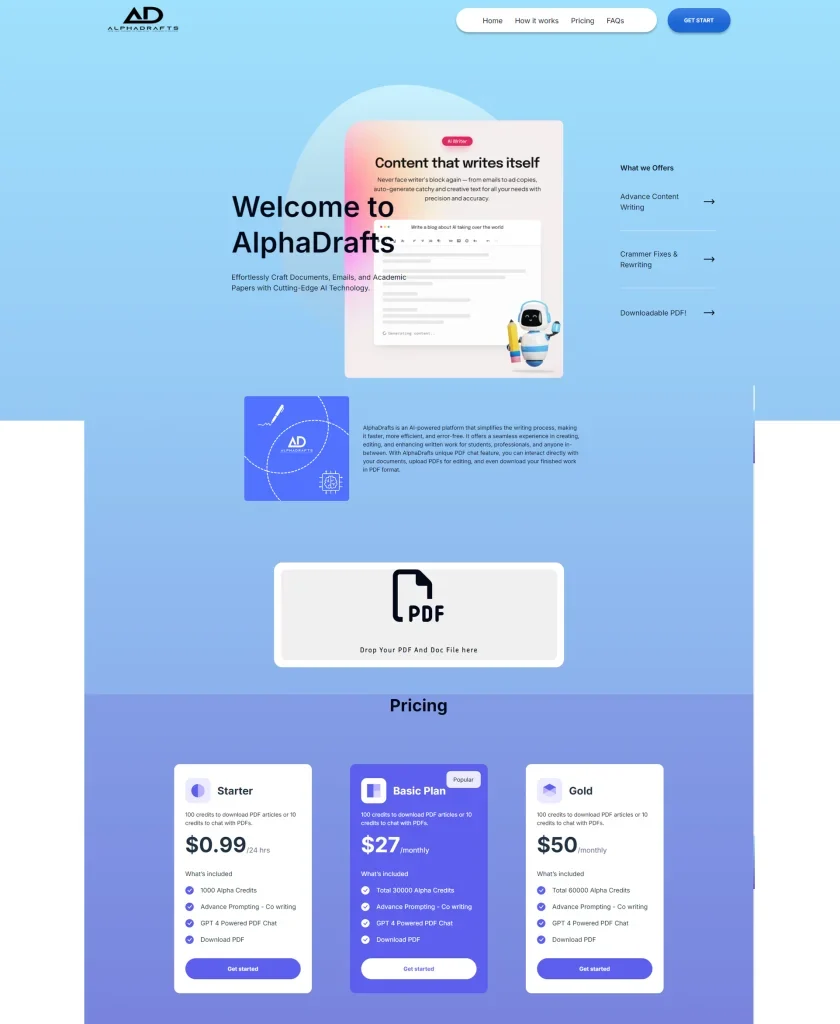
A day pass and two monthly tiers, all denominated in the same credits — so the difference between plans is a number rather than a feature matrix.
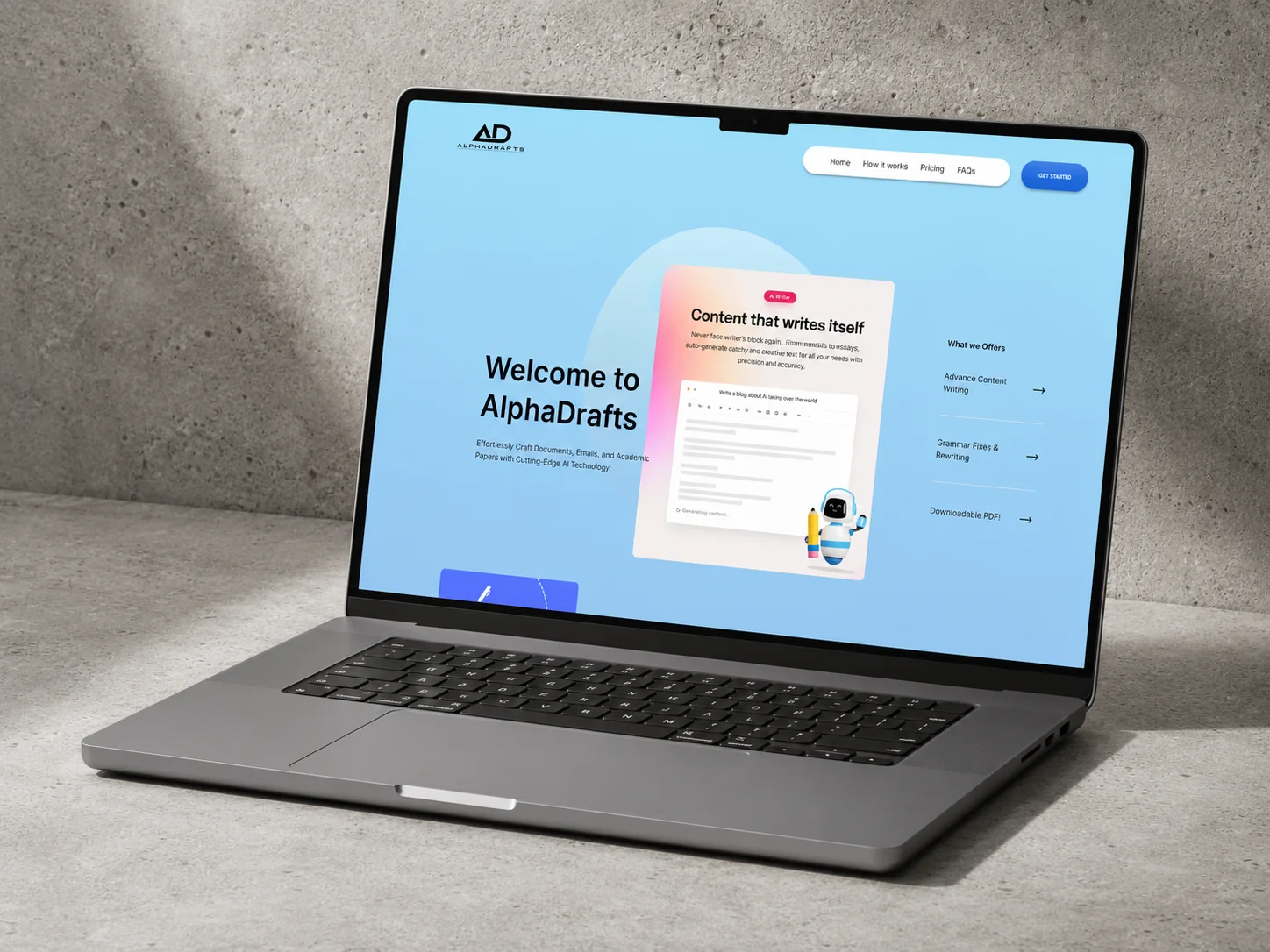
Advanced prompting, grammar fixes and downloadable PDFs at the top; the plans at the bottom, priced in credits rather than in features. A day pass exists because the first thing most people want is to try it on one document.
Type of piece, length, formatting style, in-text citations, references — the decisions a writer makes before writing, as fields. The result arrives in an editor with its formatting intact, and the credit counter sits above it the whole time.
The PDF stays open beside the chat rather than being swallowed by it. That is the whole design argument: an answer about a document is only useful if the document is there to check it against.
Solution: Model output is plain text with markup conventions in it; a PDF needs real structure. The draft is parsed into a rich-text document first, so headings are headings and lists are lists — which is what makes the export a document rather than a screenshot of a chat.
Solution: A long essay and a short email cost the operator very different amounts, so a per-request charge would be either unprofitable or unfair. Credits are deducted against a daily allowance and shown on every screen, which prices the work rather than the click.
Solution: Answering from a document means retrieving from that document rather than from what the model remembers about the subject. The page stays visible beside the answer for the same reason — the user is the last check, and they can only be that if they can see the source.
I'm very happy and impressed with the freelancer's level of expertise and coordination. Excellent delivery, and simply the best!
Alpha Drafts
Client, via Fiverr
Let's build the part people pay for.